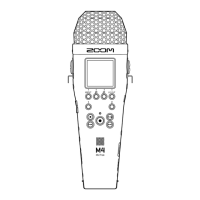
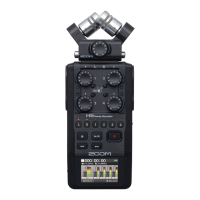
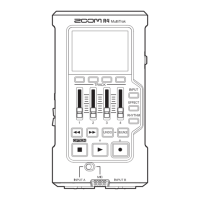
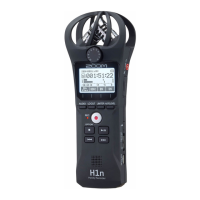
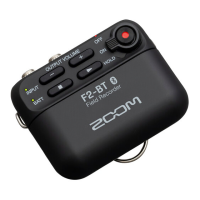
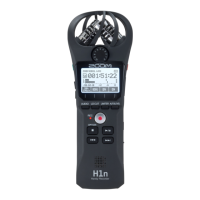
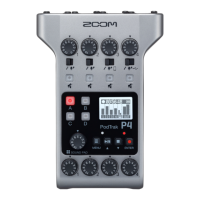
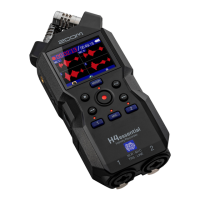
The Zoom M4 MicTrak is a portable audio recorder designed for capturing high-quality sound in various environments. It features a compact, handheld design, making it suitable for on-the-go recording of live performances, interviews, and other audio events. The device is equipped with a built-in XY stereo microphone, offering a three-dimensional sound with natural depth and width, ideal for capturing immersive audio.
Function Description
The M4 MicTrak serves as a versatile audio recording device, capable of capturing sound from its built-in microphones, external XLR/TRS inputs, and a MIC/LINE IN jack. It records audio to microSD cards, supporting both microSDHC (4 GB - 32 GB) and microSDXC (64 GB - 1 TB) formats. The device utilizes a 32-bit float format, which allows for recording at any volume level without the need for manual gain adjustment, ensuring that audio can be recovered even if recorded too quietly or too loudly.
Key functions include:
- Audio Recording: The primary function is to record audio. Users can select between the built-in XY mic, INPUT 1, or INPUT 2 as the sound source. The built-in XY mic offers recording options for stereo or mono files, while external inputs allow for connecting dynamic or condenser microphones, as well as line-level equipment. Phantom power can be supplied to compatible microphones connected to INPUT 1/2.
- Playback: Recorded files can be played back directly on the device through its built-in speaker or via headphones connected to the PHONE OUT jack. The playback screen displays waveforms, and users can navigate through files, adjust playback position, and manage marks within recordings.
- File Management: The device includes functions for managing recorded files, such as listing files, deleting them, and exporting them. It can also normalize audio and convert files to formats compatible with devices that do not support 32-bit Float WAV.
- Timecode Synchronization: The M4 MicTrak supports timecode input and output, allowing for synchronization with other video or audio recording devices. Timecode data can also be written to recording files.
- USB Audio Interface: The device can function as a USB microphone when connected to a computer, smartphone, or tablet. During USB mic operation, the M4 can simultaneously record audio to its microSD card. It also acts as an SD card reader, enabling easy transfer of recorded files to a computer.
- Pre-recording: This feature allows the device to capture input signals for a certain amount of time before recording is officially started, ensuring that no crucial audio is missed.
- Recording Start Tone: The device can output tone signals from its output jacks when recording begins, and these tones are also written into the recording files.
- Automatic Playback Volume Adjustment: This function evens out the volumes of recorded sounds during playback without causing distortion.
Usage Features
The M4 MicTrak is designed for intuitive operation, with a clear display and dedicated buttons for various functions.
- Power Management: The device is powered by batteries (alkaline, NiMH, or lithium) and can also be supplied power via its USB (Type-C) port from a mobile battery or AC adapter. A POWER/HOLD switch is used to turn the device on/off and to disable button operation, preventing accidental changes during recording.
- Initial Setup: Upon first use, users are guided through setting the language, date format, date and time, and battery type. Correctly setting the battery type ensures accurate display of remaining battery charge.
- microSD Card Handling: microSD cards are inserted into a dedicated slot. It is crucial to turn off the power before inserting or removing a card. Formatting microSD cards on the device is recommended to maximize performance, especially for new cards or those used with other devices. The formatting process deletes all previously saved data.
- Input and Output Connections:
- INPUT jacks (XLR/TRS): For connecting external microphones and mixers.
- MIC/LINE IN jack: For connecting external mics (including those requiring plug-in power) or line-level equipment.
- PHONE OUT jack: For monitoring audio with headphones.
- LINE OUT jack: For outputting sound to connected devices.
- REMOTE connector: For connecting a dedicated remote control.
- USB (Type-C) port: For power supply, data transfer, and USB mic functionality.
- TIMECODE IN/OUT connector: For timecode synchronization.
- Recording Settings:
- Input Source Selection: Users can easily switch between the built-in XY mic, INPUT 1, and INPUT 2 using dedicated buttons.
- Recording Format: For the built-in XY mic, users can choose to record no sound (OFF), stereo files, or mono files (mixing left and right signals).
- Input Source for Connected Equipment: Options include OFF (when nothing is connected), MIC (for dynamic mics), MIC with phantom power (for condenser mics), LINE (for line-level equipment), and LINE with phantom power (for line-level equipment requiring it).
- Lo Cut Filter: This feature helps reduce unwanted low-frequency noise from wind or vocal pops. Users can select different cutoff frequencies (80Hz, 160Hz, 240Hz) or turn it off.
- Volume Amplification: While the 32-bit float format makes recording level adjustment unnecessary for capturing sound, users can adjust the volume display on the screen to a suitable size for monitoring during recording.
- Playback Controls: Dedicated buttons allow for starting/pausing playback, stopping playback, navigating between files, moving playback position backward/forward, and adding/deleting marks within a recording.
- Menu System: A MENU button provides access to various settings, including Rec Settings, USB, SD Card, Timecode, and System settings.
- Physical Design: The device includes tripod mounting threads for stable placement, a battery compartment with a closure screw for easy access, and a built-in speaker for quick audio checks.
Maintenance Features
Proper usage and occasional troubleshooting ensure the longevity and optimal performance of the M4 MicTrak.
- Battery Care: Always use only one type of battery (alkaline, NiMH, or lithium) at a time. If the device is not supplied with power for an extended period, date and time settings may reset, requiring re-entry upon startup.
- microSD Card Maintenance: Regularly format microSD cards using the M4 MicTrak to maintain optimal performance. If recorded sound breaks up, formatting the card is a recommended troubleshooting step. It is also advisable to use microSD cards confirmed to operate with the recorder, as listed on the Zoom website.
- Troubleshooting Guide: The manual provides a troubleshooting section for common issues:
- No sound or low volume: Check headphone connection, M4 headphone volume, mic orientation, connected equipment volume, M4 volume amplification, M4 input source settings, and ensure plug-in power is supplied if needed.
- Distorted monitored sound: Adjust volume amplification on the display.
- Distorted built-in mic sound: Move the M4 away from the sound source and use a windscreen if air is blowing directly at the mic.
- Distorted input 1/2 sound: Adjust the volume of the connected device and confirm correct M4 input source settings.
- Recording not possible: Confirm available space on the microSD card and ensure the card is properly loaded.
- Recorded sound breaks up: Format the microSD card and consider testing or replacing it.
- Not recognized by computer: Ensure a USB cable that supports data transfer is being used.
- General Precautions: Users are reminded to read the Usage and Safety Precautions before use. Copying or reprinting the manual without permission is prohibited. The manual should be kept in an easily accessible place for future reference. The contents and specifications of the product are subject to change without notice.
- Phantom Power Warning: Do not supply phantom power to devices that are not compatible with it, as this could damage the device.

 Need help?
 General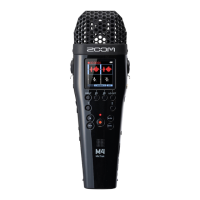

 To Next Page