
 Need help?
Do you have a question about the 3M Versaflo TR-600 and is the answer not in the manual?
Check motor/blower for damage and battery pack for intact case and sufficient charge.
Examine breathing tube for tears and filter/cartridge for cracks or damage.
Check headgear for tears, cuts, loose stitching, or other signs of damage.
Connect battery pack to motor/blower, and attach filter/cartridge with cover.
Insert and twist breathing tube into motor/blower and attach to headgear.
Verify airflow with TR-971 indicator and test low flow alarm.
Turn on motor/blower and put on headgear.
Clean and store PAPR according to employer and product instructions.
The 3M™ Versaflo™ Powered Air Purifying Respirator (PAPR) TR-600 Assemblies are designed to provide respiratory protection against various airborne contaminants by reducing concentrations in the wearer's breathing zone. This Quick Start Guide serves as a reference for initial setup and use, emphasizing the importance of consulting the full User Instructions for comprehensive details. The system is engineered to be user-friendly, with clear visual and audible indicators for operational status and maintenance needs.
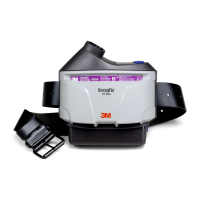
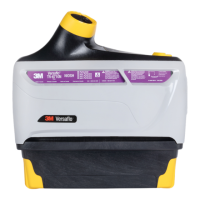
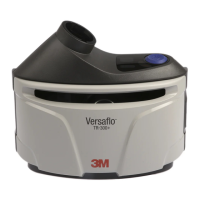
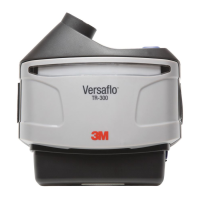
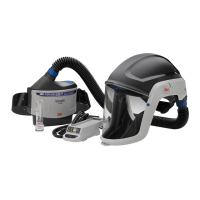
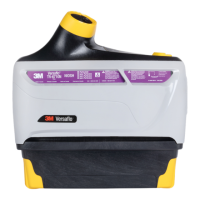
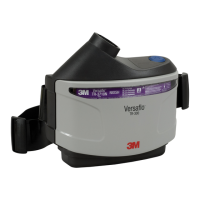
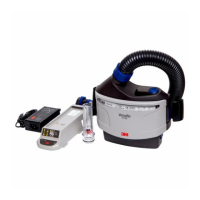
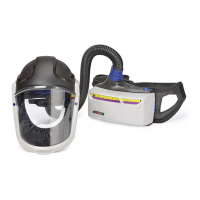
The TR-600 PAPR system operates by drawing ambient air through a filter or cartridge, which removes particulate matter and/or gases and vapors, and then delivering the purified air to a headgear worn by the user. This continuous flow of filtered air creates positive pressure within the headgear, preventing contaminants from entering the breathing zone. The core components of the system include a motor/blower unit, a battery pack, a filter/cartridge, a breathing tube, and a headgear. The motor/blower unit houses the fan that pulls air through the filter and pushes it to the user. The battery pack provides power to the motor/blower, ensuring continuous operation for the duration of a work period. The filter/cartridge is crucial for contaminant removal, with different types available for various hazards. The breathing tube connects the motor/blower to the headgear, delivering the purified air. Finally, the headgear provides the interface for the user, directing the filtered air over the face and protecting against external contaminants. The system is designed to be worn on the body, typically attached to a belt or backpack, for mobility and comfort during work.
The TR-600 PAPR system incorporates several features to ensure ease of use and user safety. Before donning the system, a thorough inspection is required. This includes checking the motor/blower for cracks or damage, confirming the battery pack's charge level using the TEST button, examining the breathing tube for tears or cracks and ensuring the presence of o-rings, and inspecting the filter/cartridge for any damage to its housing or seal gasket. The headgear also needs to be checked for tears, cuts, or loose stitching. Any damaged parts must be replaced with TR-600 replacement parts.
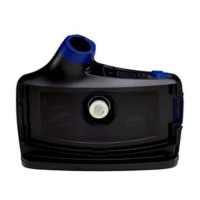
Assembly of the TR-600 PAPR system is straightforward. The battery pack attaches to the bottom of the motor/blower with a distinct click, and a gentle pull confirms a secure connection. If a spark arrestor is used, it is installed first, followed by a prefilter into the filter cover. The filter/cartridge is then placed into the filter cover, ensuring the bottom latching tab snaps into place. If a filter cover is not used, the filter/cartridge attaches directly to the motor/blower. The hinge side of the filter/cartridge is inserted into the motor/blower, and the latch side snaps into place with a distinct click, again confirmed by a gentle pull. The motor/blower unit can then be attached to a belt or backpack. The breathing tube connects to the motor/blower air outlet by inserting its prongs into the slots and twisting a quarter turn clockwise to lock. The other end of the breathing tube, featuring a blue pinch clip (QRS end), pushes onto the air inlet of the headgear, securing with a distinct click.
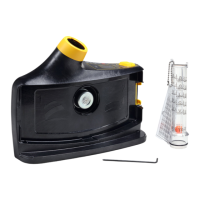
A critical usage feature is the flow check, performed before each use. With the breathing tube removed, the air flow indicator TR-971 is inserted into the motor/blower outlet. The motor/blower is then turned on and allowed to run for one minute. The system's airflow is deemed sufficient if the bottom of the floating ball in the vertical airflow indicator is at or above the minimum flow level indicated for the user's 'zone'. If the airflow is insufficient, the respirator system must not be used until evaluated and repaired. After the flow check, the air flow indicator is removed, and a low flow alarm test is performed according to the TR-600 User Instructions. Finally, the breathing tube and headgear are reattached.
To don the TR-600 PAPR system, the motor/blower is turned on by pressing and holding the blue on/off button. The PAPR is then attached to the wearer using the belt or backpack. The headgear is pulled over the head and adjusted according to the specific headgear's user instructions for a proper fit. The system is designed to provide continuous protection, and it is essential to wear the complete respirator system at all times of exposure.
Maintenance of the TR-600 PAPR system is crucial for its continued effectiveness and longevity. Post-use, the system should be cleaned and stored according to practices established by the employer and in compliance with the product User Instructions. Regular inspection is a key maintenance feature, as outlined in the pre-use checks. This includes visually inspecting all components for any signs of wear, damage, or degradation.
The filter/cartridge is a consumable component and needs to be replaced when damaged or when its service life is exhausted. The design allows for easy replacement, ensuring that the system can be quickly returned to operational status. The battery pack's charge level is indicated by LED bars, allowing users to monitor its status and recharge it as needed. The TEST button on the battery pack provides a quick way to confirm the charge is sufficient for the planned work period, preventing unexpected power loss during operation.
The system is designed with audible and vibratory alarms that sound upon startup and during operation if a low flow condition or low battery is detected. These alarms serve as critical maintenance indicators, alerting the user to potential issues that require immediate attention. If an alarm sounds, the user must follow the procedures outlined in the TR-600 User Instructions, which typically involve exiting the contaminated area and troubleshooting the system.
The modular design of the TR-600 PAPR system facilitates maintenance and repair. Components like the battery pack, filter/cartridge, breathing tube, and headgear are designed to be easily attached, detached, and replaced. This modularity simplifies troubleshooting and allows for the replacement of individual parts rather than the entire system, reducing downtime and maintenance costs. Adherence to the cleaning and storage guidelines specified in the User Instructions helps prevent contamination and extends the lifespan of the components. Regular cleaning of the motor/blower, breathing tube, and headgear is essential to maintain hygiene and prevent the buildup of debris that could affect performance.
 General
| Battery Type | Lithium Ion |
|---|---|
| Product Series | Versaflo |
| Product Type | Powered Air Purifying Respirator (PAPR) |
| Standards | NIOSH approved |
| Airflow | 185 L/min and 205 L/min |
| Filter Options | Particulate |
| Operating Temperature | -10°C to +55°C |
| Filter Type | HEPA |
| Headgear Compatibility | Compatible with 3M Versaflo Headgear |


 To Next Page
