17
PERIODIC INSPECTIONS Continued
ELECTRIC, STEAM, HOT WATER, COOLING &
CHILLED WATER UNITS
1. Indoor blower, coils and filters should be in-
spected monthly.
2. Once each year, before unit is turned on for the
heating season, a qualified serviceman should inspect
the unit for proper operation.
3. Inspect all valves and steam traps in accor-
dance with manufacturers recommendations.
WARNING: All of the items listed under the service,
trouble shooting and maintenance section of this manual
should be performed once a year.
HEATING • ELECTRIC
1. Set thermostat in the heat mode.
2. Set thermostat to call for heat to engage all
electric heat strips. Check blower for proper rotation
and voltage.
3. Measure the amperage and voltage. Compare
them to the nameplate data.
HEATING • STEAM OR HOT WATER
1. Set thermostat in the heat mode.
2. Observe supply blower for proper rotation and
voltage.
3. Check boiler or hot water operations according
to the manufacturers instructions.
4. Check control flow valves for correct operation
and settings per manufacturers instructions.
NOTE:
Should any of the above functions not perform properly,
the following sequence of operations are given for the
various heating and cooling modes with various control
systems for an additional analysis in the case of any
problems.
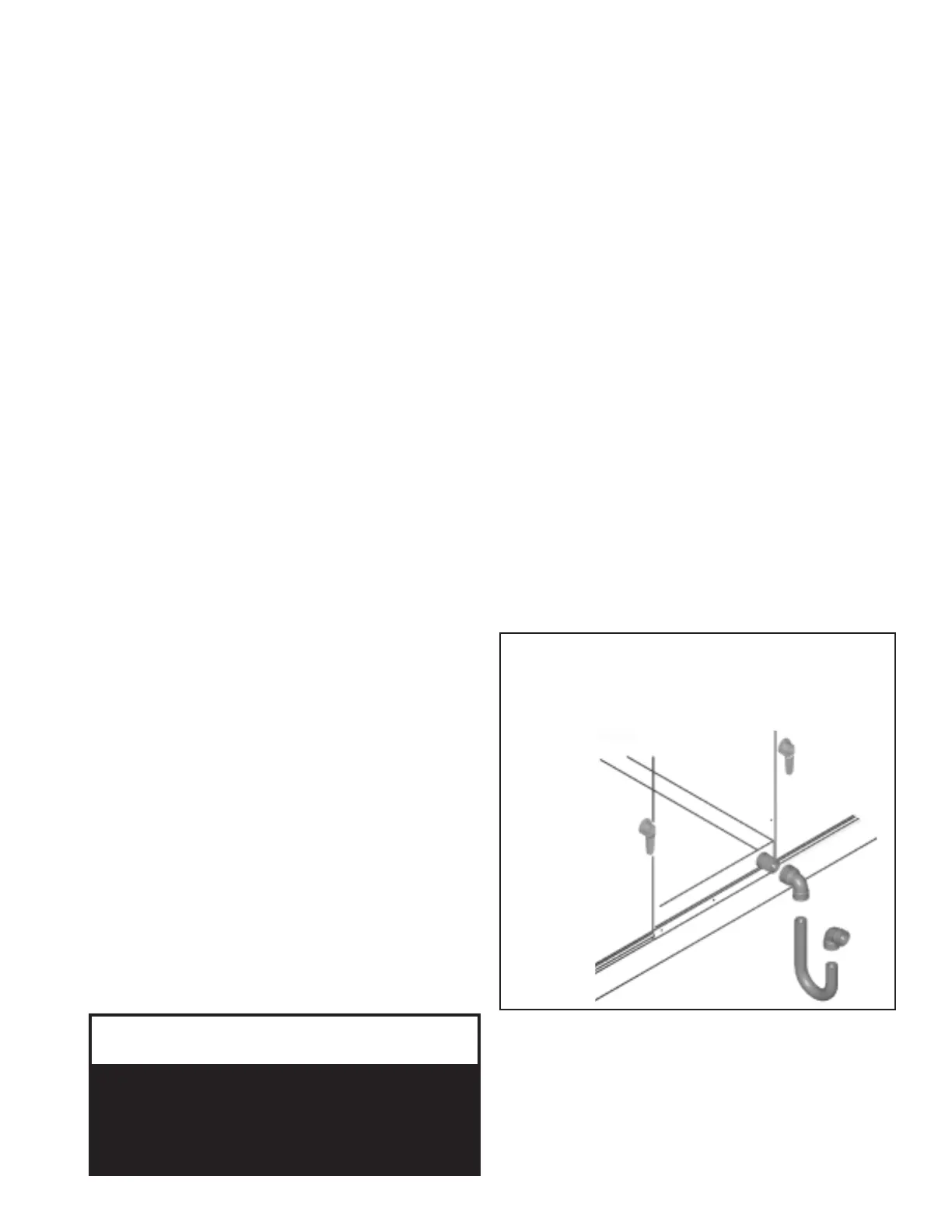
CONDENSATE PIPING
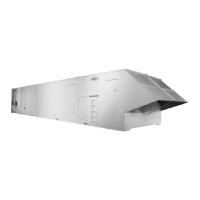
The RL equipment is furnished with 2 drain connections
one on each side of the unit. All drain connections must
be used and individually trapped to ensure a minimum
amount of condensate will be present in the drain pans.
The 'P' traps are furnished with the equipment.
Drainage of condensate directly onto the roof may be
acceptable in certain areas, refer to applicable codes. If
condensate is to drain directly onto the roof, a small drip
pad should be placed below the drain to protect the roof
from possible damage.
When condensate is piped into the building drainage
system, the drain pipe should penetrate the roof exter-
nal to the unit itself. The drain line should be pitched
away from the unit at least 1/8 inch per foot. On longer
runs, an air break should be used to ensure proper
drainage.
Drain pans in any air conditioning equipment, even
when they have a built-in slope to the drain, will have
moisture present and will require periodic cleaning to
prevent any build up of algae of bacteria. Cleaning of the
drain pans will also prevent any possible plugging of the
drain lines and an overflow of the pan itself. All cleaning
of the drain pans and inside of the equipment should be
done by qualified personnel.
FOR PROPER UNIT OPERATION,
DRAIN TRAP MUST BE INSTALLED AS SHOWN.
USE ABS TYPE CEMENT TO JOIN
THE CONNECTIONS.
NOTE: A DEEPER 'P' TRAP MAY BE NECESSARY
BASED ON THE NEGATIVE PRESSURE IN THE
EVAPORATIVE SECTION ON A DRAW THROUGH
UNIT.
▲
!
CAUTION
Before leaving installation, a complete
operating cycle should be observed
to verify that all components
are functioning properly.
Typical 'P' trap
connection


 To Next Page