ENGLISH
SOPROCARE • User’s manual
21
OPERATION PROTOCOL OF THE CAMERA IN
PERIO MODE AND CARIO MODE
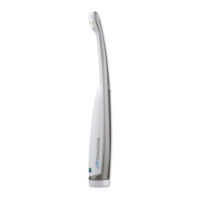
The SOPROCARE is used as an aid in the prevention practice thanks to its technology based on fl uorescence phenomenon (given
by its LED lamps) and chromatic amplifi cation, this camera will permit a large and time effi cient oral examination of the patient.
The optics and the charge coupled device (CCD) sensor in the SOPROCARE pick up the images containing this fl uorescence, highlight
it and converts them to a video signal that is sent to a video monitor or computer monitor. The result image can be used by dental
practitioner and/or hygienist as an aid for diagnosis.
As an aid in the detection of dental plaque, gingival infl ammations (restricted to gingival infl ammations which lead to bleeding upon
probing) and pit and fi ssure caries, any changes in fl uorescence color should direct the dental professional to examine the warning
area using gold standard techniques. The image information together with results of gold standard examination can be used to
identify pathological symptoms and to formulate an appropriate treatment plan.
NOTE:
The SOPROCARE is an aid in your diagnosis by providing additional information to supplement the dentist’s visual observations,
patient history and information from other diagnostic techniques, resulting in overall determination. The camera does not provide
a diagnosis. Diagnosis subsequent to the use of the camera is performed by the dental practitioner.
Any use that is not described in this manual as correct usage is considered as incorrect usage. The manufacturer is not to be held
liable for any damage caused as a result of incorrect usage. The operator bears all risks.
8.1. PERIO MODE
This fl uorescent mode associated with chromatic amplifi cation permits to have information about patient dental hygiene and to
highlight dental plaque and gingival infl ammations (restricted to gingival infl ammations which lead to bleeding upon probing). The
images provided are displayed with colors that can be interpreted following the tab below:



 To Next Page