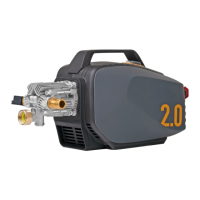
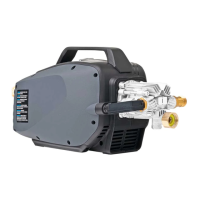
Why Active SE02 Pressure Washer oil is dripping?
- SSamantha ArnoldSep 13, 2025
If oil is dripping from your Active Pressure Washer, it indicates that the oil seals are damaged or worn. In this case, you should call the Toll-free Hotline.
Why Active SE02 Pressure Washer oil is dripping?
If oil is dripping from your Active Pressure Washer, it indicates that the oil seals are damaged or worn. In this case, you should call the Toll-free Hotline.
| Brand | Active |
|---|---|
| Model | SE02 |
| Category | Pressure Washer |
| Language | English |
Explains the meaning of safety alert symbols like Danger, Warning, and Caution.
Provides critical safety warnings regarding fire, electric shock, explosion, and injury risks.
Warns about serious injury from spray penetration and advises seeking medical aid.
Advises using only approved detergents for pressure washers to avoid damage and warranty void.
Details how to hold the spray gun with both hands due to kickback and trigger safety.
Specifies using clean water, protecting against backflow, and acceptable water temperature.
Outlines that maintenance must be done by adults, use genuine parts, and shut off power before servicing.
Explains double-insulation and the care required for servicing such products.
Describes the product's design for residential use and lists suggested applications with icons.
Provides essential guidelines for using extension cords, including gauge, length, and condition.
Details the automatic stop device and the importance of the main power ON/OFF switch.
Lists and identifies all main components of the pressure washer, including the main unit and accessories.
Explains the different spray tips (0°, 15°, 25°, 40°) and their recommended uses.
Advises inspecting and clearing the work area before starting assembly.
Specifies using cold water only, minimum hose diameter, flow rate, and maximum temperature.
Provides cautions regarding contaminated water, inlet dirt, debris, and recommended rest periods.
Instructions on attaching the high-pressure hose to the gun and pump outlet using hand-tightening.
Guidance on attaching the spray tip to the wand and the wand to the spray gun securely.
Steps for connecting the garden hose to the inlet adapter and the water supply.
Procedure for plugging the GFCI into the power receptacle and testing the connection.
Reminder to ensure hands are dry and to release the safety trigger if locked.
Details on purging air by squeezing the trigger until a steady stream of water appears.
Instructions for draining the unit after use to prevent damage during storage.
Guide on pushing the ON/OFF button to start the machine for operation.
Step-by-step instructions for turning off the water, releasing pressure, and unplugging the unit.
Warns that failure to depressurize can lead to personal injury from high-pressure water discharge.
Procedure for safely pausing operation, including engaging the safety lock and turning off the unit.
Emphasizes proper cleaning to prevent the detergent injection system from clogging.
Lists chemicals like bleach, solvents, and ammonia that must never be used due to unit damage.
Recommends using antifreeze for lubrication, rust protection, and freeze prevention before winter storage.
Advises draining any remaining water from the gun assembly by aiming and pulling the trigger.
Warns that antifreeze can damage paintwork and requires thorough flushing before reuse.
Alternative steps if optimum procedure isn't possible, including disconnecting, brief run, and proper storage.
Warns that freeze damage is not covered by warranty and storage must avoid freezing temperatures.
Recommends cleaning and lubricating pressure washer hose, gun, and spray wand connections regularly.
Explains how to clean clogged nozzles using a needle or thin instrument.
Details how to remove, rinse, and replace the water inlet screen to protect the pump.
Lists key technical details such as peak pressure, rated pressure, power, flow rate, and motor specifications.
Diagnoses and solutions for when the motor fails to start, including power and circuit issues.
Addresses causes and fixes for the device not reaching high pressures, such as hose size or clogged filters.
Solutions for inconsistent pressure, including checking air intake and cleaning filters.
Troubleshooting steps for when the foam blaster fails, covering detergent levels and tube blockages.
Solutions for leaks at the garden hose connection, including loose fittings and washers.
Addresses leaks from the spray wand, extension, or nozzle, and attachment issues.
Diagnoses for a noisy pump, including sucking air or clogged water filters.
Information on permissible water leaks from the pump and when to call for service.
Troubleshooting for motor hums without running, including voltage and residual pressure checks.
Solutions for no water output, such as water supply issues or kinks in the hose.
Encourages online registration for easier warranty support and receipt keeping.
Details the guarantee against defects in material and workmanship for two years from purchase.
Lists exclusions from the warranty, such as commercial use, accidental damage, and unauthorized repairs.
Loading...