17
The Advanced
®
3D3/4D3 Service Manual
Over the years, Advanced Instruments, Inc.
has made several improvements to the
3D3/4D3 system. It is important to identify
some of these changes to properly service
your instrument. Although every attempt has
been made to cover all the configurations,
some descriptions may vary from what is
present in your particular situation. If you are
having difficulty comparing your system to
this manual, consult the factory for assistance.
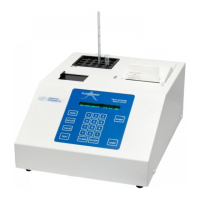
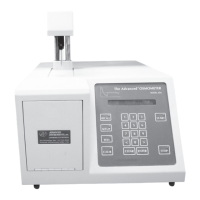
Please refer to the applicable system photo-
graphs and circuit descriptions once you have
identified your configuration. You may also
refer to suffix history chart located in the
Design Changes section of this manual, but
keep in mind that many of these changes were
backward-compatible, so use the chart only as
a reference.
System control electronics
1. The original main control board was a
single board located on the right side,
containing a Hitachi 63A03 microproces-
sor and a 256K Byte EPROM. This
board can be identified by the heat sink
mounted component in the upper left cor-
ner of the main control board. This board
and firmware are no longer supported, as
of October 1, 2001.
2. The second main control board was a sin-
gle board located on the right side, also
containing a Hitachi 63A03 microproces-
sor, but had a 512K Byte EPROM. This
board can be identified by the lack of a
heat sink mounted component in the
upper left corner of the main control
board. This board and firmware are no
longer supported, but can be replaced
with the Intel configuration. All refer-
ences to this configuration will use the
term main control board.
3. The third and current control board, locat-
ed on the right side, is a two-board set.
The larger board is called the application
board, and the smaller board is called the
processor board. The processor board
contains an Intel 80C186 microprocessor
and two field-programmable Flash
EPROM's. All references to this configu-
ration will use the terms control board
set, application board, or processor
board.
Motor control relays
1. The original configuration used two chas-
sis-mounted relays located on the center
rear interior wall.
2. The second configuration used two PCB-
mounted relays located on the center rear
interior wall. This version may be used
as a replacement for the first configura-
tion.
Operator/Supervisor keyswitch
1. The first configuration had no keyswitch.
All references to keyswitch position in
this manual should be ignored.
2. The second configuration used a black
plastic keyswitch located on the rear of
the instrument. This keyswitch, when in
the operator position, locked the user out
of these features: setup, diagnostic test
utilities, and calibration.
3. The third and current configuration uses a
metal keyswitch located on the rear of the
instrument. This keyswitch, when in the
operator position, locks the user out of
these features: setup and calibration.
Note: If you have configuration number 2
(above) and you replace the main con-
trol board with the control board set,
the operator and supervisor positions
will be reversed, and your keyswitch
will now only lock out the setup and
calibration features.
Major Configuration Changes


 To Next Page