© Glenco Air & Power Pty Ltd
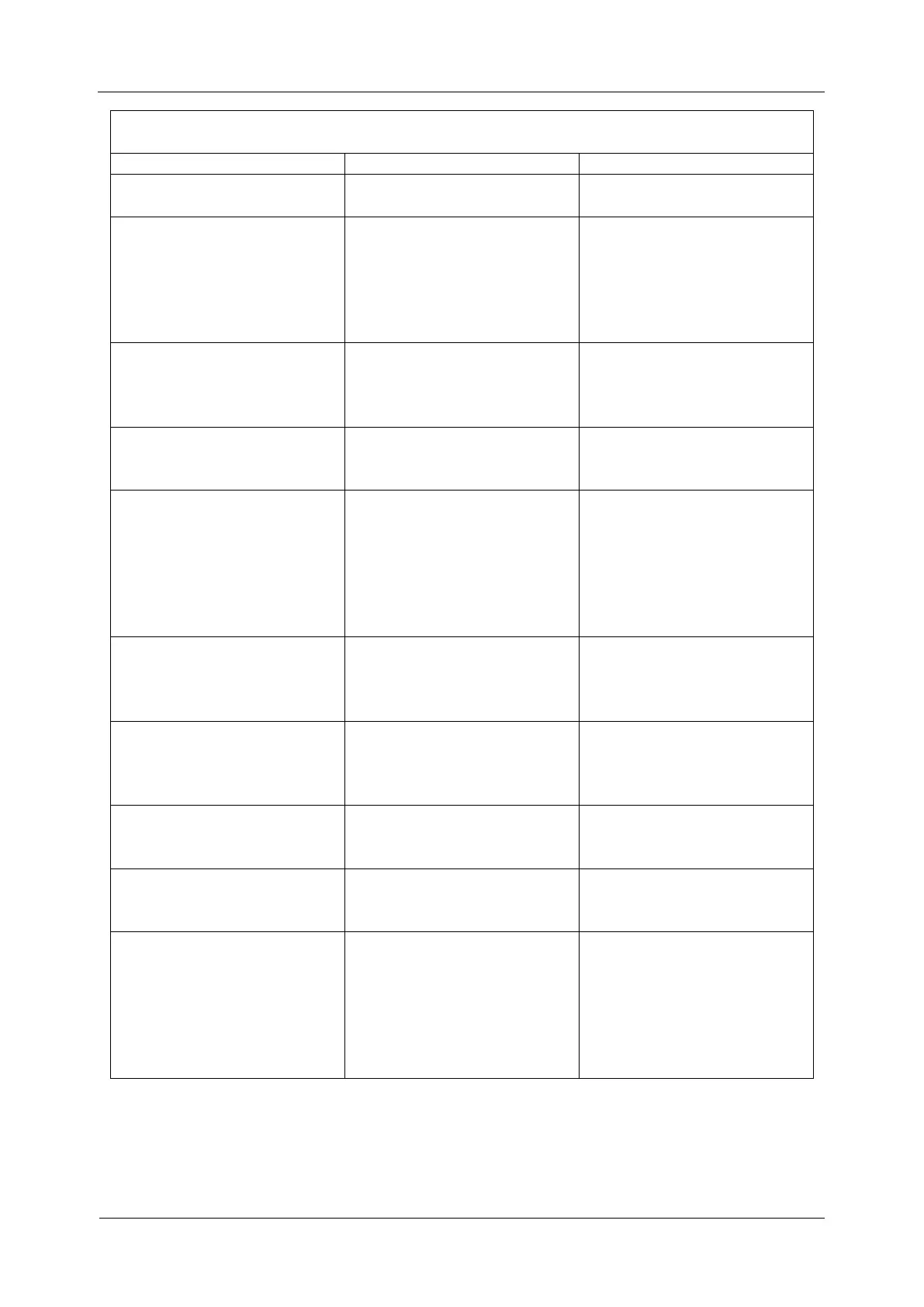
Table 8.1
Troubleshooting Chart
3. Blocked or faulty non-
return valve.
3. Clean, repair or replace
non-return valve.
Short initial discharge of air
from the 240 Volt pressure
switch during pumping mode
after starting with nil or low
pressure in the air receiver
1. Correct function of the
“soft start” pressure switch
unloading valve to reduce
motor starting current.
Continuous discharge of air
from the pressure switch after
reaching cut-out pressure or
being manually switched off.
1. Faulty non-return valve.
1. Repair or replace non-
return valve.
Continuous discharge of air
from pressure switch during
1. Faulty pressure switch
unloader valve.
1. Replace unloader valve or
complete pressure switch.
Air receiver tank does not hold
pressure when compressor is
off and discharge outlet valve
is closed.
1. Faulty non-return valve.
2. Faulty head unloaders.
3. Air leaks.
1. Repair or replace non-
return valve.
2. Repair or replace head
unloaders.
3. Tighten, refit or replace
leaking connections or
Engine stalls when compressor
changes from unloading mode
to pumping mode.
1. Engine idle speed too low.
2. Engine throttle control not
opening fully.
1. Increase engine idle speed.
2. Adjust or replace throttle
control.
Engine stalls when compressor
changes from pumping mode
to unloading mode.
1. Engine idle speed too low.
2. Head unloaders not fully
actuating.
1. Increase engine idle speed.
2. Repair or replace head
unloaders.
External oil discharge from
compressor pump.
1. Tighten, refit or replace
leaking connections or
Oil appears “milky” in sight
glass.
1. Water contamination in
oil.
compressor to less damp
Oil appears black in sight glass.
1. Graphite carry-over from
cast iron material (initial oil
fill only).
2. Oil dirty or overheated
(initial or subsequent oil
fill).
2. Replace oil and check for
compressor pump
overheating.


 To Next Page