EasyManua.ls Logo

airmaster TIGER 16/1050 - User Manual

airmaster TIGER 16/1050
20 pages
Print Icon
To Next Page IconTo Next Page
Loading...
OPERATION & MAINTENANCE
INSTRUCTIONS
ORIGINAL INSTRUCTIONS GC1120 - ISS 2
100L OIL FREE AIR COMPRESSOR
MODEL NO: TIGER 16/1050
PART NO: 1499515

Questions and Answers

Summary

INTRODUCTION AND TECHNICAL DATA

TECHNICAL SPECIFICATIONS

Key technical specifications including power supply, dimensions, weight, and capacity.

GUARANTEE AND SUPPORT CONTACTS

Warranty details, return policy, and contact numbers for parts and service.

GENERAL SAFETY WARNINGS

WORK AREA AND PERSONAL SAFETY

Guidelines for safe work environment and essential personal safety precautions.

GENERAL MACHINE USE AND CARE

OPERATOR GUIDELINES AND CABLE USE

User instructions, cable handling, extension leads, and recommended parts.

AIRLINE HOSES

HOSE MANAGEMENT AND CONNECTION SAFETY

Safe handling, connection, and disconnection of airline hoses.

AIR COMPRESSOR SAFETY INSTRUCTIONS

OPERATING CONDITIONS AND SAFE PRACTICES

Temperature, voltage, ventilation, correct switch usage, and specific warnings.

SAFETY SYMBOLS AND RECYCLING POLICY

SYMBOL EXPLANATION AND DISPOSAL GUIDELINES

Understanding safety symbols and following environmental disposal regulations.

ELECTRICAL CONNECTIONS

PRE-CONNECTION CHECKS, WIRING, AND RCD

Verifying voltage, plug, wiring, and recommending RCD use for safety.

ASSEMBLY

INSTALLING WHEELS, FEET, AND AIR FILTERS

Step-by-step guide for assembling wheels, support feet, and air filters.

INSTALLATION AND MOVING

OIL BREATHER CAP INSTALLATION AND SAFE MOVING

Installing the oil breather cap and precautions for safely moving the compressor.

BEFORE USE CHECKS

PRE-OPERATION VERIFICATIONS AND OIL LEVEL

Checking ON/OFF switch, ground, voltage, and oil level.

OPERATION AND TOOL ATTACHMENT

CONDENSATE DRAINAGE, TOOL CONNECTION, AND START-UP

Draining condensate, connecting tools, and starting the compressor.

OPERATIONAL CHECKS AND ADJUSTMENTS

SAFETY VALVE TEST AND PRESSURE SETTING

Testing the safety valve and adjusting output pressure using gauges.

TOOL REMOVAL AND SHUTDOWN

SAFE DETACHMENT AND COMPRESSOR SHUTDOWN

Procedures for safely removing tools and turning off the compressor.

RESERVOIR DRAINAGE AND RESET

DAILY DRAINAGE AND THERMAL OVERLOAD RESET

Daily condensate drainage and how to reset the thermal overload.

MAINTENANCE ROUTINES

DAILY AND MONTHLY MAINTENANCE TASKS

Daily oil/drain checks, monthly air filter cleaning, and general cleaning/storage.

TROUBLESHOOTING GUIDE

COMMON PROBLEMS AND SOLUTIONS

Addresses start-up, motor, pressure, overheating, leaks, and noise issues.

DECLARATION OF CONFORMITY

COMPLIANCE, STANDARDS, AND MANUFACTURER INFO

Compliance details, applied standards, and manufacturer information.

COMPONENT PARTS DIAGRAM

EXPLODED VIEW OF COMPONENTS

Visual representation of all parts for identification.

COMPONENT LIST

DETAILED PARTS INDEX

A numbered list correlating parts to their descriptions.

Summary

INTRODUCTION AND TECHNICAL DATA

TECHNICAL SPECIFICATIONS

Key technical specifications including power supply, dimensions, weight, and capacity.

GUARANTEE AND SUPPORT CONTACTS

Warranty details, return policy, and contact numbers for parts and service.

GENERAL SAFETY WARNINGS

WORK AREA AND PERSONAL SAFETY

Guidelines for safe work environment and essential personal safety precautions.

GENERAL MACHINE USE AND CARE

OPERATOR GUIDELINES AND CABLE USE

User instructions, cable handling, extension leads, and recommended parts.

AIRLINE HOSES

HOSE MANAGEMENT AND CONNECTION SAFETY

Safe handling, connection, and disconnection of airline hoses.

AIR COMPRESSOR SAFETY INSTRUCTIONS

OPERATING CONDITIONS AND SAFE PRACTICES

Temperature, voltage, ventilation, correct switch usage, and specific warnings.

SAFETY SYMBOLS AND RECYCLING POLICY

SYMBOL EXPLANATION AND DISPOSAL GUIDELINES

Understanding safety symbols and following environmental disposal regulations.

ELECTRICAL CONNECTIONS

PRE-CONNECTION CHECKS, WIRING, AND RCD

Verifying voltage, plug, wiring, and recommending RCD use for safety.

ASSEMBLY

INSTALLING WHEELS, FEET, AND AIR FILTERS

Step-by-step guide for assembling wheels, support feet, and air filters.

INSTALLATION AND MOVING

OIL BREATHER CAP INSTALLATION AND SAFE MOVING

Installing the oil breather cap and precautions for safely moving the compressor.

BEFORE USE CHECKS

PRE-OPERATION VERIFICATIONS AND OIL LEVEL

Checking ON/OFF switch, ground, voltage, and oil level.

OPERATION AND TOOL ATTACHMENT

CONDENSATE DRAINAGE, TOOL CONNECTION, AND START-UP

Draining condensate, connecting tools, and starting the compressor.

OPERATIONAL CHECKS AND ADJUSTMENTS

SAFETY VALVE TEST AND PRESSURE SETTING

Testing the safety valve and adjusting output pressure using gauges.

TOOL REMOVAL AND SHUTDOWN

SAFE DETACHMENT AND COMPRESSOR SHUTDOWN

Procedures for safely removing tools and turning off the compressor.

RESERVOIR DRAINAGE AND RESET

DAILY DRAINAGE AND THERMAL OVERLOAD RESET

Daily condensate drainage and how to reset the thermal overload.

MAINTENANCE ROUTINES

DAILY AND MONTHLY MAINTENANCE TASKS

Daily oil/drain checks, monthly air filter cleaning, and general cleaning/storage.

TROUBLESHOOTING GUIDE

COMMON PROBLEMS AND SOLUTIONS

Addresses start-up, motor, pressure, overheating, leaks, and noise issues.

DECLARATION OF CONFORMITY

COMPLIANCE, STANDARDS, AND MANUFACTURER INFO

Compliance details, applied standards, and manufacturer information.

COMPONENT PARTS DIAGRAM

EXPLODED VIEW OF COMPONENTS

Visual representation of all parts for identification.

COMPONENT LIST

DETAILED PARTS INDEX

A numbered list correlating parts to their descriptions.

Overview

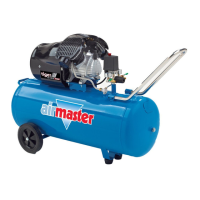
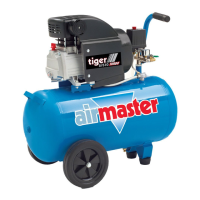
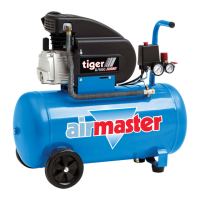
The Airmaster TIGER 16/1050 is a 100L oil-free air compressor designed for a range of applications from DIY to industrial use. This robust machine is an essential tool for anyone requiring a reliable source of compressed air for power tools, spray guns, and other accessories.

Function Description:

The Airmaster TIGER 16/1050 is an air compressor that draws in ambient air, compresses it, and stores it in a 100-liter receiver tank. The compressed air can then be used to power various pneumatic tools and equipment. Being an "oil-free" compressor, it does not require oil for lubrication in its compression mechanism, which means the output air is free from oil contaminants, making it suitable for applications where oil-free air is critical, such as painting or certain sensitive equipment. The compressor is equipped with a pressure regulator to adjust the output pressure to suit the specific requirements of the connected air tool or application. A safety valve is integrated to prevent over-pressurization of the tank, ensuring safe operation. The unit also features a thermal overload device that automatically cuts power to the motor if it overheats, protecting the motor from damage.

Important Technical Specifications:

  • Model No.: TIGER 16/1050
  • Part No.: 1499515
  • Power Supply: 230 V/ 50 Hz
  • Dimensions (L x W x H): 1030 x 350 x 750 mm
  • Weight: 52.5 kg
  • Receiver Capacity: 100L
  • Fuse Rating: 13 amps
  • Max Working Pressure: 8 Bar / 116 psi
  • Max Flow Rate: 14.5 cu.ft/min
  • Sound Power Level: 97 dB LwA
  • Operating Temperature Range: +5°C to +40°C (not at or below freezing temperatures).
  • Motor Power (Noise Related Value): 2.2 kW
  • Measured Sound Power Level: 95 dB
  • Guaranteed Sound Power Level: 97 dB

Usage Features:

The compressor is designed for ease of use and safety.

  • Assembly: It requires minimal assembly, including attaching the wheels and support feet for mobility and stability, and screwing in the air filters.
  • Portability: The compressor is equipped with wheels and a handle, making it relatively easy to move, though assistance is recommended due to its weight. Users are cautioned against lifting it by valves or hoses to prevent damage.
  • Start-up: Before connecting to the power supply, users must ensure the ON/OFF switch is in the OFF position, the compressor is on level ground, and the supply voltage matches the data label. To start, simply lift the On/Off button. The compressor will operate until the reservoir is fully pressurized and then stop, restarting automatically when the pressure drops.
  • Air Tool Connection: Air tools are connected to the ½" BSP outlet valve via an air hose. Users must ensure that the air tool is suitable for the compressor and hose specifications and that its instructions are read.
  • Pressure Regulation: The output pressure can be adjusted using the pressure regulator, turning it clockwise to increase and counterclockwise to decrease. Two gauges display the current reservoir pressure and the user-set outlet pressure.
  • Safety Valve: A safety valve is present to prevent over-pressurization. It should never be removed or adjusted. To check its function, unscrew the knurled end and pull it outwards; air should be released.
  • Shut-down: To turn off the compressor, push down the On/Off button, turn the outlet valve handle to the closed position, operate the tool to depressurize the air hose, and then disconnect the tool. Finally, disconnect the compressor from the power supply and slowly open an outlet valve to depressurize the reservoir completely.
  • Thermal Overload Protection: In case of motor overheating, a thermal overload device will cut power. After a 5-minute cooling period, the reset button can be pushed to restart. If the issue persists, professional inspection is required.
  • Safety Warnings: The manual emphasizes general safety warnings, including keeping the work area clean, keeping children and bystanders away, using adequate ventilation, wearing eye and ear protection, avoiding electric shock, and never directing the air stream at people or animals. It also warns against using the compressor for breathing quality air or to inflate small, low-pressure objects.

Maintenance Features:

Regular maintenance is crucial for the longevity and safe operation of the compressor.

  • Oil Level Check (Daily): Although an "oil-free" compressor in its compression mechanism, it requires SAE30 compressor oil in the crankcase. The oil level should be checked daily via the sightglass and topped up if necessary, ensuring it's filled only to the halfway point to prevent damage from overfilling.
  • Draining the Reservoir (Daily): Condensate collects in the reservoir and must be drained after each day's use and before storage to prevent corrosion. This involves turning off the compressor, disconnecting it from the power supply, slowly opening an outlet valve to depressurize the tank, and then opening the drain valve to collect the condensate.
  • Cleaning the Air Filter (Monthly): The air filter should be examined monthly, or more frequently in dusty conditions. This involves removing the filter cover and sponge filter, cleaning them with a soft brush (or warm soapy water if needed), rinsing, drying, and then refitting. Damaged filters must be replaced.
  • General Cleaning & Storage: The compressor should be kept free of dirt and dust. It can be wiped with a clean, damp cloth and soft soap, or blown down with compressed air at low pressure. Harsh cleaning agents or solvents should be avoided. Before cleaning or storage, all hoses and air tools must be disconnected. The compressor should be stored upright in a dry location.

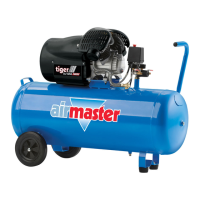
airmaster TIGER 16/1050 Specifications

General IconGeneral
Brandairmaster
ModelTIGER 16/1050
CategoryAir Compressor
LanguageEnglish

Related product manuals