Exterior
6-8 2021 Classic
The mating, green swivel nut and brass nipple also
incorporate new features: the green nylon nut swivels
on a black bushing that is heat-sensitive� Between 240
and 300°F, the bushing will yield (melt) allowing the
spring-loaded module in the valve to push the brass
nipple back (approximately 1/4 in�), closing the module
and stopping the ow of gas from the cylinder. Inside
the brass nipple is a ow-limiting device designed
to sense excessive gas ow. If an excessive ow is
sensed, the ow-limiting device shuts the ow down
to a maximum of 10 SCFH (Standard Cubic Feet per
Hour) or less� This is also referred to as the bypass
ow.
Bypass ow is extremely important in the proper
operation of this connection. The ow-limiting device
may activate if the cylinder valve is opened quickly�
When all appliances are off, the bypass ow allows
the pressure downstream from the ow-limiting device
to equalize. When pressure is equalized, the ow-
limiting device will supply normal ow to the system.
Equalization occurs in approximately 5 seconds and,
in most cases, goes completely unnoticed� If, however,
an appliance is left on or there is a leak or open ow
in the system, the bypass pressure will not be able to
equalize and allow the ow-limiting device to re-open.
Symptoms of this condition would be appliances that
light but have lower than normal ame or starve out
from lack of gas, a substantial reduction in the ame
when another appliance is operating, or pilots that are
difcult to light. If this should happen, the following
steps should eliminate the condition:
1� Close LPG cylinder valve�*
2� Extinguish all ames and smoking materials.
3� Be sure all gas appliances, including their pilot
lights, are off�*
4� Open LPG cylinder valve slowly� Do not snap open�
5� Wait at least 15 seconds before lighting appliances�
6� If operational difculties continue, there may be
a leak in the system� Immediately close the LPG
cylinder valve and have the system inspected by a
qualied RV service technician.
*When reconnecting a full cylinder to an auto
changeover regulator, it is not necessary to shut off the
appliances or close the valve of the cylinder already in
service�
The amount of time a full tank of gas will last is
dependent on usage� In cold weather, when you are
using the furnace, large amounts of hot water, and are
doing extensive cooking, you will naturally use more
than you will in warm weather when you may do limited
cooking� On the average, with normal cooking and
other appliance use, you can probably count on two to
three weeks of service from each tank�
WARNING
Leaking LPG may ignite, causing a re or
explosion, which could result in serious bodily
injury, property damage, and/or death.
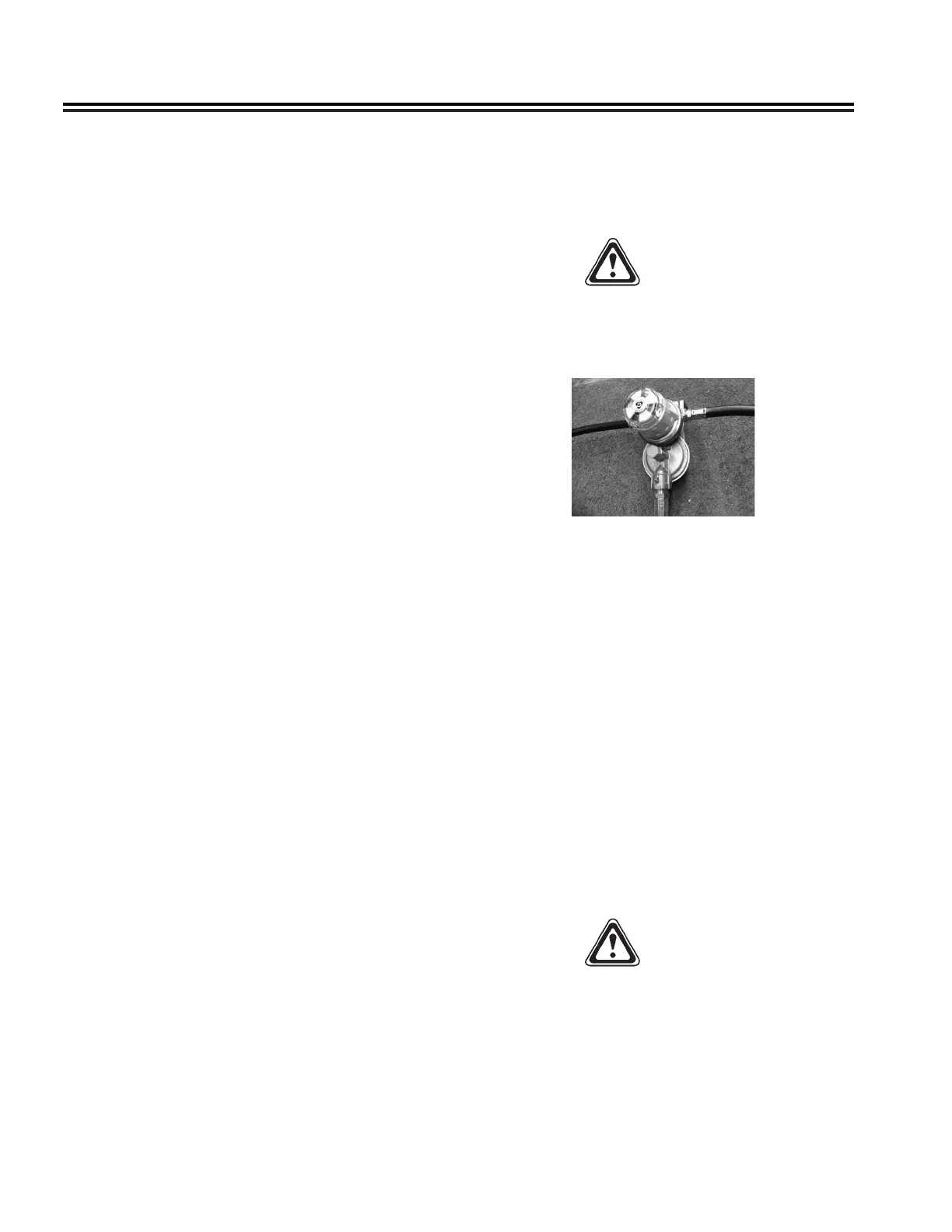
Automatic Gas Regulator
All models are equipped with a two stage automatic
change-over gas regulator that offers the convenience
of automatic changeover from empty to full gas
cylinders� Both tanks are connected to this regulator�
Make sure there is propane in both tanks before you
start� Rotate the white knob on the top-front side of
the regulator toward the cylinder you want to use rst.
This will be the service cylinder and the other will be
the reserve cylinder� Slowly open both cylinder valves�
Open both cylinder valves completely, then close about
1/4-turn� This will allow you to easily check to see if
valves are open or closed� The indicator on top of the
regulator will turn bright green� The indicator will stay
bright green as long as there is fuel coming from the
service cylinder� When the service cylinder empties,
the regulator will automatically draw fuel from the
reserve cylinder, providing an uninterrupted fuel ow
to the system� When it switches over, the indicator will
change from green to red� This red color indicates the
service cylinder is empty and needs to be lled.
WARNING
LPG regulators must always be installed with the
diaphragm vent facing down. Regulators that are
not located in compartments have been equipped
with a protective cover. Make sure the regulator
vent faces down and the cover is kept in place
to minimize vent blockage, which could result in
excessive gas pressure, causing re or explosion.







 To Next Page