507404-02Page 14 of 80 Issue 1448
A95UH2V/95G2UHV exhaust and intake connections
are made of PVC. Use PVC primer and solvent cement
when using PVC vent pipe. When using ABS vent pipe,
use transitional solvent cement to make connections to
the PVC tting in the unit.
IMPORTANT
Use PVC primer and solvent cement or ABS solvent cement
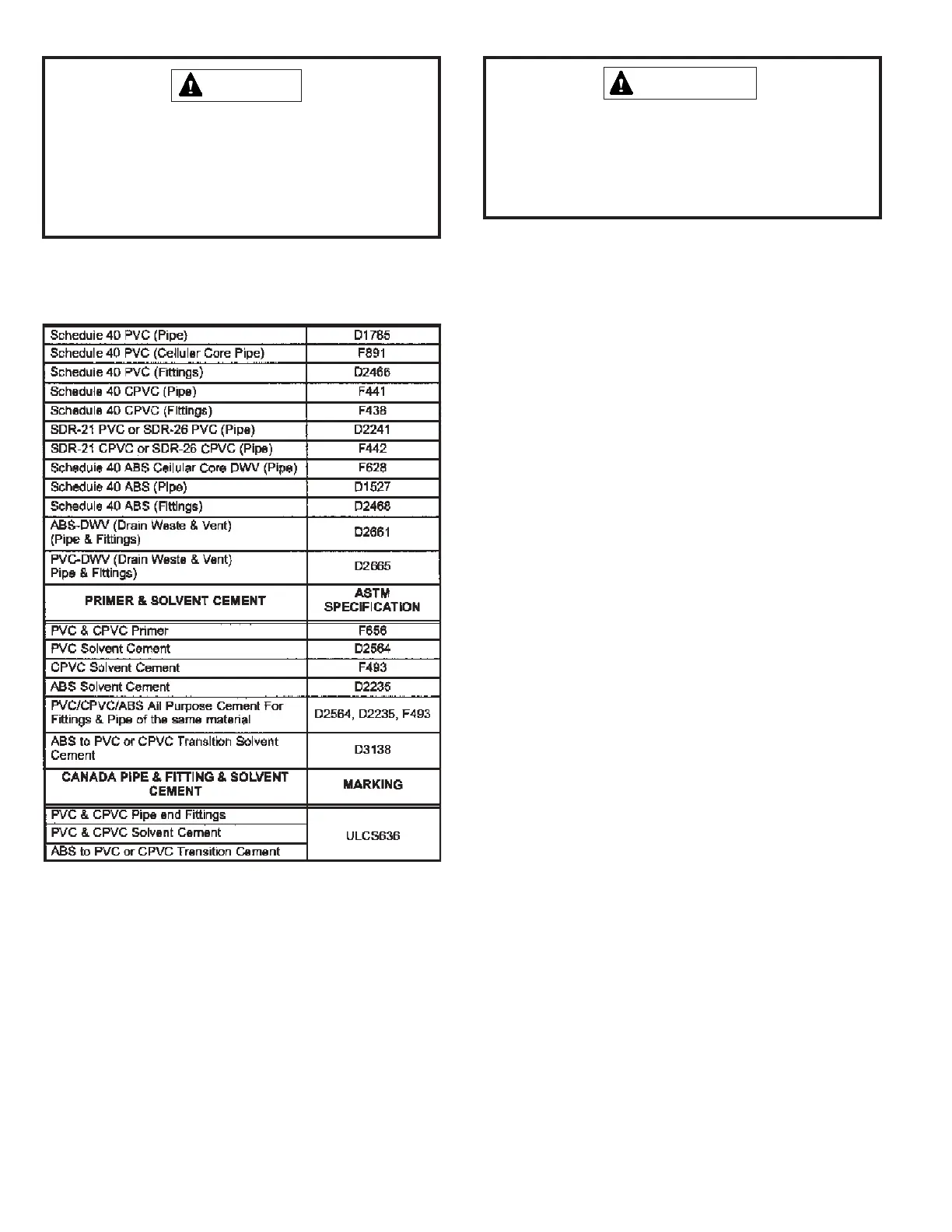
meeting ASTM specications, refer to Table 2. As an
alternate, use all purpose cement, to bond ABS, PVC, or
CPVC pipe when using ttings and pipe made of the same
materials. Use transition solvent cement when bonding ABS
to either PVC or CPVC.
Low temperature solvent cement is recommended during
cooler weather. Metal or plastic strapping may be used for
vent pipe hangers. Uniformly apply a liberal coat of PVC
primer for PVC or use a clean dry cloth for ABS to clean
inside socket surface of tting and male end of pipe to depth
of tting socket.
Canadian Applications Only
Pipe, ttings, primer and solvent cement used to vent
(exhaust) this appliance must be certied to ULC S636 and
supplied by a single manufacturer as part of an approved
vent (exhaust) system. When bonding the vent system to
the furnace, use ULC S636 approved One-Step Transition
Cement to bond the pipe to the ue collar, or to bond the 90°
elbow or reducing 90° elbow to the ue collar. In addition,
the rst three feet of vent pipe from the furnace ue collar
must be accessible for inspection.
Solvent cements for plastic pipe are ammable liquids
and should be kept away from all sources of ignition.
Do not use excessive amounts of solvent cement when
making joints. Good ventilation should be maintained to
reduce re hazard and to minimize breathing of solvent
vapors. Avoid contact of cement with skin and eyes.
CAUTION
PIPING AND FITTINGS SPECIFICATIONS
Table 2


 To Next Page