SVP INSTRUCTION MANUAL Page 15
SHAW-ALMEX INDUSTRIES LIMITED 49909-010
Jun 2017
3. The cooling water can be turned off when the platens have cooled to an acceptable temperature. A typical
cool down temperature is 150F (65C) for a good splice result and safe handling of the belt without the
risk of a burn.
4. The water must be blown out with air before the platens are reheated.
Important: Water remaining in the cooling channels will reduce platen temperature uniformity, increase the
heat-up time and may cause the elements to overheat. Furthermore, if water remains in the platens and the
vulcanizer is stored at temperatures below freezing the platens may be severely damaged.
5.4. Depressurize
1. To de-pressurize the vulcanizer, slowly open the pressure release valve on the pressure control.
2. When the pressure has dropped to zero and the fluid has stopped flowing, the pressure supply can be
disconnected.
Safety: Do not attempt to disassemble the press until the pressure has been completely relieved or injury
could result.
6. MAINTENANCE
Safety: All maintenance must be done with the vulcanizer disconnected from the power supply and no
pressure in the bag.
There are no special tools required to maintain this equipment.
6.1. Routine Maintenance
The following items should be checked after every thirty cures.
1. Visually inspect the traverse bars, tie bolts and pins for signs of cracking or deformation. Some dry
lubricant can be applied to the bolt threads.
2. The threads on pressure bolts should be inspected using die penetrant after each 200 cycles.
3. Inspect the bolt retaining lugs at the ends of the bars to ensure that there are no cracks. Remove the bars
from service if there are cracks and contact Shaw-Almex.
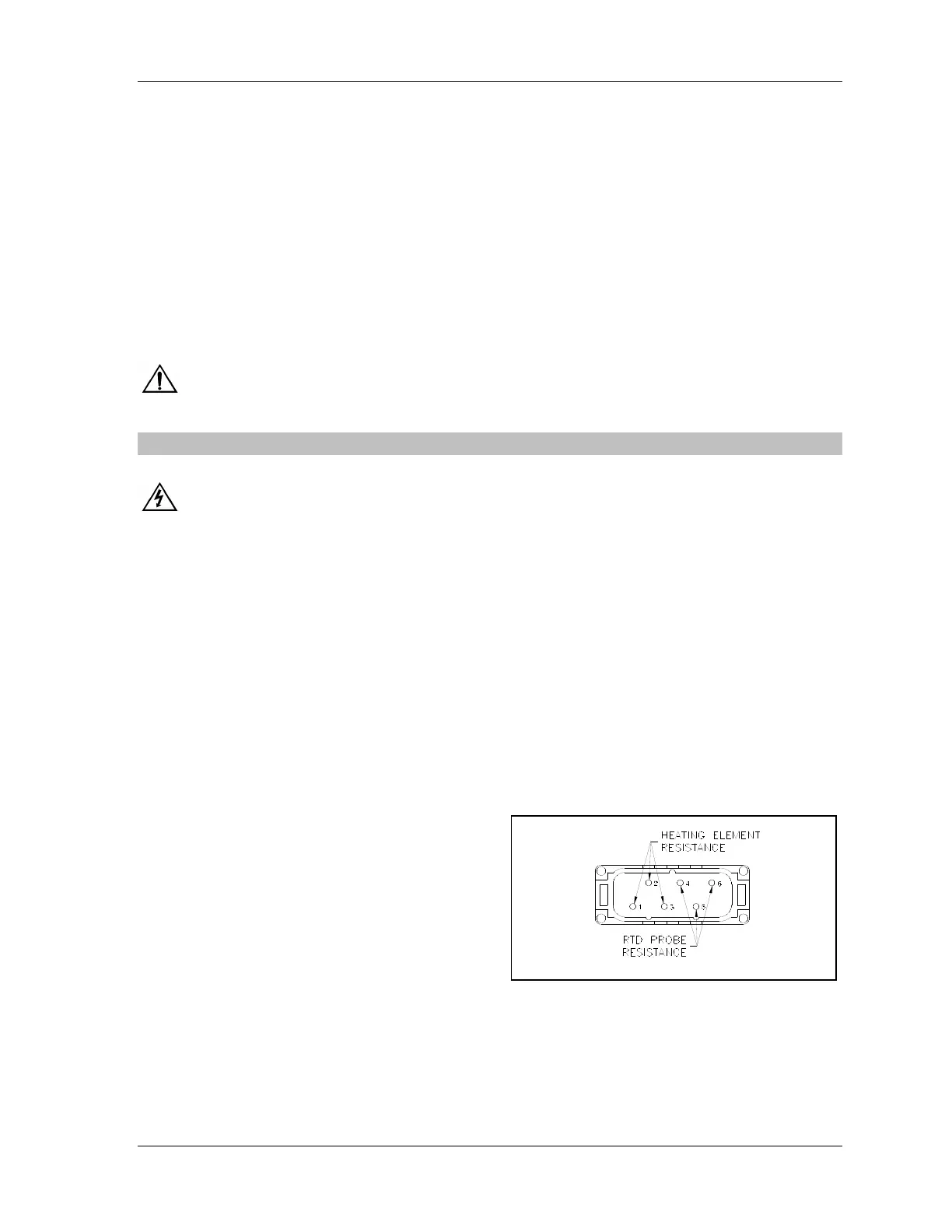
4. Check the continuity of the platen heating elements. Refer to “Record of Purchase” for the resistance
(ohms) values. Use the figures from the “Ohms Reading Coils Connected” column. This is the resistance
between pins 1-2, 2-3 and 1-3 on the platen connector.
5. Check the continuity of the platen temperature
sensor. See 7.1 Platens Not Heating item 3
6. Inspect the platen pressure bag, hoses and
connectors for damage due to abrasion, cuts or any
type of damage that might cause a leak or
breakdown while under pressure.
7. Inspect all cables for cuts, abrasion and wear and all
“strain relief” fittings between cable and plugs for a
secure fit. If any cable, hose, fitting or pressure bag
shows signs of damage they should be repaired or
replaced.
8. Inspect the platen cooling for leaks and/or blockages that will affect their performance.
9. The platen insulation should be inspected for damage and for compression. Compression of the insulation
will cause the platen assembly screws to protrude above the insulation. If the screws cannot be tightened,
the insulation should be replaced.
Tip: Assembly bolt threads on Almex vulcanizers are coated with an anti seize compound to facilitate removal
and replacement of components in service. This compound will be worn off when assembly bolts are removed



 To Next Page