85
WARNING:
VERIFY
THAT
YOUR
BREAKAWAY
SYSTEM
FUNCTIONS
PROPERLY
BEFORE
EACH
TRIP.
WARNING:
NEVER
CRAWL
UNDER
YOUR
TRAILER
UNLESS
IT
IS
RESTING
ON
PROPERLY
PLACED
JACK
STANDS.
Loading
When you tow a trailer, you are subject to new and different challenges on the highway than you
may never have previously encountered. Towing a trailer is no small responsibility and should be
undertaken with great care with an eye toward safety first. An accident with a tow vehicle and
trailer can have much greater consequences than with a small car. Like an airline pilot who is
responsible for expensive equipment and many lives, you should take your responsibilities as a
tow vehicle driver very seriously and learn all you can about doing the job safely and well.
Balancing the load and preparing the trailer and tow vehicle are critical to safe handling.
One of the most critical aspects of safely operating a trailer is knowing the weights involved and
where they are placed. The first thing to determine is how much is being towed and confirming
that it is within the capacities of the equipment being used. Determining where that load is placed
is critical to the way your rig will handle on the road.
Do not try to guess what your trailer weighs loaded. Load your trailer including water, propane,
etc. and take it to a public scale. Weigh you travel trailer (see Specifications). Refer to your axle
weight and tire limits to see if you’re within a safe range. If you are not overloaded make sure
your load is balanced. Do not load too much on one side. A balanced load is much easier to tow.
Also, front to back balance is also important. Step back and look at your trailer. Make sure that
there is not too much weight on the hitch or on the rear of the trailer. Be sure to secure all items.
Loose items can cause damage and be a safety issue if not properly secured.
The Cargo Carrying Capacity tag is installed on every trailer (photo M-2).
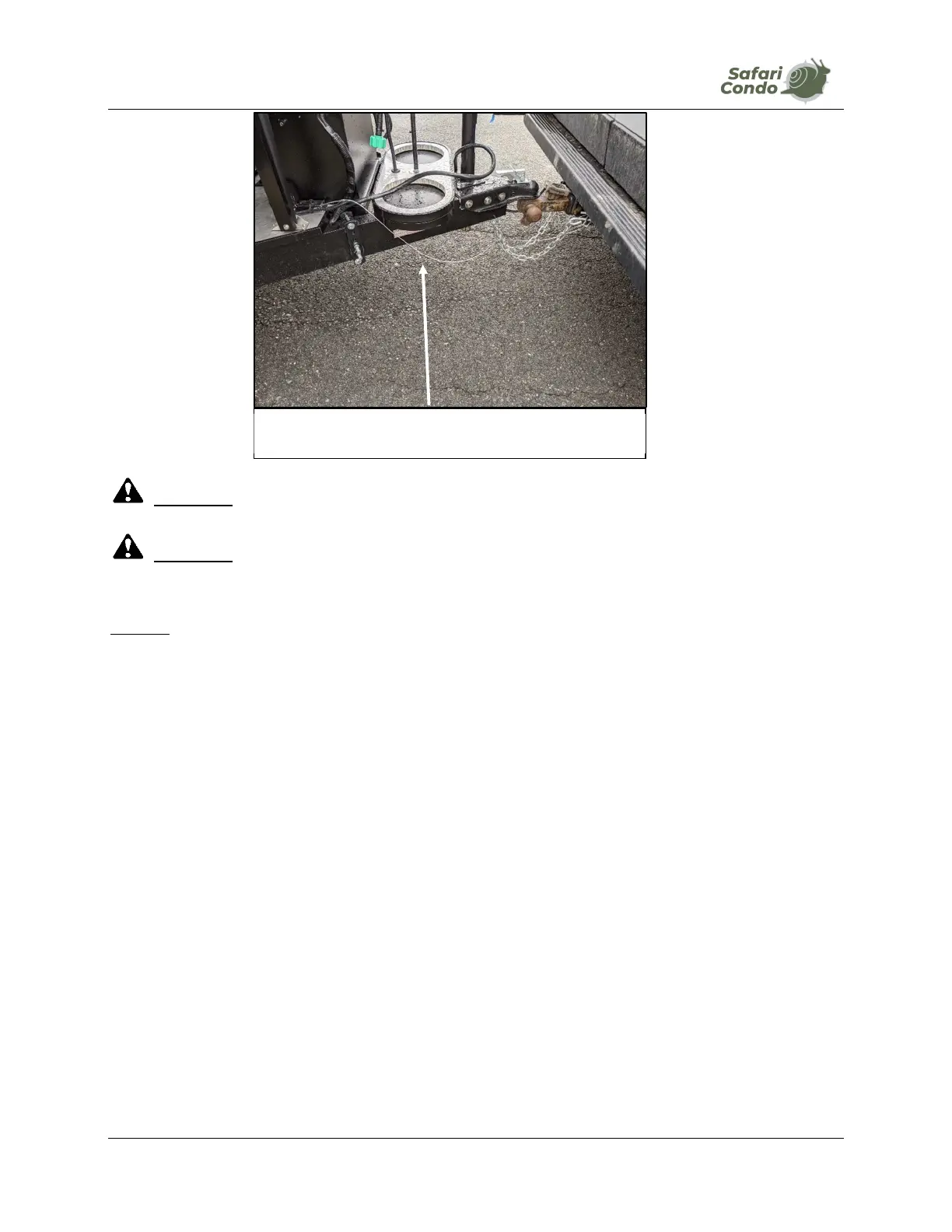
PHOTO M-1
Breakaway switch cable loop



 To Next Page