EasyManua.ls Logo

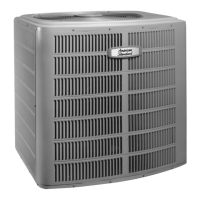
American Standard 2A7A8030 - User Manual

American Standard 2A7A8030
8 pages
Print Icon
To Next Page IconTo Next Page
Loading...
© 2006 American Standard Inc. All Rights Reserved
Since the manufacturer has a policy of continuous product
and product data improvement, it reserves the right to
change design and specifications without notice.
11-AC14D1-3
These instructions do not cover all variations in systems
nor provide for every possible contingency to be met in
connection with installation. All phases of this installa-
tion must comply with NATIONAL, STATE AND LOCAL
CODES. Should further information be desired or should par-
ticular problems arise which are not covered sufficiently for the
purchaser’s purposes, the matter should be referred to your
installing dealer or local distributor.
A. GENERAL
WARNING:
This information is intended
for use by individuals possessing adequate backgrounds
of electrical and mechanical experience. Any attempt to
repair a central air conditioning product may result in
personal injury and or property damage. The manufac-
turer or seller cannot be responsible for the interpreta-
tion of this information, nor can it assume any liability in
connection with its use.
NOTE: AMERICAN STANDARD HAS ALWAYS RECOM-
MENDED INSTALLING AMERICAN STANDARD AP-
PROVED MATCHED INDOOR AND OUTDOOR SYSTEMS.
THE BENEFITS OF INSTALLING APPROVED MATCHED
SYSTEMS ARE MAXIMUM EFFICIENCY, OPTIMUM PER-
FORMANCE AND BEST OVERALL SYSTEM RELIABILITY.
Check for transportation damage after unit is uncrated. Report
promptly, to the carrier, any damage found to the unit.
To determine the electrical power requirements of the unit,
refer to the nameplate of the unit. The electrical power available
must agree with that listed on the nameplate.
B. LOCATION AND PREPARATION OF THE UNIT
1. When removing unit from the pallet, notice the tabs on the
basepan. Remove tabs by cutting with a sharp tool as shown in
Figure 2 (see page 2).
2. The unit should be set on a level support pad at least as large
as the unit base pan, such as a concrete slab. If this is not the
application used please reference ALG-APG0*-EN (*latest revi-
sion number).
3. The support pad must NOT be in direct contact with any
structure. Unit must be positioned a minimum of 12" from any
wall or surrounding shrubbery to insure adequate airflow.
Clearance must be provided in front of control box (access
panels) & any other side requiring service access to meet
National Electrical Code. Also, the unit location must be far
enough away from any structure to prevent excess roof run-off
water from pouring directly on the unit. When choosing the
location of the unit(s), sound transmission through air and
refrigerant lineset should be taken into consideration. It is
recommended to locate unit(s) away from areas (bedrooms, etc.)
where such sound could be objectionable.
4. The top discharge area must be unrestricted for at least
five (5) feet above the unit.
5. When the outdoor unit is mounted on a roof, be sure the roof
will support the unit’s weight. Properly selected isolation is
recommended to prevent transmission to the building structure.
6. The maximum length of refrigerant lines from outdoor to
indoor unit should NOT exceed sixty (60) feet.
7. If outdoor unit is mounted above the air handler, maximum
lift should not exceed twenty-five (25) feet (suction line). If air
handler is mounted above condensing unit, maximum lift should
not exceed twenty-five (25) feet (liquid line).
8. Locate and install indoor coil or air handler in accordance
with instruction included with that unit.
NOTE: Refer to “Refrigerant Piping Software” Pub.
No. 32-3312-0*, and “Refrigerant Piping Manual”
Pub. No. 32-3009-0* (the position of the * denotes latest
revision number).
C. INSTALLING REFRIGERANT LINES
CAUTION:
If using existing refrigerant lines
make certain that all joints are brazed, not soldered.
Condensing units have provisions for braze connections.
Pressure taps are provided on the service valves of outdoor unit
for compressor suction and liquid pressures.
The indoor end of the recommended refrigerant line sets may be
straight or with a 90 degree bend, depending upon situation
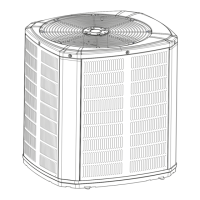
Condensing Units
INSTALLER'S GUIDE
ALL phases of this installation must comply with NATIONAL, STATE AND LOCAL CODES
5 FT. ABOVE UNIT —
UNRESTRICTED
1
Models:
2A7A8030, 036, 048, & 060C1000A
IMPORTANT — This Document is customer property and is to remain with this unit. Please return to service information pack
upon completion of work.
Question and Answer IconNeed help?

Do you have a question about the American Standard 2A7A8030 and is the answer not in the manual?

Summary

GENERAL INSTALLATION INFORMATION

GENERAL WARNING

Warning about the intended use of this information and potential risks.

APPROVED MATCHED SYSTEMS

Benefits of installing matched indoor and outdoor systems for efficiency and reliability.

ELECTRICAL POWER REQUIREMENTS

Verify electrical power availability matches the unit's nameplate.

UNIT LOCATION AND PREPARATION

BASEPAN TAB REMOVAL

Procedure for removing basepan tabs by cutting.

SUPPORT PAD REQUIREMENTS

Unit must be set on a level pad, at least as large as the base pan.

UNIT CLEARANCES AND AIRFLOW

Maintain minimum 12" clearance from walls/shrubbery for adequate airflow.

TOP DISCHARGE CLEARANCE

Top discharge area must be unobstructed for at least five (5) feet above the unit.

ROOF MOUNTING CONSIDERATIONS

Ensure roof supports unit weight and use isolation for vibration.

REFRIGERANT LINE LENGTH LIMIT

Maximum length of refrigerant lines from outdoor to indoor unit should not exceed sixty (60) feet.

REFRIGERANT LINE LIFT LIMITS

Limits for refrigerant line lift (suction and liquid) based on unit orientation.

INSTALLING REFRIGERANT LINES

REUSING REFRIGERANT LINES

Caution to ensure all joints are brazed, not soldered, when reusing lines.

TUBING ROUTING AND SECURING

Route tubing, make required bends, and secure lines to prevent vibration noise.

LINE CONTACT PRECAUTION

Avoid direct contact between uninsulated liquid and gas lines.

BRAZING HEAT DAMAGE PRECAUTIONS

Take precautions to avoid heat damage to valve cores and basepan during brazing.

NITROGEN PURGE DURING BRAZING

Use dry nitrogen purge during brazing for proper connections.

SERVICE VALVE AND REFRIGERANT HANDLING

LIQUID AND GAS LINE SERVICE VALVES

Description of factory-shipped service valves and pressure tap port function.

SERVICE VALVE OPERATION WARNING

Warning about extreme caution when opening service valves.

LEAK CHECK

Pressurize lines with dry nitrogen and use soap bubbles to check for leaks.

SYSTEM EVACUATION

Evacuate refrigerant lines and indoor coil before opening service valves.

EVACUATION DEPTH

Evacuate the system until the micron gauge reads no higher than 350 microns.

REFRIGERANT CHARGING AND LINE SETS

LIQUID AND GAS LINE VALVE OPERATION

Detailed steps for opening liquid and gas line service valves.

REFRIGERANT CHARGE ADJUSTMENT

Adjust refrigerant charge if line sets differ from recommendations.

ELECTRICAL CONNECTIONS

Guidelines for power wiring, grounding, and disconnect switch installation.

LOW VOLTAGE WIRING SPECIFICATIONS

Table defining maximum low voltage wiring lengths based on wire size.

OPERATIONAL PROCEDURES AND TROUBLESHOOTING

COMPRESSOR START-UP PROCEDURE

Procedure to prevent compressor overload trip at initial start-up.

OPERATIONAL AND CHECKOUT PROCEDURES

Perform operational checks and charge adjustments as per instructions.

SEACOAST SALT SHIELD

Information on the availability of a seacoast kit for corrosive environments.

TROUBLESHOOTING CHART

Chart to diagnose system faults and identify primary and secondary causes.

FIELD WIRING DIAGRAM

Diagram showing wiring connections between indoor and outdoor units.

CHARGE ASSIST SYSTEM

CHARGE ASSIST MODE SELECTION

Setting dip switches for line length and lift before entering Charge Assist mode.

CHARGE ASSIST OPERATION

How the system indicates low charge, correct charge, or high charge.

AUTOMATIC REFRIGERANT CONTROL

Feature that automatically controls refrigerant flow using a charging solenoid.

SUBCOOLING CHARGING METHOD

SUBCOOLING CHARGING TABLE

Table for R-22 subcooling values based on liquid temperature and pressure.

SUBCOOL CHARGING TABLE CORRECTIONS

Corrections for subcooling charging based on line length and lift.

OUTLINE DIMENSIONS AND MOUNTING

UNIT DIMENSIONS

Table showing dimensions (A-K) for various condensing unit models.

MOUNTING HOLE LOCATION

Diagram indicating the location and pattern for mounting holes.

FINAL SYSTEM CHECKOUT

CHECKOUT PROCEDURE LIST

Checklist for ensuring the entire system is properly installed and functioning.

INDOOR COIL DRAINAGE TEST

Test the indoor coil drain line by pouring water into the drain pan.

Summary

GENERAL INSTALLATION INFORMATION

GENERAL WARNING

Warning about the intended use of this information and potential risks.

APPROVED MATCHED SYSTEMS

Benefits of installing matched indoor and outdoor systems for efficiency and reliability.

ELECTRICAL POWER REQUIREMENTS

Verify electrical power availability matches the unit's nameplate.

UNIT LOCATION AND PREPARATION

BASEPAN TAB REMOVAL

Procedure for removing basepan tabs by cutting.

SUPPORT PAD REQUIREMENTS

Unit must be set on a level pad, at least as large as the base pan.

UNIT CLEARANCES AND AIRFLOW

Maintain minimum 12" clearance from walls/shrubbery for adequate airflow.

TOP DISCHARGE CLEARANCE

Top discharge area must be unobstructed for at least five (5) feet above the unit.

ROOF MOUNTING CONSIDERATIONS

Ensure roof supports unit weight and use isolation for vibration.

REFRIGERANT LINE LENGTH LIMIT

Maximum length of refrigerant lines from outdoor to indoor unit should not exceed sixty (60) feet.

REFRIGERANT LINE LIFT LIMITS

Limits for refrigerant line lift (suction and liquid) based on unit orientation.

INSTALLING REFRIGERANT LINES

REUSING REFRIGERANT LINES

Caution to ensure all joints are brazed, not soldered, when reusing lines.

TUBING ROUTING AND SECURING

Route tubing, make required bends, and secure lines to prevent vibration noise.

LINE CONTACT PRECAUTION

Avoid direct contact between uninsulated liquid and gas lines.

BRAZING HEAT DAMAGE PRECAUTIONS

Take precautions to avoid heat damage to valve cores and basepan during brazing.

NITROGEN PURGE DURING BRAZING

Use dry nitrogen purge during brazing for proper connections.

SERVICE VALVE AND REFRIGERANT HANDLING

LIQUID AND GAS LINE SERVICE VALVES

Description of factory-shipped service valves and pressure tap port function.

SERVICE VALVE OPERATION WARNING

Warning about extreme caution when opening service valves.

LEAK CHECK

Pressurize lines with dry nitrogen and use soap bubbles to check for leaks.

SYSTEM EVACUATION

Evacuate refrigerant lines and indoor coil before opening service valves.

EVACUATION DEPTH

Evacuate the system until the micron gauge reads no higher than 350 microns.

REFRIGERANT CHARGING AND LINE SETS

LIQUID AND GAS LINE VALVE OPERATION

Detailed steps for opening liquid and gas line service valves.

REFRIGERANT CHARGE ADJUSTMENT

Adjust refrigerant charge if line sets differ from recommendations.

ELECTRICAL CONNECTIONS

Guidelines for power wiring, grounding, and disconnect switch installation.

LOW VOLTAGE WIRING SPECIFICATIONS

Table defining maximum low voltage wiring lengths based on wire size.

OPERATIONAL PROCEDURES AND TROUBLESHOOTING

COMPRESSOR START-UP PROCEDURE

Procedure to prevent compressor overload trip at initial start-up.

OPERATIONAL AND CHECKOUT PROCEDURES

Perform operational checks and charge adjustments as per instructions.

SEACOAST SALT SHIELD

Information on the availability of a seacoast kit for corrosive environments.

TROUBLESHOOTING CHART

Chart to diagnose system faults and identify primary and secondary causes.

FIELD WIRING DIAGRAM

Diagram showing wiring connections between indoor and outdoor units.

CHARGE ASSIST SYSTEM

CHARGE ASSIST MODE SELECTION

Setting dip switches for line length and lift before entering Charge Assist mode.

CHARGE ASSIST OPERATION

How the system indicates low charge, correct charge, or high charge.

AUTOMATIC REFRIGERANT CONTROL

Feature that automatically controls refrigerant flow using a charging solenoid.

SUBCOOLING CHARGING METHOD

SUBCOOLING CHARGING TABLE

Table for R-22 subcooling values based on liquid temperature and pressure.

SUBCOOL CHARGING TABLE CORRECTIONS

Corrections for subcooling charging based on line length and lift.

OUTLINE DIMENSIONS AND MOUNTING

UNIT DIMENSIONS

Table showing dimensions (A-K) for various condensing unit models.

MOUNTING HOLE LOCATION

Diagram indicating the location and pattern for mounting holes.

FINAL SYSTEM CHECKOUT

CHECKOUT PROCEDURE LIST

Checklist for ensuring the entire system is properly installed and functioning.

INDOOR COIL DRAINAGE TEST

Test the indoor coil drain line by pouring water into the drain pan.

American Standard 2A7A8030 Specifications

General IconGeneral
BrandAmerican Standard
Model2A7A8030
CategoryAir Conditioner
LanguageEnglish

Related product manuals