EasyManua.ls Logo

ANDELI TIG Series - User Manual

ANDELI TIG Series
28 pages
Print Icon
To Next Page IconTo Next Page
Loading...
TIG WELDER
TIG-250GC/GLC/MGC/MPLC
INSTRUCTION MANUAL
Question and Answer IconNeed help?

Do you have a question about the ANDELI TIG Series and is the answer not in the manual?

Summary

Use and Characteristic

Safety Precautions

General Safety Precautions

General safety guidelines for welder operation and installation.

Welding Hazards

Precautions against welding fumes, arc, splash, slag, fire, and explosion risks.

Mechanical and Gas Safety

Safety measures for moving parts, gas cylinders, and machine movement.

Installation

Operation and Controls - TIG-250 GC

Front Panel and Functions

Overview of the TIG-250GC front panel, function selectors, and parameter adjustment.

Operation and Controls - TIG-250 MGC

Operation and Controls - TIG-250 MPLC

Front Panel Overview

Overview of the TIG-250MPLC panel, controls, and basic functions.

Indicators and Parameters

Explanation of TIG-250MPLC indicator lights, parameter settings, save function, and built-in parameters.

Installation and Debugging

Installation and Debugging Steps

Step-by-step guide for installing and debugging the welding machine.

MMA Welding

TIG Welding

Cold Welding

Cleaning Function

Welding Machine Precautions and Maintenance

Safety Points

Key safety considerations including ventilation, overload, and voltage.

Maintenance Procedures

Instructions for performing maintenance, including cleaning and checking connections.

Safety and Maintenance Details

Prohibited Uses and Grounding

Warnings against thawing pipes, importance of grounding, and behavior during protection state.

Before Maintenance Warnings

Overview

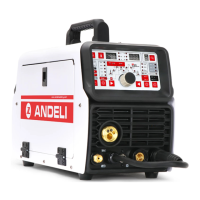
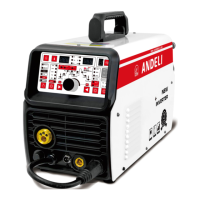
This document serves as an instruction manual for the TIG WELDER, specifically covering models TIG-250GC/GLC/MGC/MPLC. It emphasizes the importance of reading and understanding the manual for safe operation.

The TIG WELDER, part of the WS series inverter DC argon arc welding machines, is a versatile device that integrates manual welding, ordinary argon arc welding, cold welding, and cleaning functions. This allows it to be used for welding various materials including carbon steel, stainless steel, copper, and titanium. The welding machines in this series are designed with ideal performance, static and external characteristics, and comprehensive control functions.

Key usage features of the TIG WELDER include:

  • High-Efficiency Conversion: It utilizes IGBT high-frequency soft switching conversion, contributing to high efficiency, a compact size, and light weight.
  • Advanced Control: An advanced control scheme significantly enhances the welding machine's performance, meeting a broader range of welding process requirements.
  • Multi-Purpose Functionality: The machine supports manual welding, ordinary argon arc welding, cold welding, and cleaning, making it a versatile tool.
  • Cold Welding Capability: Cold welding is particularly suitable for spot welding thin plates, with the added benefit of preventing workpiece discoloration.
  • Cleaning Function: It includes a cleaning function to remove discoloration from the workpiece after ordinary argon arc welding.
  • Welding Quality: The TIG WELDER offers easy arc starting, stable arc performance, and high welding quality. For manual arc welding, it produces minimal spatter, maintains stable current, ensures high reliability, and results in good weld formation.
  • Digital Adjustment: The device features digital panel adjustment, providing complete functions and multi-parameter adjustment capabilities.

The manual outlines specific installation requirements and operational instructions for different welding modes. For MMA welding, the welding cable is connected to the machine, and the input cable to the distribution cabinet. For Hot/Cold TIG welding, the earth cable connects to the positive pole, the TIG torch to the negative pole, and the hose to the machine and gas bottle. Clean welding follows a similar setup for earth and TIG torch connections.

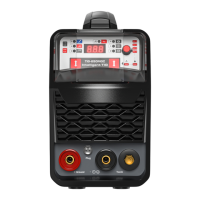
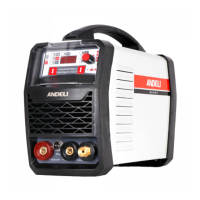
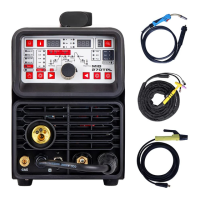
The operational panel for the TIG-250GC model includes a function selector (left first) to switch between Clean and TIG functions, with a long press entering interval mode. A second function selector (right first) switches between current and gas time delay, and a long press saves settings. A parameter adjustment button allows users to modify values, with a long press enabling rough adjustment. A digital tube displays parameter values. Indicator lights show the welding function (Clean, TIG, TIG Interval) and parameter status (Current, Gas delay, Storage). The machine also has built-in parameters for TIG welding and TIG interval welding modes, covering different workpiece thicknesses and welding types (spot or continuous).

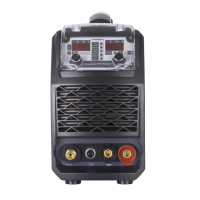
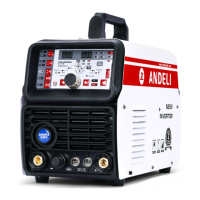
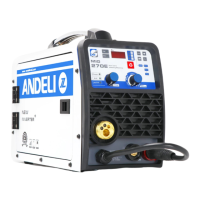
The TIG-250MGC model's panel is similar, with the function selector switching between Clean, TIG, and electrowelding. In MMA mode, a light touch of the knob selects electrode diameter (1.6/2.0/2.5/3.2) and adjusts current. The TIG-250MPLC model adds MMA, COLD, and CLEAN functions to its function selector. The parameter selection key for this model also includes cold welding time and interval time.

Safety precautions are a significant part of the manual, emphasizing the importance of preventing electrical shock, burns, fume inhalation, and arc damage. Users are advised to ensure proper grounding, use protective equipment, and maintain good ventilation. The manual also warns against fire, explosion, and injury from moving parts or falling gas cylinders.

Maintenance features are detailed to ensure the longevity and safe operation of the TIG WELDER:

  • Overheat and Overcurrent Protection: The machine is equipped with circuits to protect against overcurrent and overheating. If the internal temperature or output current exceeds set standards, the machine will automatically stop. Overheat protection allows the machine to return to normal after cooling without load, while overcurrent protection may indicate internal damage requiring careful handling.
  • Ventilation: Good ventilation is crucial. The fan effectively cools the welder, and users must ensure the ventilation area is not covered or blocked, maintaining a distance of at least 0.3 meters from surrounding objects.
  • Load Duration: Users must adhere to the allowable load duration specified in the welder's nameplate parameters to prevent current overload, which can shorten the welder's life or cause damage.
  • Voltage Control: The power supply voltage should remain within the allowable range. While the machine has an automatic voltage compensation circuit, excessive voltage can damage the welder.
  • Thawing Pipes: The welding machine must not be used for thawing pipes.
  • Grounding: Each machine has a ground screw for reliable grounding with a cable greater than 2.5mm² to prevent static electricity or electrical leakage accidents.
  • Protection State: If the machine enters a protection state due to exceeding standard load duration or high temperature, the yellow indicator light on the front panel will illuminate. The cooling fan will continue to operate, and welding can resume once the temperature drops and the indicator light turns off.
  • Regular Dedusting: Regular cleaning with dry, compressed air is recommended, especially in smoky or polluted environments, to prevent dust accumulation. The compressed air pressure should be appropriate to avoid damaging internal components.
  • Contact Area Check: Internal contact areas, especially plug-in joints, should be checked for tight connections. Any rust or oxidation should be removed with sandpaper before reconnecting.
  • Moisture Prevention: Water and moisture penetration should be avoided. If it occurs, the welder should be dried, and a megger insulation test performed before resuming operation.
  • Storage: For long-term storage, the welder should be sealed in its original packaging and kept in a dry condition.
  • Professional Maintenance: The manual strongly advises against blind experiments and imprudent overhauls, as these can exacerbate failures and create dangers from exposed live parts, potentially leading to electric shocks or death. During the warranty period, unauthorized maintenance will void free repair services.

ANDELI TIG Series Specifications

General IconGeneral
Frequency50/60 Hz
Output Current Range10-200 A
Duty Cycle60%
Efficiency85%
Power Factor0.93
Insulation ClassF
Protection ClassIP21S
Welding MethodTIG
Cooling MethodFan Cooling

Related product manuals