50
ATV0049D
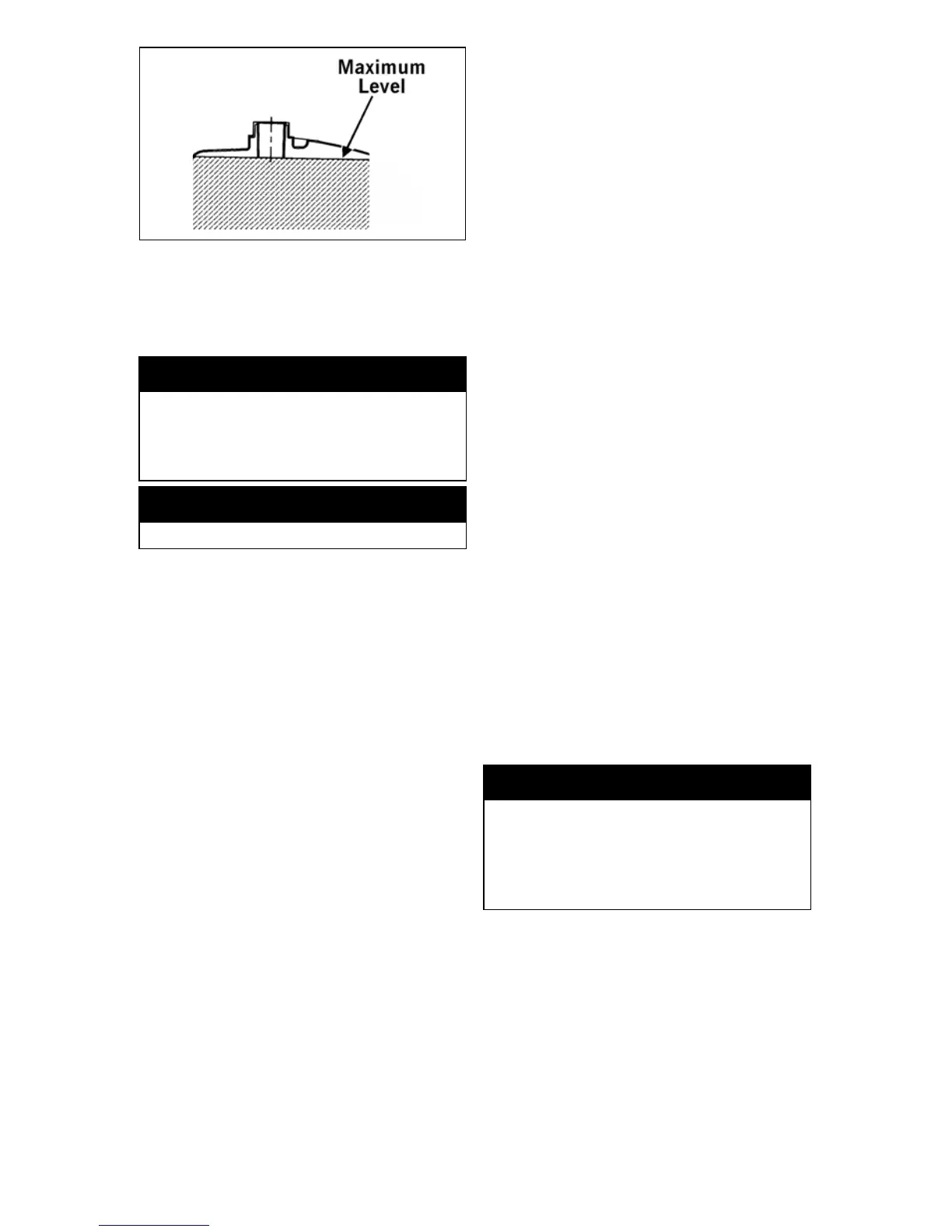
Allow the engine to cool before filling the
gas tank. Care must be taken not to over-
fill the tank. If overfilled, gas may leak
onto the engine creating a fire hazard.
Tighten the gas tank cap securely after
filling the tank.
Engine Break-In
After the completion of the break-in
period, the engine oil and oil filter should
be changed. Other maintenance after
break-in should include checking of all
prescribed adjustments and tightening of
all fasteners. At the discretion and
expense of the owner/operator, the ATV
may be taken to an authorized Arctic Cat
ATV dealer for this initial service.
New ATV’s and renewed ATV engines
require a “break-in” period. The first
month is most critical to the life of this
ATV. Proper operation during this break-
in period will help assure maximum life
and performance from the ATV.
During the first 10 hours of operation,
always use less than ½ throttle. Varying
the engine RPM during the break-in
period allows the components to “load”
(aiding the engine/transmission compo-
nent mating process) and then “unload”
(allowing components to cool). Although
it is essential to place some stress on the
engine components during break-in, care
should be taken not to overload the
engine too often. Do not pull a trailer
during the break-in period.
When the engine starts, allow it to warm
up properly. Idle the engine several min-
utes until the engine has reached normal
operating temperature. Do not idle the
engine for excessively long periods of
time.
Burnishing Brake Pads
Brake pads must be burnished to achieve
full braking effectiveness. Braking dis-
tance will be extended until brake pads
are properly burnished.
To properly burnish the brakes, use fol-
lowing procedure:
1. Choose an area sufficiently large to
safely accelerate ATV to 30 mph and
to brake to a stop.
2. Accelerate to 30 mph; then com-
press brake lever to decelerate to 0-5
mph.
3. Repeat procedure twenty times.
! WARNING
Do not over-flow gasoline when fill-
ing the gas tank. A fire hazard could
materialize. Always allow the engine
to cool before filling the gas tank.
! WARNING
Do not overfill the gas tank.
! WARNING
Do not attempt sudden stops or put
yourself into a situation where a
sudden stop will be required until
the brake pads are properly bur-
nished.


 To Next Page