ARITERM SWEDEN AB Installation, Operation & Maintenance - 2009.02.18- 7/32
e boiler shall be positioned and installed according to the building rules in force.
Before installing the boiler, the chimney must be controlled for underpressure and
possible risk of condensation. It is possible that an air draught compensator has to be
installed. Inner pipe is recommended for minimizing the risk of condensation.
Space needed for installation: Minimum clearance in front of the boiler (burner inclu-
ded) is 1000 mm. Clearence on the top and at least by the other side of the boiler shall
be at least 0,5 m. e boiler must be level. If the oor is uneven, adjustments can be
made with the help of four adjusting bolts (enclosed with the boiler) that shall be t-
ted to the bottom plate of the boiler. e air intake duct to the boiler room must have
at least the same area as the ues.
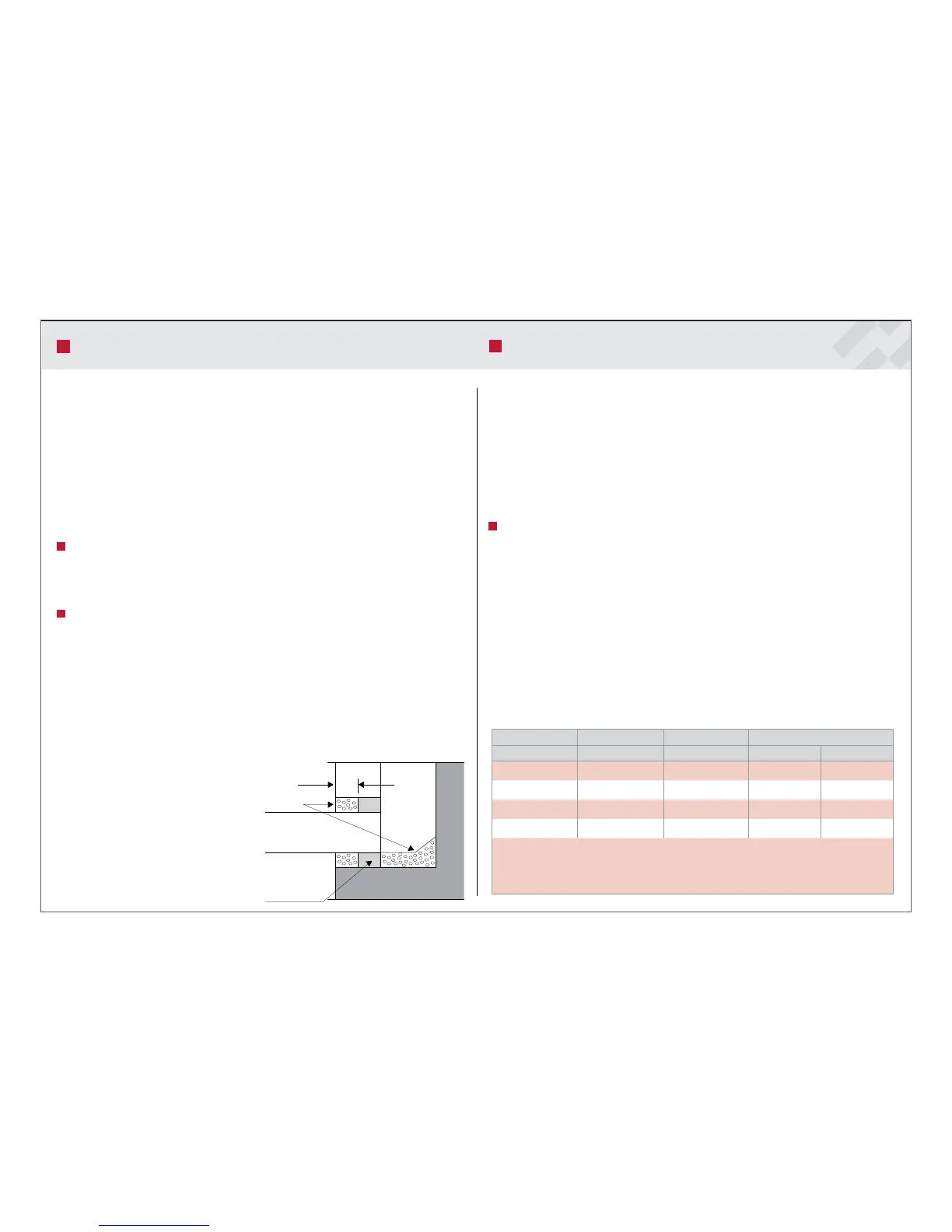
Chimney installation
To embed the angular tube in the chimney, proceed according to the drawing below.
If the tube is embedded as described, you will be able to avoid soot leakage when the
chimney is being swept.
Flue connection and combustion air intake
e combination ue of the boiler allows for connection towards the top as well as to
the rear. Boiler cement is suitable for sealing. Recommended ue gas requirements for
Biomatic+ 20/30: brick chimney lined with a Ø 100 mm (130 mm for 30) acid proof
thin-walled tube or an acid proof Ø 100 mm:s (130 mm for 30) element chimney.
Recommended underpressure for Biomatic+ 20 is 20 Pa (25 Pa for 30). e height of
the gas ue shall be dimensioned according to the building’s requirements, but should
be at least 5 m for Biomatic+ 20 (6 m for Biomatic+ 30). If condensation water comes
out of the ue, a condensate drain pan shall be installed in the lower portion of the
chimney. e combustion air intake must not be covered.
ATTENTION! The chimneysweep must
be notied for inspection of the ue.
CAUTION! The boiler has low ue
gas temperatures, which, under certain
conditions,might lead to condensation of
ue gases.
INSTALLATION
Water piping shall be carried out in accordance with current local and national hot
water and building regulations. Safety equipment shall be installed in accordance with
regulations in force.
If a closed expansion vessel is used, an approved safety valve, a pressure gauge, and a
vent valve shall be tted. e safety valve shall be tted just above, but not directly on,
the boiler in such a manner that the connection with the boiler cannot be closed o.
e connecting line from the boiler to the safety valve must rise continuously. Before the
boiler is lled with water, the enclosed drain tap shall be tted.
Radiator system and expansion vessel
When you ll the system, all valves must be open and the external circulation pump
turned o. Bleed the system carefully while lling. When the installation has been in
service for a few days, it shall be bled and relled once again.
ATTENTION! See also separate instructions for lling of water.
e volume of the expansion vessel is determined as follows:
Open system:
5% of the water volume in the heating system.
Closed system:
Select the volume of the vessel in accordance with the manufacturer’s instructions.
In the following table, you will nd examples of suitable closed system expansion
vessels.
WATER PIPING
System volyme Opening pressure Initial pressure Vessel volyme in litre
litre* bar bar 70˚C 90˚C
500 1,5 0,5 35 80
1000 1,5 0,5 80 140
1500 1,5 0,5 80 140
2000 1,5 0,5 140 200
An open system with 500 litre water volume demands at least a 35 litre expansion vessel and a 1500
litre system volume a 80 litre expansion vessel.
* System volume = boiler volume + storage tanks + piping volume + radiator volume.



 To Next Page