19
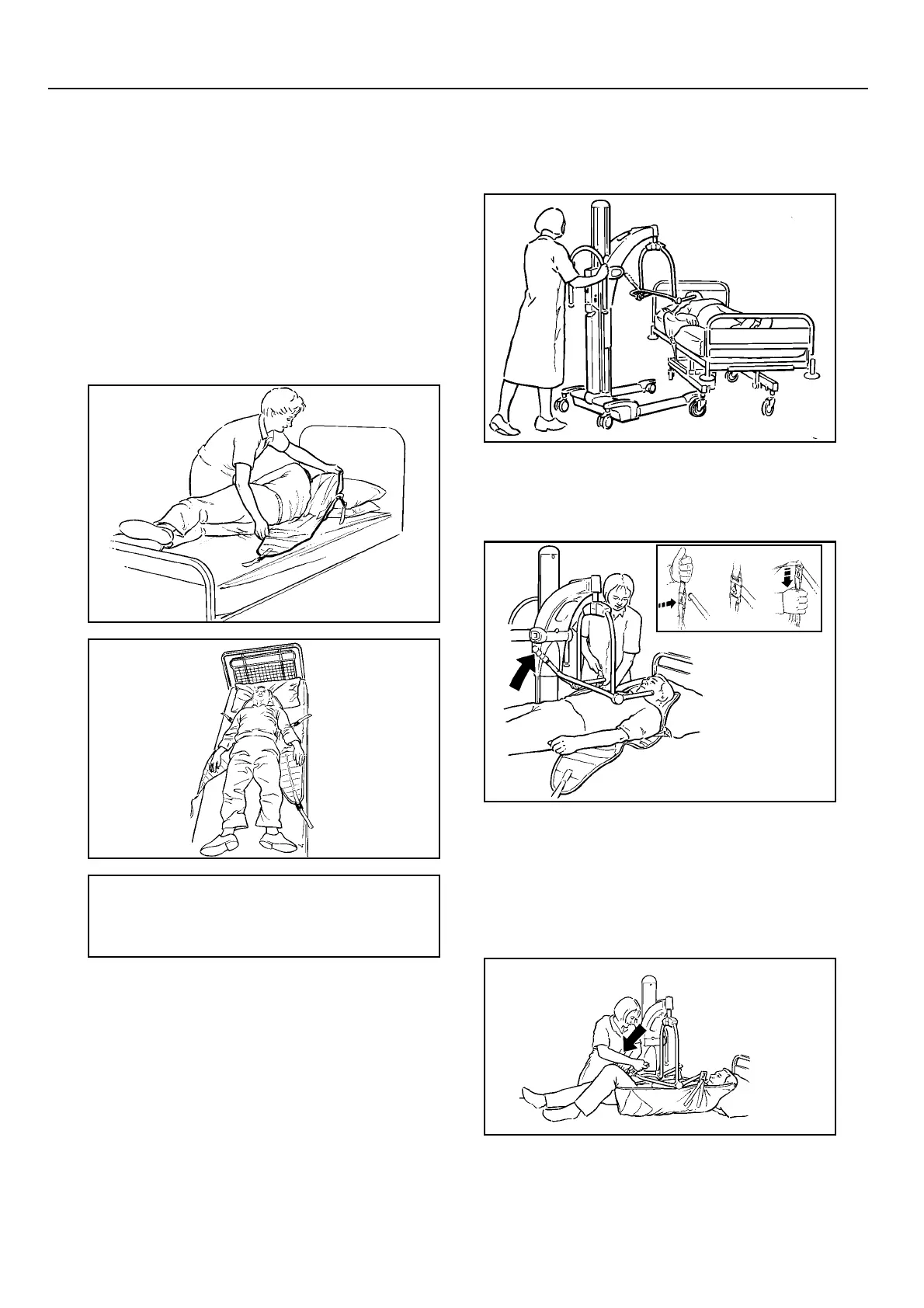
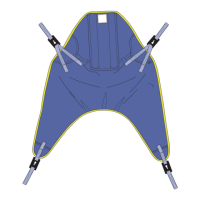
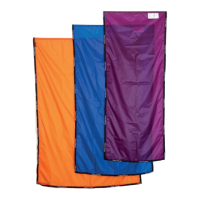
Position the patient onto the sling by rolling the
patient towards you then folding the sling in half
and placing it behind the patient's back (see fig. 1).
Position the sling carefully so that when rolled back
the patient will lie centrally on the sling (see fig. 2)
and check that the head support area of the sling
covers the patient's head. If the patient is unable to
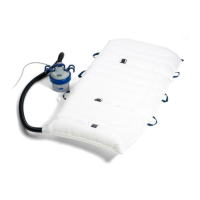
be rolled, either because of their size or the fact that
they may be in pain, a Maxislide can be used to
slide the patient onto the sling. Refer to the
Maxislide CD-ROM for details of use.
Alternatively, the patient can be brought into a
sitting posture then position the sling as detailed in
the section "To Lift From A Chair".
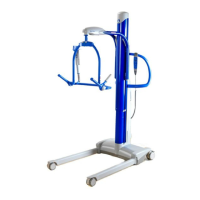
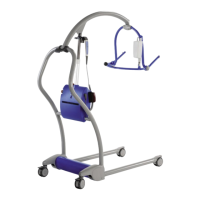
Approach the bed with the open side of the spreader
bar towards the patient's head. (See fig. 3).
Using the adjustable width chassis, it is possible to
make adjustments to chassis leg widths to assist
manoeuvrability around obstructions, for example,
bed legs.
Position the Lifter so that the spreader bar is just
above
Using the positioning handle, tilt the spreader bar
until the shoulder attachment points can be
connected to the sling shoulder strap attachment
clips. (See fig. 4).
Press down on the positioning handle until
connection of the sling leg pieces is possible. (See
fig. 5) The leg pieces must be brought under the
thighs to connect up, this may involve supporting
one leg at a time to connect up. You may need to
lower the spreader bar a little more, using the
handset control.
Fig. 1
P1133b
Fig. 2
P1022a
•Note: When rolling the patient back
onto the sling, roll the patient slightly in
the opposite direction so that the folded
part of the sling can be brought out.
Fig. 3
P1393e
Fig. 4
P1395a, P1002 a,b,c
Fig. 5
P1395b
Lifting from a bed


 To Next Page