15
If necessary, lower the spreader bar using the
handset control, being careful not to lower it onto
the patient, although if this should happen
inadvertently, there is a built in cut-out device
which will prevent any further downwards
movement. Do not continue to press the handset
lowering button.
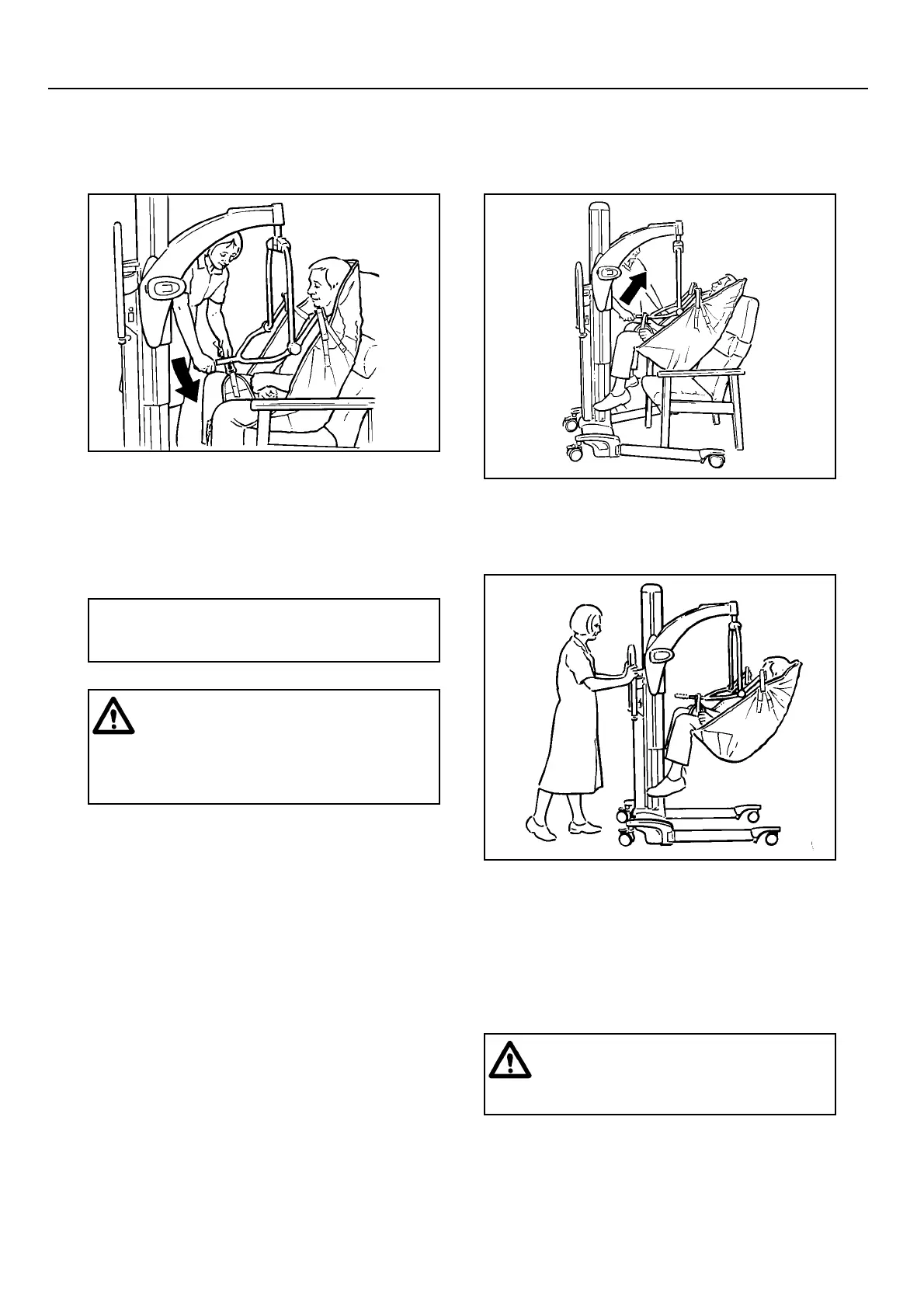
Raise the patient by operating the handset control,
move the lifter away from the chair then carefully
lift the positioning handle until the patient is
reclined in the sling - the head support will now
come into use. (See fig. 16). This is the most
comfortable position for transportation, as it
reduces pressure on the thighs. The angle of recline
can be adjusted for increased comfort if the patient
is restless.
Before transportation, turn the patient to face the
attendant at approximately normal chair height.
(See fig. 17). This gives confidence and dignity and
also improves the Opera mobility.
Remember to release the brakes, if they have been
applied, before attempting to transport the patient.
When lowering the patient back into a chair - or
when transferring from bed to chair - push down on
the positioning handle to put the patient into a good
sitting position. This avoids further lifting effort.
Take care not to push down too quickly, as this may
jerk the patient’s head forward.
Fig. 15
P1392e
•Note: If the handset button is
released during lifting or lowering,
powered motion will stop immediately.
Warning: IMPORTANT: Always
check that the sling attachment clips are
fully in position before and during the
commencement of the lifting cycle, and in
tension as the patient’s weight is
gradually taken up.
Fig. 16
P1393f
Fig. 17
P1393d
Warning: When lowering the lifter
ensure that the patient’s or attendant’s
legs and feet are well clear of the moving
mast.
Using your Opera


 To Next Page