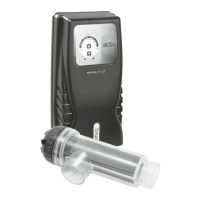
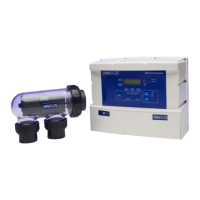
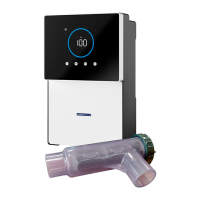
The AstralPool E Series Saltwater Chlorinator is a device designed for maintaining pool hygiene by producing chlorine from saltwater. This installation manual provides comprehensive instructions for its setup, operation, and maintenance, ensuring safe and efficient use.
Function Description
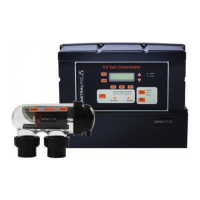
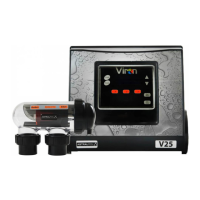
The E Series Saltwater Chlorinator generates chlorine from salt dissolved in pool water, eliminating the need for traditional chlorine chemicals. It integrates with the pool's circulation system, typically as the last piece of equipment on the return line, ensuring that the chlorinated water is returned to the pool. The system consists of a controller and an electrolytic cell. The controller manages the chlorine production process, including power supply, timing, and user interface, while the electrolytic cell is where the actual electrolysis of salt into chlorine occurs. The device is designed to operate with a filter pump, which can be controlled by the chlorinator's internal timer.
Important Technical Specifications
The E Series Saltwater Chlorinator comes in two models: E25 and E35, with differing chlorine production capacities.
- Nominal Chlorine Production:
- Nominal Output Amps:
- Required Salt Level: 6000 ppm
- Power Supply Voltage: 230-240 VAC
- Protection Index: IP23 (suitable for outdoor installation)
- Flow Through the Cell: Minimum 80 Lpm
- Operating Water Temperature: 10°C - 40°C
- Controller Dimensions: 22.54 cm (width) x 32.3 cm (height) x 13.15 cm (depth)
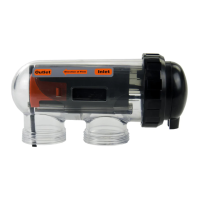
- Electrolytic Cell Dimensions: 32 cm (length) x 15.5 cm (height) x 11 cm (width), with inlet/outlet ports 11.5 cm apart.
Usage Features
The chlorinator offers several features to simplify its operation and integration into a pool system:
- User Interface: The controller features a user-friendly interface with buttons for MENU, ENTER, AUTO, UP, and DOWN, allowing users to browse menus, adjust settings, and control the system.
- Operation Modes:
- Auto - Running/Stopped: The chlorinator/pump runs according to pre-set timers.
- Manual - Running: The chlorinator/pump runs continuously.
- Manual - Stopped: The chlorinator/pump remains off continuously.
- Timer Programming: The controller includes an internal operating timer that defines two separate time periods each day for the filter pump to operate. Both ON and OFF times must be entered and validated. If no timer is set, filtration and/or chlorination will run continuously.
- Chlorine Output Adjustment: Output can be set between levels 1 to 8 (P1 to P8) from the main screen using the UP or DOWN buttons. This setting remains valid until modified.
- Salt Level Monitoring: The cell has a negative charge sensor that monitors flow and salt levels. A "LOW SALT" or "NO FLOW" indication may appear if levels are insufficient or if the cell is dirty.
- Automatic Cleaning Feature: The E25/E35 Saltwater Chlorinator includes an automatic cleaning feature designed to keep the cell plates clear of salt and calcium deposits under normal operating conditions.
Maintenance Features
Regular maintenance is crucial for the longevity and optimal performance of the E Series Saltwater Chlorinator. The manual outlines a comprehensive maintenance schedule:
- Electrode Inspection and Cleaning: In areas with high calcium hardness, the cell electrode may require cleaning. This involves switching off the system, unplugging the cell terminal cap, unscrewing the retaining ring, and immersing the electrode (excluding terminals) in a cleaning solution (e.g., Purex Salt Cell Cleaner or a 1:10 hydrochloric acid to water mixture) for about 10 minutes to dissolve calcium deposits.
- Water Chemistry Checks (Weekly or Sooner):
- Free Chlorine: 1-3 ppm (ideal 1-3 ppm)
- pH: 7.2-7.8 (ideal 7.4)
- Total Alkalinity: 60-200 ppm (ideal 80-140 ppm)
- Calcium Hardness: 100-400 ppm (ideal 90-300 ppm)
- Cyanuric Acid: Up to 50 ppm
- Salt Level: 4000-7000 ppm (ideal 4000 at 27°C)
- Metal: < 0.10 ppm
- Every Three Months:
- Check cell connections for leaks.
- Check for insects/ants around the controller and spray insecticide if necessary.
- Every Six Months:
- Check chlorine levels and pump operating hours, adjusting timers and output as needed.
- Prevent insect ingress to the controller by turning it off and spraying insecticide onto surrounding walls (not directly into the unit).
- Winterizing:
- Active Winterizing: If temperatures remain above 10°C, the filter pump and chlorinator can continue running.
- Passive Winterizing: If temperatures drop below 10°C, the chlorination cell should be deactivated. Water levels may need to be lowered, and piping drained. The cell electrode can remain in place with isolation valves open.
- Reopening the Pool: Requires adjusting water levels, checking water parameters, inspecting equipment, cleaning sensors, and restarting the chlorinator once the salt level reaches 6000 ppm and has fully dissolved.
- Troubleshooting: The manual includes a troubleshooting section with common fault indications (e.g., NO FLOW, LOW SALT, Display Blank, Low/No Chlorine), possible causes, and recommended solutions. For instance, a "LOW SALT" error might require adding salt, while "NO FLOW" could indicate a disconnected blue wire or closed valves.
The E Series Saltwater Chlorinator is designed for ease of installation and maintenance, but it emphasizes that all electrical work must be performed by a qualified installer and conform to all national, state, and local codes to ensure safety and warranty validity.


 To Next Page
 General