Autostacker™ Parking Lift 43 P/N 5900248 — Rev. B — May 2021
About Velocity Fuses
Velocity Fuses are a safety feature. They stop hydraulic flow in the event of a Hydraulic Hose failure.
Every Autostacker comes with one Velocity Fuse per Hydraulic Cylinder.
The way a Velocity Fuse works is this: When the Platform is being raised, Hydraulic Fluid moves from
the Power Unit to the Hydraulic Cylinder, which uses this force to raise the Platform. When the
Platform is being lowered, Hydraulic Fluid moves back from the Hydraulic Cylinder to the Power Unit.
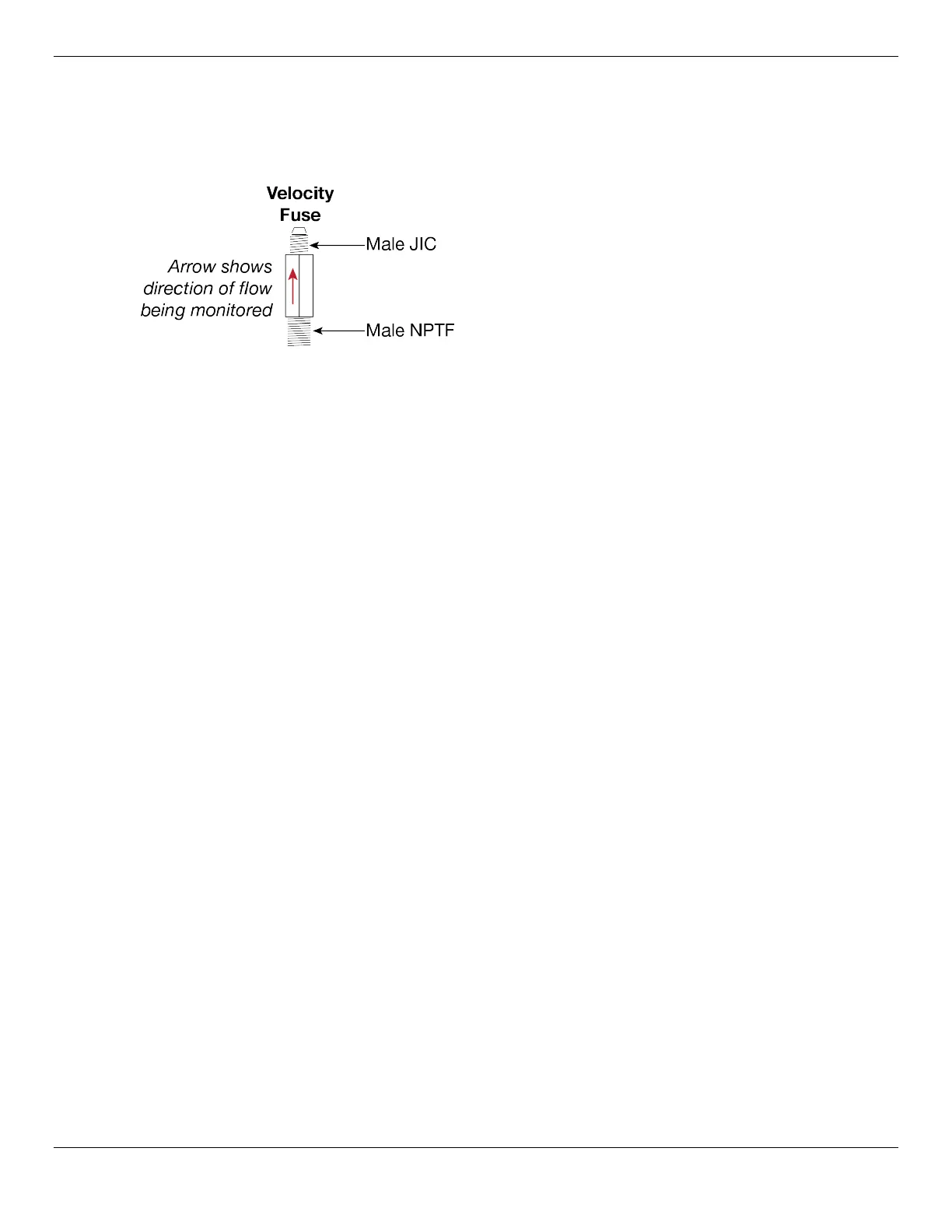
The Velocity Fuse monitors the flow of Hydraulic Fluid
. The arrow on the
Velocity Fuse shows the flow direction it is monitoring. The other direction is not monitored.
Most of the time, the force of the flow back to the Power Unit is beneath the trigger value of the
Velocity Fuse. If, however, the Hydraulic Hose were to be accidentally cut, for example, the force of the
flow back towards the Power Unit would increase significantly. If the force of the flow goes above the
trigger value of the Velocity Fuse, the Velocity Fuse kicks in and blocks the flow thus stopping descent.
Outdoor Usage
Autostacker is designed for
indoor use
, so if you decide to use it outside, here’s what you should
know:
• You may void your warranty. Damages to the Motor or rusted components on the Lift caused
by outdoor elements are
not
covered by warranty.
• Cover the Lift. Use a canopy or something similar to block the Lift from the sun and any
precipitation, reducing the impact from it being outside.
• Protect the Power Unit.
This one is really important
. The Power Unit has an electric
motor, so if that motor gets wet, it is possible for someone to get electrocuted, a fire can start, and
most certainly the motor will short circuit and stop functioning. Always keep the Power Unit, Lift
controls, and all electrical wiring covered, clean, and dry. For a Multi-Lift setup, make sure to keep
the Master Power Unit and Control Stands protected and away from all sources of moisture.
• Increased Maintenance. Placing your Lift outside subjects it to the outdoor elements like wind,
rain, dust, sunlight, snow, and other corrosive elements; you will need to double the maintenance
on your Lift to minimize the impact from it being outside. For example, if the maintenance suggests
doing something weekly, then do it 2-3 times a week.
• Increased Replacement Parts. Everything on the Lift breaks down faster if the Lift is outside,
so be prepared to order replacement parts much sooner than with indoor Lifts.


 To Next Page
 Loading...