4780 0318
BARBER SURF RAKE
®
MODEL 400
SECTION 1 - SURF RAKE
®
COMPONENTS
This instruction manual describes the different systems and components that make up the Surf Rake
®
. This
manual includes a maintenance, lubrication and parts ordering section. It is important that anyone operating
the Surf Rake
®
should read and understand this manual prior to operating the machine. All safety
procedures must be observed. Step-by-step instructions are also included to facilitate installation. The
following section describes the different systems and features of the Surf Rake
®
.
MECHANICAL COMPONENTS
CONVEYOR The conveyor belt rakes the material off of the beach, separates the debris from the sand,
elevates the debris up the conveyor and deposits the debris into the hopper. The speed of the conveyor is
adjustable. Proper belt tension is essential for long life of the conveyor belt chains and the conveyor belt
drive components which include rollers, sprockets and bearings. If the conveyor is loose, it will cause the
Surf Rake
®
to pick up less material and will hasten the wear of the Surf Rake’s
®
drive and conveyor
components.
MOLDBOARD The moldboard is located behind the reservoir and in front of the conveyor. It allows debris in
the path of the Surf Rake
®
to pass under it and into the adjacent area between the moldboard and conveyor
belt, where the conveyor separates the sand and lifts the debris using the back/hidden side of the
moldboard. The proper height adjustment of the moldboard is important for picking up the maximum amount
of debris per pass.
DRIVE MECHANISM The conveyor belt is supported by sets of sprockets and rollers on each side of the
frame. The bottom front shaft is the driving shaft or main shaft. The pair of sprockets on the main shaft and
the pair on the top shaft keep the conveyor belt tracking straight by guiding the chains located on each side
of the conveyor belt. For the conveyor belt to track correctly, the tension must be the same on each side of
the conveyor belt. The top shaft moves upward to achieve correct tracking tension. Take up bolts located
under the top shaft on each side of the frame are tightened to raise the top shaft. It is very important to
evenly adjust both sides of the conveyor belt to the same tension by tightening these take up bolts. There
are two rubber roller assemblies that support the weight of the conveyor and the debris that is being lifted up
to the hopper.
There are two idler sprocket assemblies that also support the weight of the conveyor and the debris that is
being lifted up to the hopper. There are four 8” diameter idler roller assemblies that create a smooth path of
support for the conveyor to rotate on.
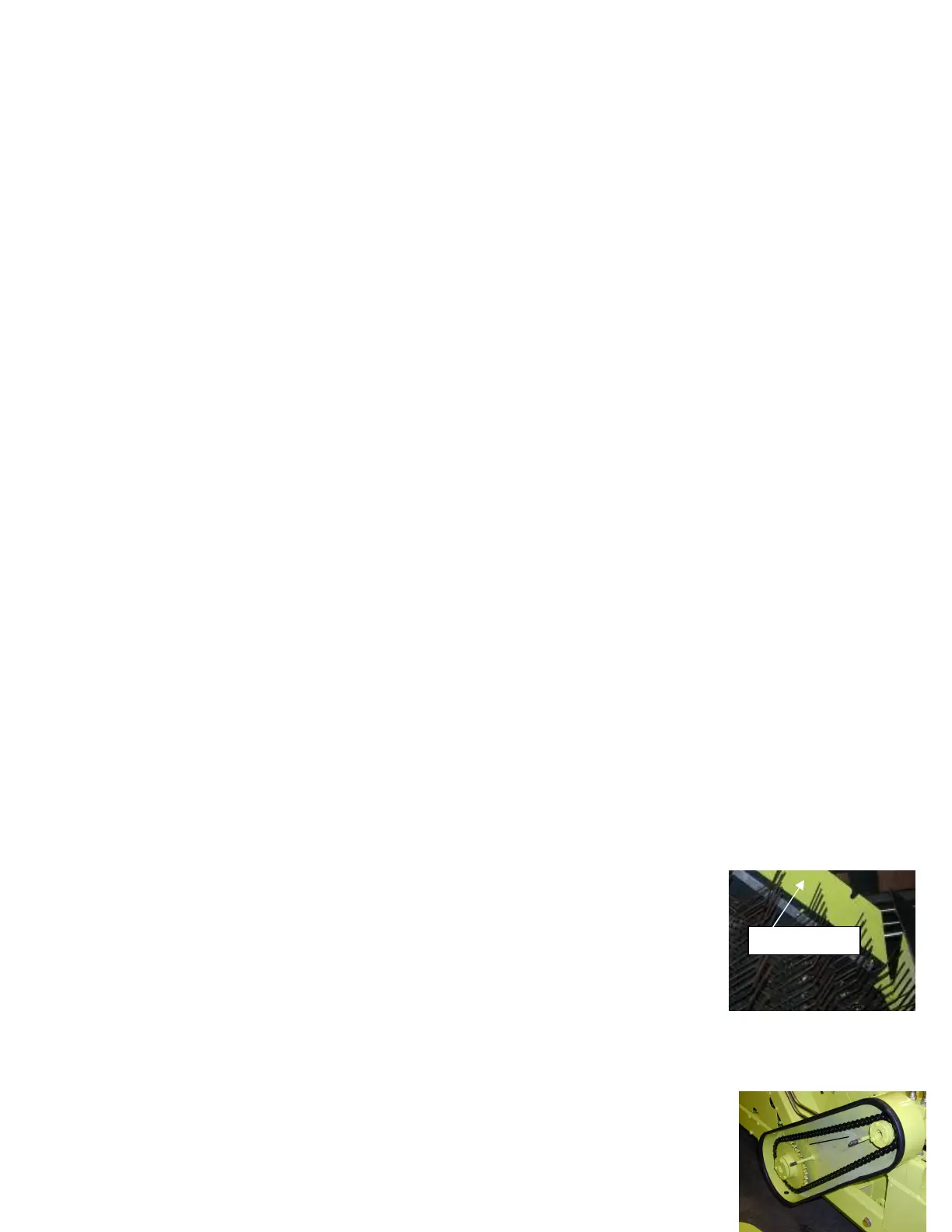
SIDE GUARDS/STONE GUARDS The side guards and stone guard flaps are located
on each side of the conveyor belt. Together they guide debris up to the top of the
conveyor belt and into the bucket. They keep debris away from the conveyor belt chain
and drive sprockets. The side guards are fastened to the side frame with three bolts.
The stone guard flaps are fastened to the side guards with bolts which are loosened to
adjust the flaps down toward the belt as the flaps wear.
TOP SHIELD The top shield acts as a guide that prevents light weight objects from being blown out of the
side of the moving Surf Rake
®
. The top shield is also a safety device that prevents incidental contact with
the moving conveyor belt assembly. It is fastened to the side guard with four bolts and is taken off to adjust
the stone guard flaps.
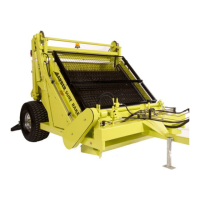
CHAIN CASE The conveyor belt is driven by the hydraulic motor which transfers power
SIDE GUARDS



 To Next Page