Need help?
Do you have a question about the Becker TLF 2.250 and is the answer not in the manual?
Perform filter checks, cleaning, and annual replacement; blow off debris.
Grease bearings, check vane width, and inspect for wear, replacing as needed.
Guidelines for cleaning and replacing air intake filters based on usage hours and condition.
Detailed steps for removing, measuring, and inspecting vanes for wear.
Procedures for cleaning vane slots and correctly installing new vanes.
Lists potential issues like rotor reversal, overload, and storage conditions.
Instructions for cleaning the pump chamber and components after vane failure.
Details components included in maintenance kits for different TLF pump models.
Describes available digital, liquid-fill vacuum gauges, and filter assemblies.
Lists phase converters, motor starters, grease kits, and filtration systems.
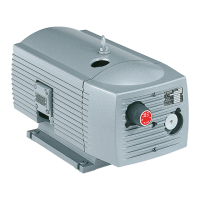
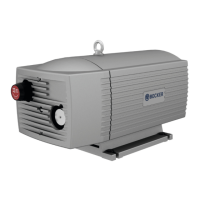
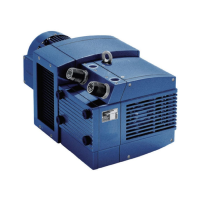
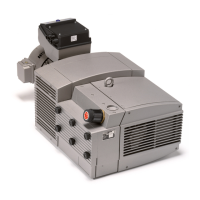
This document provides a comprehensive guide for the maintenance and operation of the Becker TLF 2.250 vacuum pump, a robust and reliable device designed for various industrial applications. The pump's primary function is to generate vacuum or low-pressure compression, making it suitable for a wide range of processes requiring air movement or pressure differential. Its design emphasizes durability and ease of maintenance, ensuring long-term performance and minimal downtime.
The Becker TLF 2.250 operates on a principle that allows it to efficiently move air, creating a vacuum or providing compressed air as needed. This versatility makes it a valuable asset in many sectors, from packaging and printing to woodworking and medical applications. The pump is engineered to handle continuous operation, providing consistent performance under demanding conditions. Its construction includes features that contribute to its efficiency and longevity, such as carefully selected materials for internal components and a design that minimizes wear and tear.
One of the key usage features of the Becker TLF 2.250 is its adaptability to different operational requirements. The pump can be integrated into various systems, offering flexibility in its application. It is designed for straightforward installation, allowing for quick deployment in new or existing setups. The user interface, though not explicitly detailed in the provided excerpts, is typically intuitive, enabling operators to manage the pump with ease. The pump's ability to function as both a vacuum pump and a low-pressure compressor highlights its dual utility, making it a cost-effective solution for businesses with diverse needs.
The design of the TLF 2.250 also incorporates considerations for noise reduction and energy efficiency. While specific metrics are not provided, Becker pumps are generally known for their efforts to minimize operational noise, which is beneficial in environments where sound levels are a concern. Furthermore, the pump is designed to optimize energy consumption, contributing to lower operating costs over its lifespan. This focus on efficiency not only benefits the user economically but also aligns with broader environmental sustainability goals.
Maintenance is a critical aspect of ensuring the longevity and optimal performance of any industrial equipment, and the Becker TLF 2.250 is designed with this in mind. The provided manual outlines a clear preventative maintenance schedule, emphasizing regular checks and timely replacement of components. This proactive approach to maintenance helps prevent unexpected breakdowns and extends the operational life of the pump.
The preventative maintenance schedule includes routine tasks such as checking and cleaning the air intake filter every 40 to 200 hours. This is a crucial step to prevent dust and debris from entering the pump, which could otherwise lead to reduced efficiency and premature wear. The manual recommends replacing the filter after every four cleanings or at least once a year, whichever comes first. This ensures that the pump always operates with clean air, protecting its internal mechanisms. The process of changing filters is made simple, involving the removal of four hand knobs to access the filter chamber. For SK versions, there are two smaller filters located below the main filter chamber, indicating a modular design that facilitates maintenance.
Another significant maintenance task, scheduled every 3000 hours, involves greasing the bearings. This is vital for reducing friction and wear in the moving parts, thereby extending the life of the bearings and ensuring smooth operation. The procedure involves placing the filter back over the non-return valve, removing plastic caps covering the grease ports, and applying grease 25 times in each fitting while the pump is running. This detailed instruction ensures proper lubrication and prevents damage due to insufficient greasing. The manual also specifies the part number for the recommended grease gun, simplifying the procurement of the correct tools.
A key component of the Becker TLF 2.250 that requires regular inspection and potential replacement are the vanes. The manual provides detailed instructions for checking and changing vanes, a process that involves several steps. First, the air guide cover must be removed, followed by all M13 end-shield bolts. To pull off the end-shield, two M5 bolts from the air guide cover are threaded into empty jack holes and tightened. This method ensures a controlled and safe removal of the end-shield.
Once the end-shield is removed, the vanes can be accessed and inspected. The manual instructs users to measure the height of the vanes and compare it against the minimum specifications listed on the maintenance sticker. For models like the 2.200/250/250SK, the minimum width is 41mm, while for 2.400/500 models, it is 60mm. If the vane height is close to or below the minimum specification, or if there are signs of improper wear such as chipping, diagonal wear, or cupping, the vanes must be replaced. This detailed guidance helps users identify worn vanes before they cause significant damage to the pump.
The process of replacing vanes also includes cleaning the rotor, end-shield, and vane slots. The manual recommends using Scotch Brite™ to clean surfaces, emphasizing that large amounts of metal should not be removed. Brake Cleaner can also be used for cleaning, and light grit sandpaper (220) is suggested for cleaning out the vane slots. This thorough cleaning ensures that new vanes can be inserted smoothly and operate effectively.
When inserting new vanes, proper orientation is crucial. The manual highlights that the beveled edge of the vane should be flush with the cylinder. Incorrect insertion, particularly backwards, can lead to vane breakage. The guide pins must be aligned and inserted into the tolerance holes during reassembly. A warning is given that if the pins are not inserted correctly, internal components may contact, leading to damage. Finally, all end-shield bolts are re-fastened, and the plastic air guide cover is reinstalled.
The manual also addresses vane breakage, providing a troubleshooting guide and cleaning instructions. Vane breakage can occur due to various reasons, including the rotor turning backwards (requiring a check of the electrical connection), the pump being stored in a humid environment leading to swelling or corrosion, too many start/stops (with a limit of 6 per hour recommended), missing check valves, overloaded filter cartridges, grease not being removed from the end-shield face causing vanes to stick, use of non-Becker vanes, vanes cupping due to overheating, blocked relief valves, incorrect pump configuration for altitude, or excessive discharge plumbing. Overheating can also cause the rotor to swell and contact the end-shields, in which case the local Becker representative should be contacted.
For cleaning after vane breakage, all side covers must be removed, and the working chamber opened. Compressed air is used to clean out all broken pieces of vanes, and the discharge side and blow-off valve are also cleaned. After wiping clean with Brake Cleaner, a new set of vanes is installed, ensuring they fall freely from the slots against their own weight. This comprehensive approach to addressing vane breakage ensures that the pump can be restored to optimal working condition.
The document also provides an overview of spare parts, specifically maintenance kits. These kits are categorized by pump model (VTLF 2.200/250 Non SK, VTLF 2.250 SK, VTLF 2.400/2.500) and include essential components such as carbon vanes, grease, and filters. This packaging of common replacement parts simplifies the ordering process and ensures that users have access to genuine Becker parts, which are identifiable by a holographic emblem.
Furthermore, the manual lists various accessory options that enhance the functionality and monitoring capabilities of the Becker TLF 2.250. These include digital and liquid-fill vacuum gauges for precise pressure monitoring, a cyclonic filter with a relief valve filter for improved air quality, and external filter assemblies with check valves and gauges, available with either metal or clear cover canisters. These accessories allow users to customize their pump setup to meet specific operational needs and improve overall system performance.
Additional accessory options include 1-phase to 3-phase converters, soft start/VFD/motor protectors (available for various voltage inputs), and manual motor starters to protect against overload. A Zerk fitting conversion kit with an industrial grease gun is also offered, further simplifying the greasing process. For extreme filtration needs, the "Spin Meister" is available. These accessories underscore Becker's commitment to providing comprehensive solutions and support for their vacuum pumps.
In summary, the Becker TLF 2.250 is a versatile and robust vacuum pump/low-pressure compressor designed for continuous industrial operation. Its key features include efficient air movement, adaptability to various applications, and a design that prioritizes durability and energy efficiency. The detailed maintenance schedule, covering filter changes, bearing greasing, and vane inspection/replacement, ensures the pump's longevity and reliable performance. The availability of genuine spare parts and a range of accessories further enhances its utility and ease of maintenance, making it a valuable asset for any industrial setting.
 General
| Frequency | 50/60 Hz |
|---|---|
| Housing Material | Cast iron |
| Voltage | 230 V |
| Impeller Material | Bronze |
| Connection Outlet | 1" BSP |

 To Next Page