EN EN
ATOM & ATOMS USER MANUALUSER MANUAL ATOM & ATOMS
3130
1. SAFETY INFORMATION
1.1 RIDING
• Do not pedal or move the bicycle while the battery charger is connected. If you do, it may cause the power
cable to become entangled in the pedals, which may damage the battery charger, the power cable and/or
the charging port.
• Do not ride the bicycle if there is a fault with the battery or any component of the pedal assistance system.
Otherwiseyoumaylosecontrolandsuerseriousinjury.
• Do not start moving with one foot on a pedal and the other on the ground and then start riding the bicycle
whenyouhavereachedacertainspeed.Otherwiseyoumaylosecontrolandsuerseriousinjury.
You should only start moving when you are properly seated on the bicycle seat.
• Do not activate the throttle function if the rear wheel is not touching the ground. Otherwise, the wheel will
rotate in the air at high speed and may cause injury.
• Be sure to check the remaining battery capacity before riding at night. The light powered by the battery
packwillgoosoonaftertheremainingbatterycapacitydecreasestothepointwhereridingwithassisted
power is no longer possible. Riding without a light may increase the risk of injury.
• Do not modify or remove any parts of the pedal assistance system. Do not install non-original parts
or accessories. If you do, they may damage the product, cause a fault or increase the risk of being injured.
• When you stop, make sure that you apply the front and rear brakes and keep your feet on the ground.
Leaving one foot on a pedal when stationary could accidentally activate the assisted power function,
whichcouldcauseyoutolosecontrolandsuerseriousinjury.
1.2 CHARGER
• Never use this battery charger to charge other electrical devices.
• Do not use any other charger or charging method to recharge the batteries of the electric bicycle.
Usinganyotherchargermayleadtoare,explosionordamagetothebatteries.
• This battery charger may be used by children aged 8 or over and by persons with physical, sensory
or mental impairments, or who lack the necessary experience and knowledge, provided that they are
supervised and instructed on how to use the battery charger safely and they understand the dangers
involved. Do not allow children to play with the battery charger. Cleaning and maintenance should
not be performed by unsupervised children.
• Although the battery charger is water resistant, do not allow it to be submerged in water or other liquids.
Furthermore, never use the battery charger if the terminals are wet.
• Nevertouchthepowerplug,chargingportorcontactsofthechargerwithwethands.Youmaysuer
an electric shock.
• Do not touch the contacts of the charger with metal objects. Do not allow any foreign matter to enter, it may
causeshortcircuitsinthecontacts,whichmaycauseelectricshock,areordamagetothebatterycharger.
• Regularlycleananydustothepowerplug.Moistureorotherproblemscouldreducetheeectiveness
oftheinsulationandcauseare.
• Neverdismantleormodifythebatterycharger.Youmaycauseareorsueranelectricshock.
• Do not use multi-socket adaptors or extension cables. Using a multi-socket adaptor or similar may exceed
theratedcurrentandcauseare.
• Do not use with the cable tied up or coiled and do not store with the cable coiled around the body of the main
charger.Ifthecableisdamageditmaycauseareoryoumaysueranelectricshock.
• Firmly insert the power plug and charging plug in the socket. If the power plug and charging plug are not fully
inserted,thismaycauseareduetoanelectricshockoroverheating.
• Donotusethebatterychargernearammablematerialsorgases.
Thismaycauseareorexplosion.
• Never cover the battery charger or place objects on it while it is charging. This may lead to internal overheating
andcauseare.
• Donotdropthebatterychargerorexposeittostrongimpacts.Otherwise,itmaycauseareorelectricshock.
• If the power cable is damaged, stop using the battery charger and take it to an authorised dealer.
• Handle the power cable with care. Plugging in the battery charger indoors while the bicycle is outdoors
may lead to the power cable being caught on or damaged by doors or windows.
• Do not pass the wheels of the bicycle over the power cable or plug.
Otherwise you may damage the power cable or port.
1.3 BATTERY
• Keep the battery and battery charger out of the reach of children.
• Do not touch the battery or battery charger during charging. As the battery pack and battery charger reach
temperaturesof40–70°Cduringcharging,touchingthemmayleadtorstdegreeburns.
• Ifthebatterycaseisdamaged,crackedoryounoticeunusualsmells,donotuseit.Theleakageofuid
from the battery may cause serious injury.
• Do not short the contacts of the charging port of the battery. If you do, it may cause the battery to heat
uporcatchre,causingseriousinjuryordamagetoproperty.
• Donotdismantleormodifythebattery.Ifyoudo,itmaycausethebatterytoheatuporcatchre,causing
serious injury or damage to property.
• Donotdropthebatteryorsubjectittoimpacts.Ifyoudo,itmaycausethebatterytoheatuporcatchre,
causing serious injury or damage to property.
• Donotdisposeofthebatteryinareorexposeittoheatsources.Otherwise,thismaycauseare
or explosion, resulting in serious injury or damage to property.
1.4 BLUETOOTH (ONLY COMPATIBLE MODELS)
• Do not use the wireless Bluetooth function in areas such as hospitals or medical institutions where
itisforbiddentouseelectronicorwirelessequipment.Otherwise,thismayaectthemedicalequipment
and cause an accident.
• When using the wireless Bluetooth function, keep the screen at a safe distance from any pacemakers
in use. Otherwise, the radio waves may interfere with the operation of the pacemaker.
• Do not use the wireless Bluetooth function near to automatically controlled equipment, such as automatic
doors,realarms,etc.Otherwise,theradiowavesmayinterferewiththeequipmentandcauseanaccident
due to a malfunction or unintended operation.
1.5 WASTE
• The drive unit, battery, charger, display panel, torque sensor and accessories and packaging must
be disposed of and recycled in an environmentally friendly way.
• Do not dispose of the bicycle or its components together with household waste.
• For EU countries:
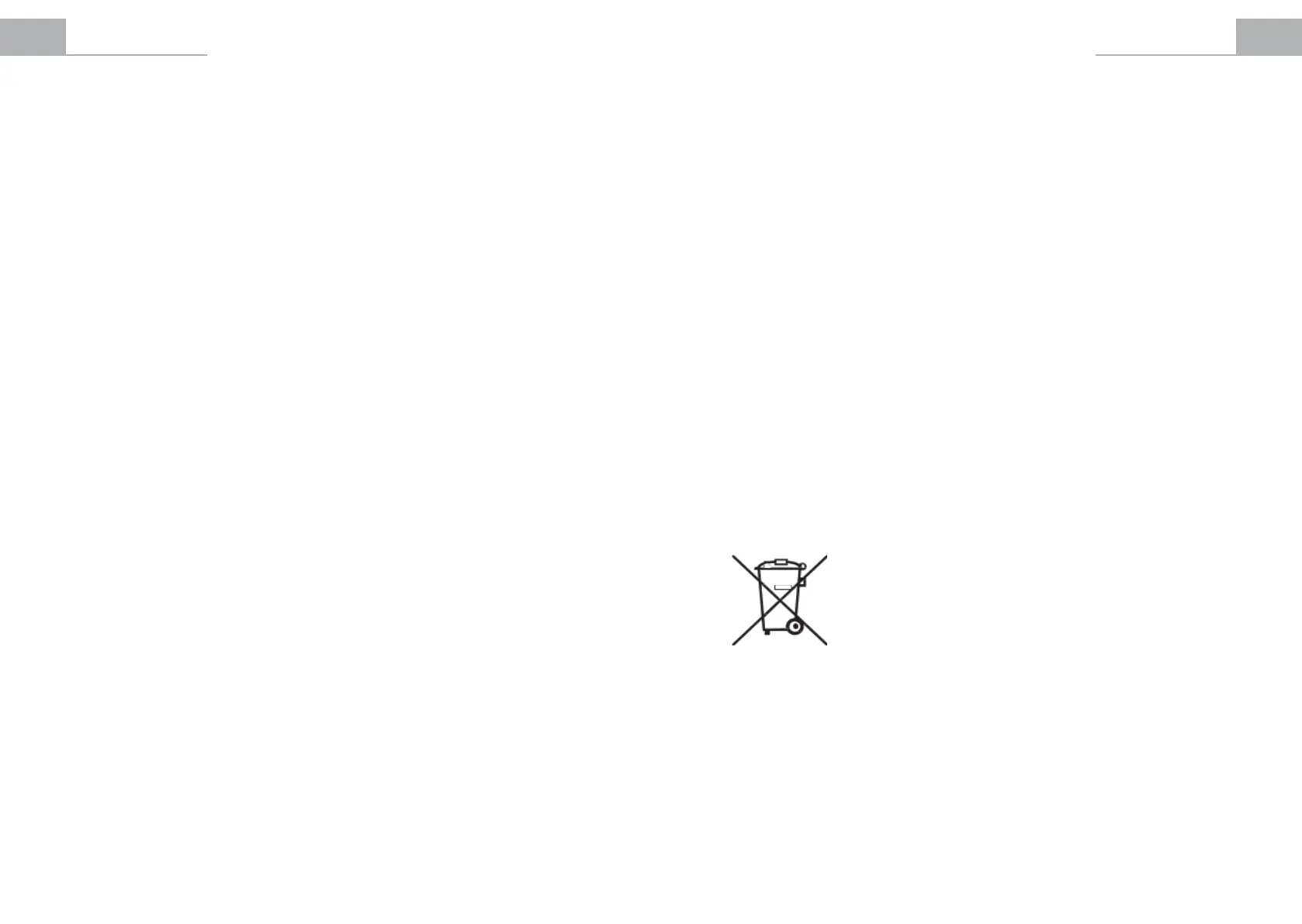
Pursuant to Directive 2012/19/EU and Directive 2006/66/EC, electrical devices/tools that can no longer
be used and defective or used battery packs/batteries must be disposed of and recycled separately and
in an environmentally friendly way. Hand over any batteries that can no longer be used to an authorised
bicycle supplier.


 To Next Page
 Loading...