3.0 BRAKING SYSTEM
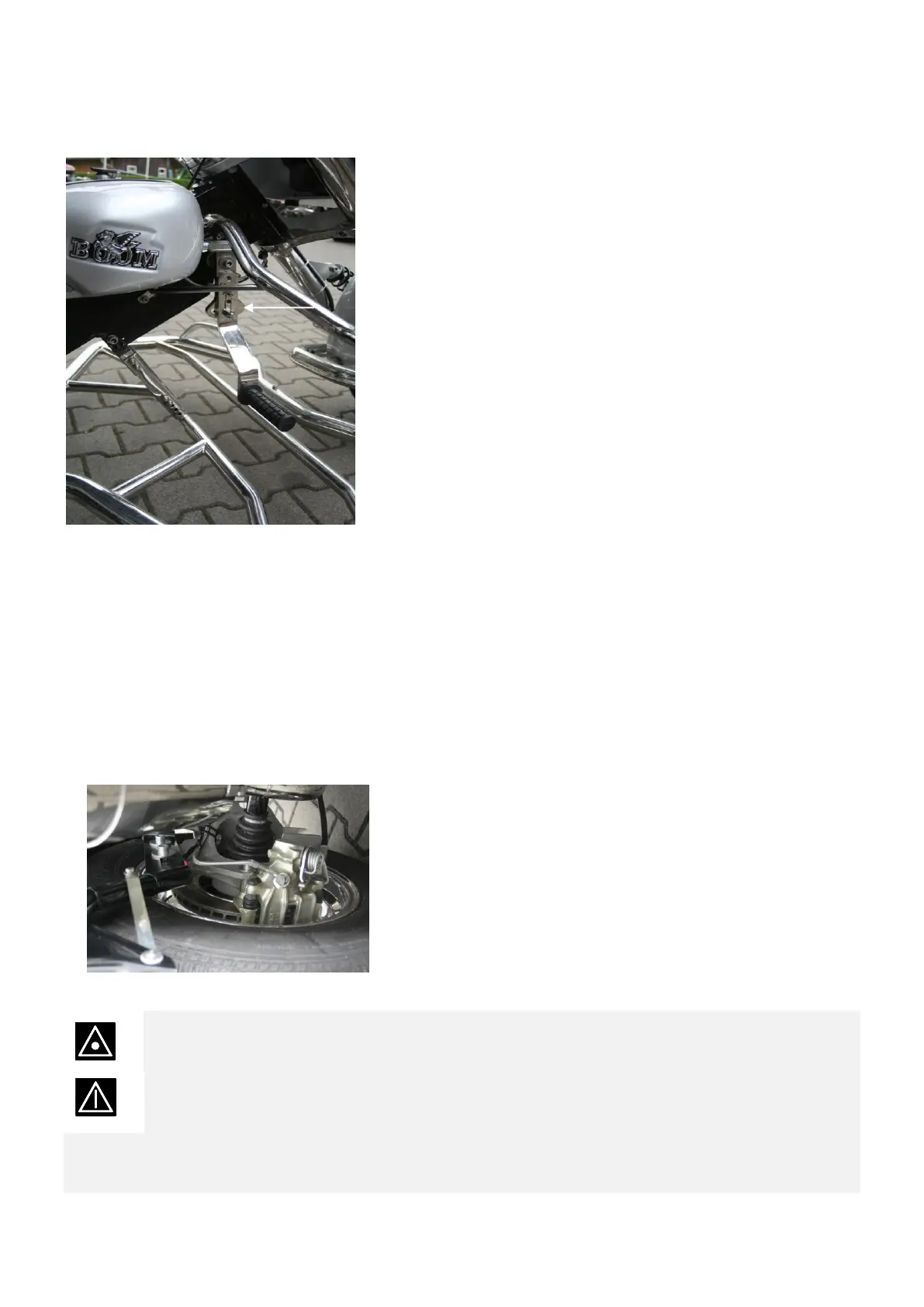
A) BRAKE PEDAL
Fig. 11
B) FRONT DISK
The front brake, operated by the integral braking system, is a legal requirement. Unlike a motorcycle,
80 % of braking loads are transmitted to the rear wheels, even at high speeds. Nevertheless, you should
regularly check the front brake for wear, and the brake lines for any leakages.
Caution: The braking system should be maintained and repaired by specialist dealers only.
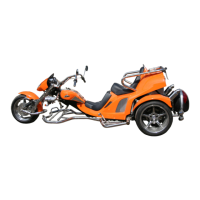
C) REAR BRAKE
Fig. 12
CAUTION:
The vehicle must begin to slow down after the brake pedal has been depressed about
one third of the way. Your specialist dealer will check for brake pad wear. If he fits new
brake pads, and before you ride the vehicle, you should actuate the brake lever several
times to ensure that the brake pistons return to their proper positions and so that
brake lever travel readjusts itself.
17
Wear to the brake pads and the discs is compensated by the
system and has no effect on braking performance. Therefore
as a rule no adjustment to the brakes will be required.
If resistance at the brake lever is spongy, then in all likelihood
air has entered the brake lines. Since the brakes are of major
importance to the overall safety of the trike, we urgently
recommend that you contact a specialist dealer immediately
to have him carry out the necessary checks.
To adjust the brake pedal, remove splint and unscrew
the nut. With the aid of the existing holes you can
adjust pedal and the foot rest according to the size.
Unscrew the nut at the foot rest and remove the
screw. Now you can adjust the foot rest.
Make sure you have enough ground clearance!


 To Next Page