3.5 ENGINE OIL LEVEL
On 4-stroke engines, engine oil lubricates the drive components, main bearings and
moving parts. Running an engine with insufficient oil can cause severe engine damage.
On all 4-stroke engines, both oil consumption (to a certain degree) and gradual deterioration of oil
properties are normal occurrences. The amount of oil an engine consumes is influenced heavily by the
type of use the vehicle is put to, (for example prolonged periods of full throttle lead to increased oil
consumption).
To avoid malfunctions, you should check the oil level at shorter intervals than those specified in
the maintenance checklist, and prior to undertaking longer trips.
The vehicle is equipped with an oil pressure warning light (see page 23, point 3).
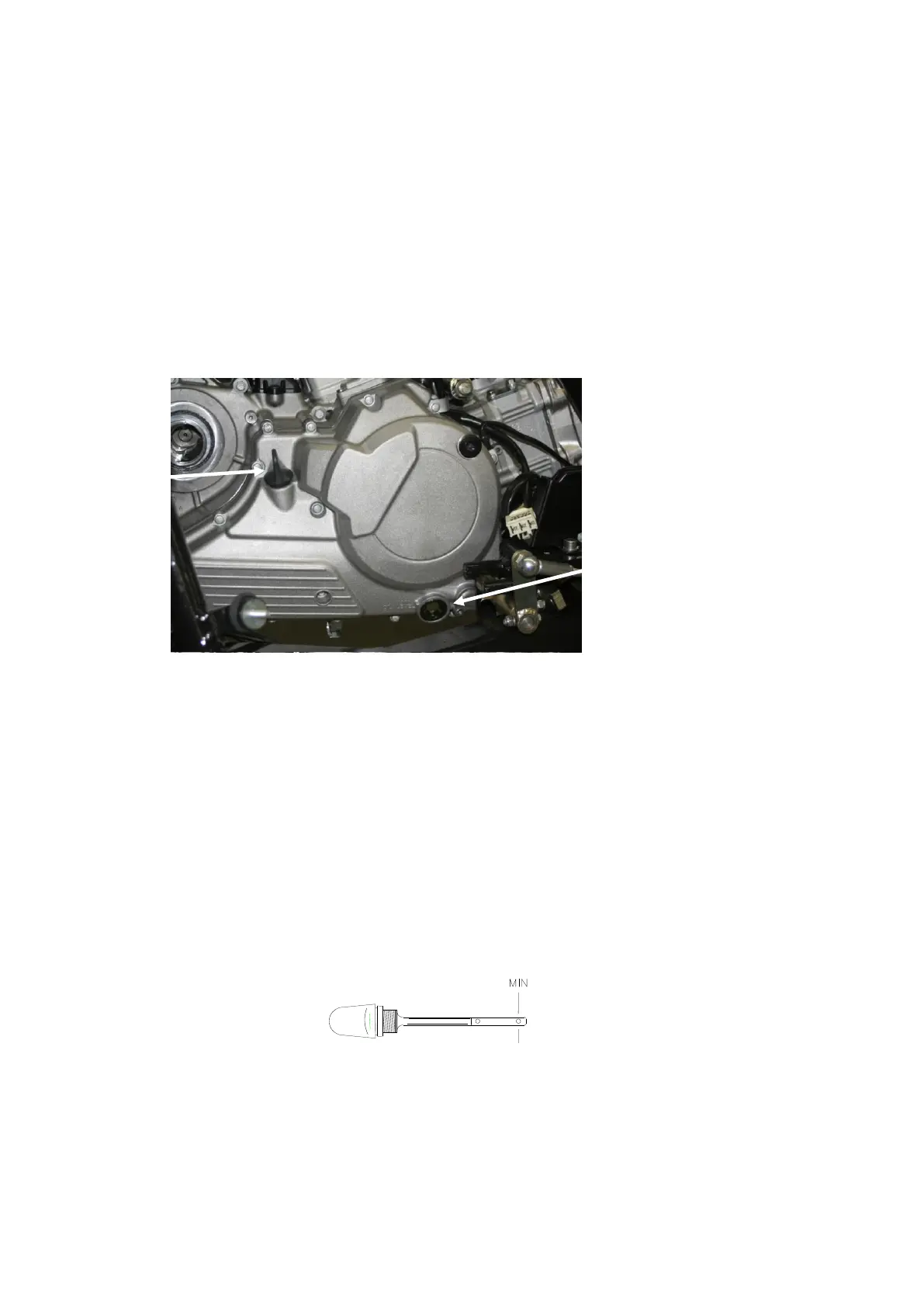
1. Checking the engine oil level:
1
2
Fig. 16
1.) Place the vehicle on an even and level surface.
2.)
wipe with a clean cloth, replace the dipstick and screw in fully.
3.) Unscrew the dipstick again. Check the oil level. You can read only the minium oil level at the dipstick
and the maximum oil level at the glass sight funnel (arrow 2). Maximum level: cast iron nose at
engine block.
Oil at the MAX marking indicates that the engine contains approximately 2,6 ltrs. oil. If you check the oil
when the engine is hot, then the oil level reading will be lower. Allow a hot engine to cool down for
approximately 10 minutes before checking the oil.
2. Topping up with oil:
Always top up after checking the oil level, as the MAX marking should never be exceeded.
Approximately 0,3 ltr. of oil are needed for topping up from the MIN to the MAX marking (Fig. 17).
As part of the service plan the maintenance checklist specifies checking the oil level, and topping up if
required, at intervals of every 1850 miles / 3000 km (see maintenance plan).
22


 To Next Page