EasyManua.ls Logo

Bose 1800-VI - User Manual

Bose 1800-VI
32 pages
Print Icon
To Next Page IconTo Next Page
Loading...
Bose
®
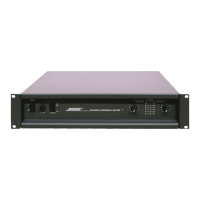
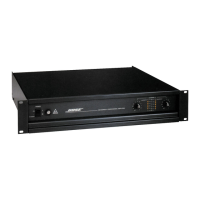
Model 1800-VI and 1600-VI Professional
Stereo Power Amplifier
Owner’s Guide

Other manuals for Bose 1800-VI

Questions and Answers

  • S
    Sarah BartonJul 31, 2025
    What to do if my Bose 1800-VI has no sound and no power?
    • T
      Tammy CampbellJul 31, 2025
      If your Bose Amplifier has no sound and no power, it usually indicates a power supply problem, either in the power line itself or the amplifier’s power supply. Here are some things to check: * Ensure the amplifier is turned on. * Verify the line cord is connected properly. * Check the fit between the plug and AC receptacle; try another receptacle. * Confirm power at the AC receptacle using a tester or lamp. * Inspect and replace the amplifier fuse if it's blown. * If there's an open thermal breaker in the power transformer, allow the amplifier to cool down so the breaker can reset itself.
  • M
    Michael MossAug 6, 2025
    How to fix Bose Amplifier distortion?
    • R
      Ryan AveryAug 6, 2025
      Distortion in your Bose Amplifier is usually caused by excessive loss in the input controls when the mixer/equalizer/crossover doesn't produce enough output, over-driving that results in output clipping, or current limiting caused by excessively low load impedances. To resolve this: * Check the input level controls. If they are set too low, the preceding equipment may not have sufficient output. * Check speaker connections and verify that all screw connections are tight and that there are no stray strands of wire causing short circuits. * Verify that the total load impedance presented to the amplifier is within the specified limits for the selected mode of operation.
  • K
    Kyle Carpenter IIAug 12, 2025
    Why does my Bose Amplifier have power but low or no output?
    • M
      Mark ReedAug 12, 2025
      If your Bose Amplifier powers on but has low or no output, it's usually related to the signal source, a bad cable, or a partial output short circuit. Here's how to troubleshoot: * Reset the input level controls if they are set too low. * Check if the problem originates from the source by moving the input connections to another working amplifier. * Ensure there are no small wire strands touching similar strands from the other wire in the cable. * Confirm that the speakers are functioning correctly. * If using bridged-mono mode, verify the stereo/mono switch is set correctly. * Use a voltmeter to check if the power line voltage drops excessively when the amplifier is driven hard.
  • P
    phillipserikaAug 18, 2025
    What to do if Bose 1800-VI Amplifier playback is mixed with hum?
    • M
      Michael VaughnAug 18, 2025
      If your Bose Amplifier playback is mixed with hum: * Check or replace the connecting cables. * Ensure each screw terminal connection is tight. * Make sure signal cables are not routed too closely to AC cables, power transformers, motors, or other EMI inducing devices. * Connect another source to the power amplifier inputs. If the hum stops, the problem lies with the original source component.
  • E
    elizabeth93Aug 25, 2025
    How to troubleshoot unnatural sound from Bose 1800-VI Amplifier?
    • A
      Angelica FloresAug 26, 2025
      To troubleshoot unnatural sound from your Bose Amplifier, check the EQ cards. Verify that the EQ card corresponds to the model speaker being used and that the EQ card is installed in the proper channel. Verify that the speakers are connected to the same channel that the corresponding EQ card is installed in.

Summary

Safety Information

Warning

General safety precautions to reduce risk of fire or electric shock.

Electrical Noise Compliance

Details on FCC compliance and potential radio frequency interference.

Before You Begin

Unpacking the amplifier

Instructions for carefully unpacking the amplifier and checking for damage.

Bose Professional Stereo Power Amplifiers

Installation

Location and general precautions

Guidance on selecting a suitable location and general precautions for installation.

Mechanical considerations

Details on rack mounting requirements and physical installation aspects.

Thermal considerations

Guidelines for managing heat dissipation and ventilation during operation.

AC power considerations

Information on proper AC power connections and voltage requirements.

Magnetic leakage consideration

Considerations regarding magnetic field effects on nearby equipment.

Input wiring

Connection methods for audio input signals using various connector types.

Balanced operation

Instructions for connecting balanced audio signals using various connector types.

Unbalanced operation

Instructions for connecting unbalanced audio signals using 1/4" phone jacks.

Input sensitivity

How to adjust the amplifier's input sensitivity for optimal performance.

Output wiring

Guidance on selecting appropriate speaker wire gauge and connection methods.

Polarity

Ensuring correct phasing for optimal bass response by matching speaker terminal polarity.

Dual mono

Instructions for configuring and using the amplifier in dual mono mode.

Bridged mono

Detailed steps for connecting speakers in bridged mono mode for increased power output.

Parallel mono

Information on when and how to use parallel mono operation for low impedance loads.

Clipping eliminator

Explanation of the clipping eliminator circuit and how to enable/disable it.

Operation

Using the Bose Model 1800-VI or 1600-VI Professional Stereo Power Amplifier

Tips for getting the most performance from the amplifier after installation.

Input Modules

Overview of standard and optional input modules and their functionality.

Standard input module

Details on the standard input module and its use with equalization cards.

ACM-1 amplifier control module

Information on the optional ACM-1 module for network control and monitoring.

Front Panel

Description of the controls and indicators on the amplifier's front panel.

Power switch

How to use the power switch and the different modes of operation (ON/STANDBY).

Standby LED

Indicates when the amplifier is connected to AC power and ready for standby.

AC power fuse

Information about the AC power fuse and its protective function.

Level controls

How to adjust input level controls for each channel to achieve maximum gain or attenuation.

Status indicators

Explanation of the various status LEDs (ON, SIGNAL, PEAK/PROTECT) and their meanings.

Data receive indicator

Indicates when the ACM-1 module is receiving network information.

Rear panel

Overview of the connectors and switches located on the amplifier's rear panel.

Stereo;mono switch

How to set the switch for Normal Stereo, Dual Mono, or Bridged Mono operation.

Clipping eliminator switch

Function of the clipping eliminator switch and how to bypass the circuit.

Input connectors

Description of the different types of input connectors and their wiring.

EQ OUT connectors

Access to equalized line level output signals for connecting external devices.

Equalizer LEDs

Indicates the presence of installed equalizer cards.

EQ Bi-Amp;Full Range switch

Switch for selecting high frequency output from equalizer cards for bi-amp or full range use.

Level defeat switch

Allows bypassing the front panel level controls to set maximum gain.

Sequencer connector

Enables sequential powering up of multiple amplifiers to manage surge currents.

Speaker outputs

Details on connecting loudspeakers using multi-way binding posts and polarity.

Power cord

Instructions for connecting the power cord to a suitable outlet.

Troubleshooting

Problems;solutions

Common issues and their solutions for the Bose Model 1800-VI/1600-VI amplifiers.

Care

Cleaning and maintenance instructions for the amplifier.

Features

Features of the Bose Model 1800-VI and 1600-VI Professional Stereo Power Amplifiers

Summary of key features and capabilities of both amplifier models.

Warranty, Service

Warranty period

Details on the five-year limited warranty for the Bose amplifiers.

Service

Instructions on how to obtain service and support for the amplifiers.

Specifications

Model 1800-VI amplifier

Technical specifications for the Bose Model 1800-VI stereo power amplifier.

Model 1600-VI amplifier

Technical specifications for the Bose Model 1600-VI stereo power amplifier.

Model 1800-VI amplifier sensitivity

Detailed sensitivity specifications for the 1800-VI amplifier at different gain settings.

Model 1600-VI amplifier sensitivity

Detailed sensitivity specifications for the 1600-VI amplifier at different gain settings.

Specifications common to both amplifiers

Common technical specifications applicable to both the 1800-VI and 1600-VI models.

Bose 1800-VI Specifications

General IconGeneral
Power Output600W per channel at 8Ω
Signal-to-Noise Ratio105 dB
Frequency Response20Hz - 20kHz
Input Impedance10 kOhms unbalanced, 20 kOhms balanced
CoolingForced air cooling
Weight47 lbs

Related product manuals