Need help?
Do you have a question about the BougeRV CR65 and is the answer not in the manual?
Instructions for cleaning the appliance using a wet cloth, avoiding soakage and abrasive agents.
Guidance for storing the appliance when not in use, including cleaning, drying, and ventilation.
Procedure for defrosting the appliance to maintain cooling capacity, warning against sharp tools.
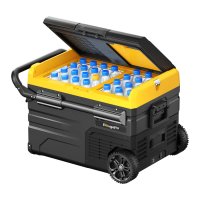
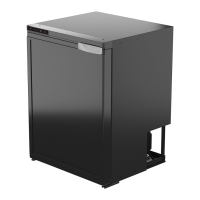
This document outlines the operation and maintenance of an RV Refrigerator, available in two models, CR65 and CR130. It serves as a comprehensive guide for users to safely install, operate, and maintain their appliance.
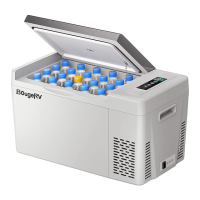
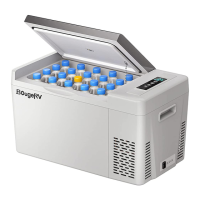
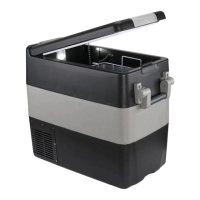
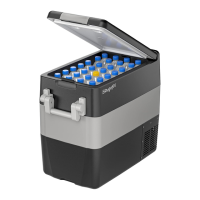
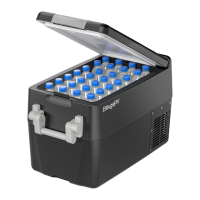
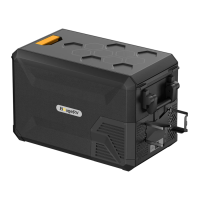
The RV Refrigerator is designed for both refrigeration and freezing, offering a versatile solution for food storage in various environments, including RVs, homes, offices, and other similar applications. Its core function is to keep food and beverages at optimal temperatures, with the ability to switch between refrigerator and freezer modes as needed. The appliance is equipped with a high-efficiency DC compressor and a conversion module, ensuring reliable performance while being CFC-free and featuring excellent heat insulation. This design contributes to energy efficiency and environmental friendliness.
One of the key usage features is the intelligent battery protection system, which is crucial for RV and off-grid applications. This system prevents the vehicle's battery from being completely drained, safeguarding against unexpected power loss. Users can select from High, Medium, or Low battery protection modes, with the factory setting typically being High. The refrigerator also boasts an LED display control panel, which allows for easy temperature setting and monitoring of both the fridge and freezer zones. The temperature can be adjusted using simple plus and minus buttons, and the settings are automatically saved. The display also indicates whether the appliance is operating as a refrigerator ("rE") or a freezer ("Fr").
The appliance offers flexibility in its configuration. The fridge and freezer compartments can be combined or separated, allowing users to customize the storage space according to their needs. This is achieved by opening a lid at a 75-degree angle and pulling out a divider horizontally. Another convenient feature is the reversible door, which can be configured to open from either the left or the right side. This adaptability makes it suitable for various installation layouts and user preferences. The process for reversing the door involves unscrewing hinges, moving door axles, and reinstalling the door latch and decorative sheets.
Installation of the RV Refrigerator requires careful attention to ensure proper ventilation and power connection. A minimum of 50mm space at the rear and top, and 20mm on each side, is recommended for optimal airflow. The appliance connects directly to a 12/24VDC system in a vehicle, and the manual provides guidelines for the minimal cable cross-section based on the wire length to the battery. For AC power, a dedicated adapter is used. The refrigerator can be mounted into a cabinet using screw holders built into its side walls, or optionally with a standard or flush-mount installation frame for a secure and aesthetically pleasing finish. After installation, it is important to verify the continuity of the earth circuit and ensure all cables are protected and fixed to prevent accidental disconnections or contact with hot or sharp parts.
Maintenance features are straightforward, focusing on cleanliness and proper storage. Regular cleaning involves switching off and unplugging the device, then wiping it with a wet cloth and drying it. It is explicitly stated not to soak the fridge in water or use abrasive cleaning agents, as these can damage the device. For long-term storage, users should switch off and unplug the appliance, remove all stored items, wipe off excess water, and place it in a cool, dry place with the lid slightly open to prevent mold and odors.
Defrosting is another important maintenance aspect. Frost can accumulate in the interior, reducing cooling capacity. To defrost, the device should be switched off, unplugged, and all items removed. The lid should be left open, and the defrosted water wiped away. A critical safety note advises against using hard or pointed tools to remove ice, as this can damage the refrigerant circuit.
The manual also includes a troubleshooting section to help users address common issues such as the refrigerator not working, compartments being too warm, food freezing, or unusual noises. It provides potential causes and suggestions, including checking power connections, adjusting battery protection modes, and restarting the device. For more complex issues or error codes (F1-F8), it advises contacting the manufacturer for service.
Overall, the RV Refrigerator is designed for ease of use, flexibility, and durability, catering to the specific needs of mobile and off-grid living while ensuring food safety and appliance longevity.
 General
| Capacity | 65 liters |
|---|---|
| Power Consumption | 45W |
| Refrigerant | R134a |
| Voltage | 12/24V DC |
| Temperature Range | -20°C to 10°C |
| Noise Level | ≤45dB |

 To Next Page