Start of packet read (T
VD
in the Standard) is a given time where the packet must be
available to be read. The time is calculated by adding the values of Alignment Point
with TR
OFFSET
.
When the first packet in the frame arrives, the RTP timestamp will be compared to
the arrival time, that time difference constitutes Path Delay. The packets can arrive
both before and after the alignment point. The RTP Align Offset graph displays the
time difference between the RTP timestamp in the packets and Alignment point. FPT
(first packet time) shows the time difference between the Alignment Point and the
timestamp at the arrival time.
Since the RTP clock ticks at 90kHz, and because of that has a resolution of
11.111us the accuracy of RTP based timing can not be higher than that. For
example at 50fps the RTP counter will tick 1800 ticks per frame ( 90kHz/50FPS =
1800).
The time interval between the packet arrival and start of packet read constitutes the
Margin. The FPT margin indicates how closely the packet arrives to the start of the
packet read, which is when the packet needs to be available at the latest.
There are three different types of senders defined in the standard. Narrow,
NarrowLinear and Wide. The sender types are specified to accommodate the Packet
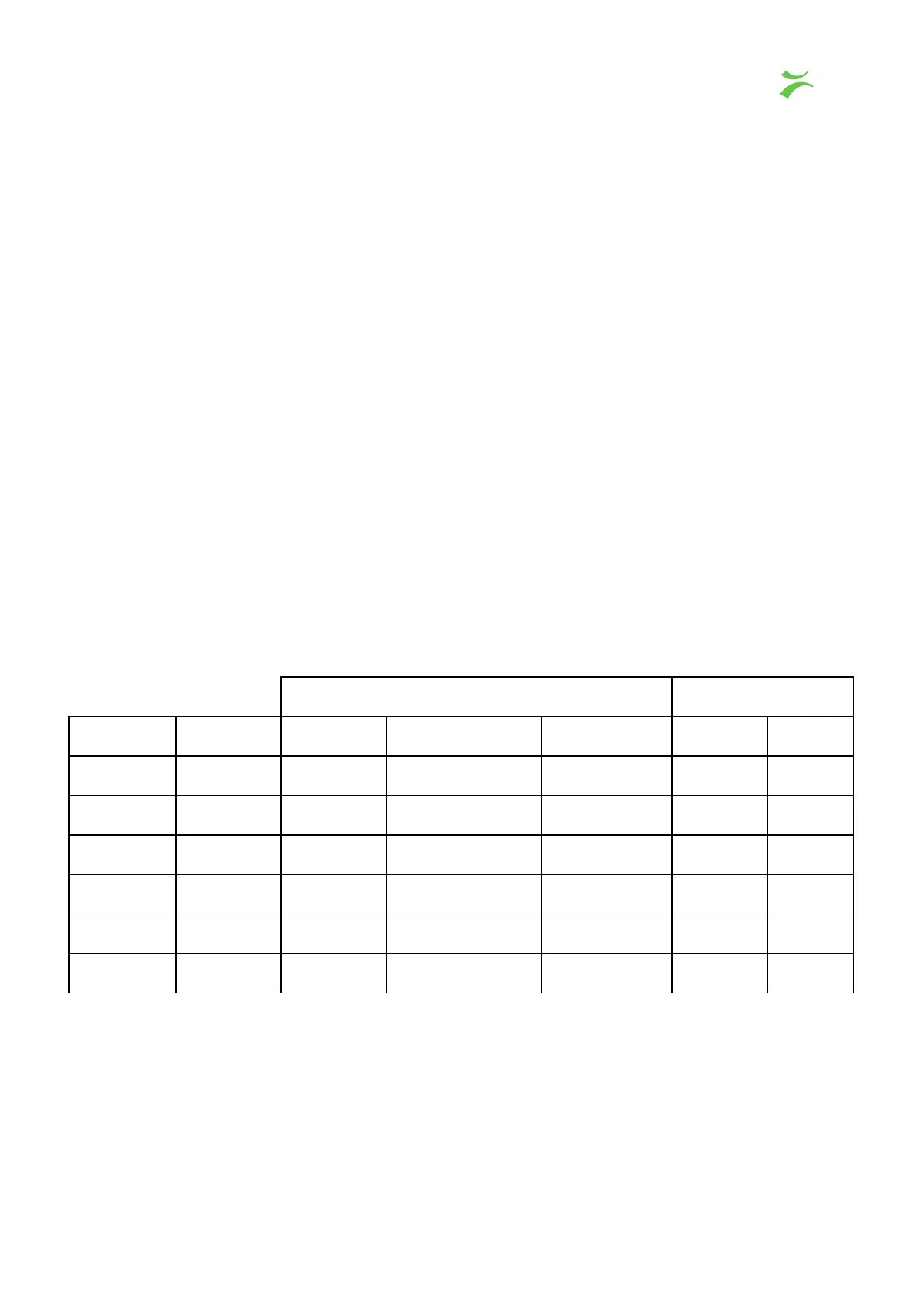
read schedule, VRX and The network compatibility model (C). The table above gives
an overview of VRXFULL and CMAX for some well used video streams.
VB440 Studio Probe User’s Manual v6.0 © Bridge Technologies Co AS 59


 To Next Page