EasyManua.ls Logo

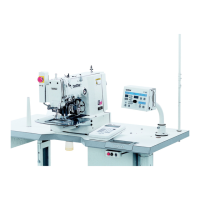
Brother KE-430F - Service Manual

Brother KE-430F
184 pages
Print Icon
To Next Page IconTo Next Page
Loading...
KE-430F
BE-438F
Please read this manual before making any adjustments.
ELECTRONIC DIRECT DRIVE LOCKSTITCH BAR TACKER
ELECTRONIC DIRECT DRIVE LOCKSTITCH BUTTON SEWER
SERVICE MANUAL

Table of Contents

Other manuals for Brother KE-430F

Questions and Answers

  • C
    Christina ColeAug 20, 2025
    Why does the upper thread keep breaking on my Brother KE-430F Sewing Machine?
    • B
      brownomarAug 20, 2025
      If the upper thread breaks on your Brother Sewing Machine, it could be due to several reasons: * The upper thread tension might be too strong – try adjusting it. * The needle may be incorrectly installed – ensure it is correctly installed. * The thread could be too thick for the needle – use the correct thread. * The thread take-up spring tension and height might be incorrect – adjust them. * There may be damage to the rotary hook, needle hole plate, or needle – file smooth or replace the part. * The thread could be melting, especially if it's synthetic – use the needle cooler.
  • R
    rossmatthewAug 21, 2025
    How to fix skipped stitches on my Brother KE-430F?
    • C
      Catherine SchaeferAug 22, 2025
      Skipped stitches on your Brother Sewing Machine can occur for a few reasons: * The clearance between the needle and rotary hook tip might be too great – adjust the needle clearance. * The needle and rotary hook timing could be incorrect – adjust the needle bar lift amount. * The driver may be contacting the needle too much – adjust the driver needle guard. * The needle might be bent – replace it. * The needle might be installed incorrectly – install it correctly.
  • G
    Glen GloverAug 25, 2025
    Why does the thread keep coming unthreaded on my Brother KE-430F?
    • J
      James BarrettAug 25, 2025
      The thread coming unthreaded on your Brother Sewing Machine may be due to: * Stitches being skipped at the sewing start – refer to “Skipped stitches occur”. * Uneven needle thread – adjust the sub-tension. * Needle thread being too short – use a thread nipper device.
  • J
    Jacqueline Gonzalez DDSAug 26, 2025
    What to do if my Brother KE-430F does not operate even when powered on?
    • E
      Elizabeth VangAug 26, 2025
      If your Brother Sewing Machine doesn't operate when powered on and the foot switch is depressed: * Check if the machine head switch cord is disconnected. * Adjust the position of the switching plate. * If the machine head switch is broken, replace it.
  • A
    Anthony WolfAug 27, 2025
    Why is the thread jamming in my Brother KE-430F?
    • S
      Steven WilsonAug 28, 2025
      Thread jamming in your Brother Sewing Machine can occur due to: * Incorrect thread take-up spring tension and height. Adjust the tension and height of the thread take-up spring. * Incorrect needle and rotary hook timing. Adjust the needle bar lift amount. * The shuttle race thread guide not separating the threads. Adjust the position of the shuttle race thread guide.
  • K
    Kevin AdamsAug 30, 2025
    How to adjust incorrect thread tightness on Brother KE-430F Sewing Machine?
    • J
      Jenny KleinAug 30, 2025
      Incorrect thread tightness on your Brother Sewing Machine can be caused by: * Upper thread tension being too weak – adjust the upper thread tension. * Lower thread tension being too weak – adjust the lower thread tension. * Thread take-up spring tension and height being incorrect – adjust the tension and height of the thread take-up spring.
  • J
    Julie GarnerAug 31, 2025
    What to do if the needle breaks on my Brother KE-430F?
    • C
      csmithSep 1, 2025
      Needle breakage in your Brother Sewing Machine can be attributed to: * The needle touching the rotary hook – adjust the needle clearance. * Incorrect needle bar lift amount – adjust the needle bar lift amount. * A bent needle – replace the needle. * Using a needle that's too thin – use the correct needle for the material. * The needle striking the button (BE-438F) – refer to “5-6. Checking the sewing pattern”.
  • J
    Jeremy FrankSep 3, 2025
    What causes the lower thread to break on my Brother KE-430F Sewing Machine?
    • J
      Jonathan StuartSep 3, 2025
      If the lower thread breaks on your Brother Sewing Machine, check the following: * The lower thread tension might be too strong, so adjust it. * The corners of the needle hole plate or bobbin case might be damaged; file them smooth or replace the affected part.
  • S
    saraowensSep 5, 2025
    Why is the seam finish poor on the reverse side of the material with my Brother KE-430F?
    • J
      joycedonaldSep 5, 2025
      A poor seam finish on the reverse side of the material when using your Brother Sewing Machine can be caused by: * The shuttle race thread guide not separating the threads sufficiently – adjust its position. * The upper thread not being properly tight – adjust the upper thread tension. * Uneven needle thread – adjust the sub-tension. * The needle thread being too long – adjust the sub-tension, and if using a thread nipper device, turn the tension nut to adjust the upper thread trailing length to 35 – 38 mm. * The needle striking the button (BE-438F) – refer to “5-5. Checking the sewing pattern”.
  • T
    Tiffany MoyerSep 7, 2025
    Why is the upper thread not trimming on my Brother KE-430F?
    • W
      Willie BishopSep 7, 2025
      If the upper thread is not being trimmed by your Brother Sewing Machine, consider the following: * The movable knife might be blunt – replace it. * The fixed knife might be blunt – sharpen or replace it. * The movable knife might not be picking up the thread – adjust the position of the shuttle race thread guide. * The needle bar lift amount might be incorrect - adjust the needle bar lift amount. * Skipped stitches at the sewing end can prevent the movable knife from picking up the thread – refer to “Skipped stitches occur”. * The movable knife position might be incorrect – adjust its position. * The sub-tension might be too weak – turn the sub-tension nut to adjust the tension.

Summary

SAFETY INSTRUCTIONS

Indications

Describes DANGER, WARNING, and CAUTION terms used in safety instructions.

Symbols

Explains the meaning of caution, prohibition, and mandatory symbols.

Environmental Requirements and Installation

Installation Precautions

Details requirements and precautions for machine setup and electrical work.

Operational Safety Precautions

Maintenance and Inspection Safety

Safety precautions for maintenance, inspection, and part replacement.

Warning Labels Overview

High Voltage and Danger Labels

Describes DANGER, GEFAHR labels and high voltage area warnings.

Ground Connection and Operational Warnings

Emphasizes ground connection importance and general operational warnings.

Handling and Setup Precautions

Carrying and Tilting Machine Head

Explains proper lifting, handling, and tilting procedures for the machine head.

Function Settings - Power On Functions

Data Initialization Function

Resets the machine to factory default settings.

Software Version and Error Log Display

Allows viewing software version and checking machine error history.

Home Position and Treadle Adjustment Modes

Adjusts motor home positions and sets foot switch depression strokes.

Function Settings - Advanced Functions

Main Shaft Motor and Digital Tension Adjustment

Adjusts main shaft motor position and corrects digital tension output.

Protect Setting and Version Update

Sets operation protection levels and updates the control program version.

Function Settings - Memory Switch Operations

Setting Memory Switches (Advanced)

Step-by-step guide to changing memory switch settings.

Function Settings - Memory Switch Lists

Memory Switches - Device and Error Settings

Configures device settings and error processing behavior.

Using SD Cards

SD Card Handling Precautions

Provides precautions for using commercially available SD cards.

Data Read;Write Preparation and Modes

Explains SD card preparation and lists available read/write modes.

Reading and Writing Pattern Data

Guides on transferring pattern data between SD card and machine.

Reading and Writing Memory Switch Data

Guides on transferring memory switch settings between SD card and machine.

Writing Error Log and Version Data to SD Card

Guides on saving error logs and updating control program via SD card.

Disassembly Precautions and Procedures

General Disassembly Precautions

Safety warnings and general notes before starting disassembly.

Assembly Precautions and Procedures

General Assembly Precautions

Safety warnings and general notes before starting assembly.

Adjustment Precautions and Procedures

General Adjustment Precautions

Safety warnings and notes for performing adjustments.

Standard Thread Tension Settings

Provides recommended thread tensions for various materials.

Adjusting Thread Trimmer Cam and Home Positions

Guides on adjusting trimmer cam position and motor home positions.

Correcting Digital Tension Output

Guides on calibrating digital tension output using a tension gauge.

Applying Grease Procedures

General Grease Precautions

Safety warnings for handling oil and grease.

Installing 2-Pedal Foot Switch (Option)

Safety Warnings for Foot Switch Installation

DANGER and NOTE regarding electrical safety and ground connection.

Electric Mechanism Precautions

General Precautions for Adjustment

Safety warnings regarding electric shock and injury.

Electric Mechanism Components

Troubleshooting Flowchart and Problem Solutions

Problem Solutions - General Advice and Error Status #1

Provides general advice and solutions for power indicator errors.

Problem Solutions - Error Status #2 and #5

Details solutions for errors related to switches, connections, and foot switch.

Problem Solutions - Error Status #6, #7, #8

Details solutions for errors related to X/Y feed, encoders, and work clamp motors.

Problem Solutions - Error Status #9, #10-#15

Details solutions for thread nipper, clamp, test, and feed mechanism errors.

Problem Solutions - Error Status #16-#19

Details solutions for sewing, motor, stitch, and thread trimmer errors.

Problem Solutions - Error Status #20, #21

Details solutions for position, SD card, and panel errors.

Table of Error Codes

Switch-Related Errors

Lists switch-related error codes and their remedies.

Motor and Feed Mechanism Errors

Lists motor and feed mechanism error codes and remedies.

Work Clamp, Communication, and Memory Errors

Lists work clamp, communication, and memory error codes and remedies.

Data Editing and Device-Related Errors

Lists data editing and device error codes and remedies.

PCB-Related and Version Update Errors

Lists PCB and version update error codes and remedies.

Troubleshooting Common Problems

Brother KE-430F Specifications

General IconGeneral
TypeElectronic Sewing Machine
Bobbin WindingAutomatic
Feed SystemDrop Feed
Stitch TypeDecorative
Stitch Length5 mm
Stitch Width7 mm
Presser Foot LiftAdjustable
BobbinDrop-in
Thread TensionAdjustable
Power RequirementsAC 100-120V, 50/60Hz

Related product manuals