EasyManua.ls Logo

Brother KE-435C - User Manual

Brother KE-435C
83 pages
Print Icon
To Next Page IconTo Next Page
Loading...
KE-434C
KE-435C
Please read this manual before using the machine.
Please keep this manual within easy reach for quick reference.
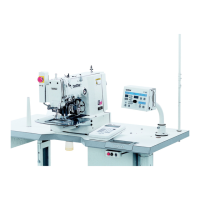
ELECTRONIC LOCKSTITCH PATTERN TACKER
ELECTRONIC LOCKSTITCH PATTERN TACKER WITH STEPPING FOOT
INSTRUCTION MANUAL

Table of Contents

Other manuals for Brother KE-435C

Questions and Answers

  • J
    Joel DanielsSep 15, 2025
    What causes poor seam finish on reverse side of Brother KE-435C Sewing Machine material?
    • N
      nmoralesSep 15, 2025
      A poor seam finish on the reverse side of the material can be caused by: * The shuttle race thread guide not separating the threads sufficiently; adjust its position. * The upper thread not being properly tight; adjust the upper thread tension. * Uneven needle thread; adjust the sub-tension. * The needle thread being too long; adjust the thread take-up lever stroke.
  • J
    Jason KrauseAug 25, 2025
    What to do if my Brother KE-435C is skipping stitches?
    • P
      phillip84Aug 25, 2025
      If your Brother Sewing Machine is skipping stitches, it could be due to: * Too much clearance between the needle and rotary hook tip - adjust the needle clearance. * Incorrect needle and rotary hook timing - adjust the needle bar lift amount. * The driver contacting the needle too much - adjust the driver needle guard. * A bent needle - replace the needle. * The needle being installed incorrectly - install the needle correctly.
  • V
    Victoria HawkinsAug 25, 2025
    Why is my Brother KE-435C Sewing Machine upper thread breaking?
    • R
      rhartAug 26, 2025
      There are several reasons why the upper thread might be breaking: * The upper thread tension may be too strong, so you should adjust it. * The needle might be installed incorrectly; make sure it is installed correctly. * The thread might be too thick for the needle; use the correct thread for the needle. * The thread take-up spring tension and height could be incorrect; adjust them. * The rotary hook, needle hole plate, or needle might be damaged; file smooth or replace the part. * If using synthetic thread, it might be melting; use a thread cooling device.
  • R
    Ronald WeeksAug 26, 2025
    What to do if my Brother KE-435C Sewing Machine skips stitches?
    • E
      ellismarkAug 27, 2025
      Skipped stitches can occur for several reasons: 1. The clearance between the needle and rotary hook tip might be too great; adjust the needle clearance. 2. The needle and rotary hook timing could be incorrect; adjust the needle bar lift amount. 3. The driver might be contacting the needle too much (except KE-484C); adjust the driver needle guard. 4. The needle could be bent; replace it. 5. The needle might be installed incorrectly; install it correctly. 6. The needle thread might be too short; adjust the thread take-up lever stroke.
  • T
    Tammy VelezSep 16, 2025
    What to do if the Brother KE-435C Sewing Machine work clamp does not rise?
    • N
      Nicole BatesSep 16, 2025
      If the work clamp or button clamp does not rise, it could be due to: * Sluggish work clamp operation; grease the sliding part of the work clamp. * The work clamp (Button clamp) lift amount being too great; adjust the work clamp (button clamp) lift amount. * Too much friction between the work clamp plate and work clamp arm lever plate; grease them. * The work clamp contacting the thread wiper; adjust the position of the thread wiper.
  • D
    David WallaceSep 23, 2025
    What to do if inner clamping device does not operate in Brother KE-435C?
    • C
      Christina MurphySep 23, 2025
      If the inner clamping device does not operate, adjust the work clamp pressure so that the inner clamping device operates.
  • J
    Jon AndersonSep 8, 2025
    Why is the upper thread not trimming on my Brother KE-435C Sewing Machine?
    • M
      Michael SpearsSep 8, 2025
      The upper thread may not be trimming on your Brother Sewing Machine because: * The movable knife is blunt - replace it. * The fixed knife is blunt - sharpen or replace it. * The movable knife does not pick up the thread - adjust the position of the shuttle race thread guide. * The movable knife does not pick up the thread because of skipped stitches at the sewing end - refer to “Skipped stitches occur”. * The movable knife position is incorrect - adjust the position of the movable knife. * The sub-tension is too weak - turn the sub-tension nut to adjust the tension.
  • S
    Shannon PattersonSep 8, 2025
    What to do if the work clamp does not rise on my Brother Sewing Machine?
    • V
      Victoria KingSep 9, 2025
      If the work clamp on your Brother Sewing Machine does not rise, it could be due to: * Sluggish work clamp operation - grease the sliding part of the work clamp. * The work clamp lift amount being too great - adjust the height of the work clamp to within 17 mm (25 mm). * Too much friction between the presser plate and presser arm lever support - grease them. * The work clamp contacting the thread wiper - adjust the position of the thread wiper.
  • M
    Mark BakerSep 2, 2025
    Why is my Brother Sewing Machine lower thread breaking?
    • G
      glenda48Sep 2, 2025
      The lower thread may break because: * The lower thread tension is too strong, so adjust the lower thread tension. * The corners of the needle hole plate or bobbin case are damaged; file smooth or replace the affected part.
  • L
    leslie58Aug 31, 2025
    How to adjust incorrect thread tightness on a Brother KE-435C?
    • J
      Jonathan KiddAug 31, 2025
      Incorrect thread tightness on your Brother Sewing Machine can be fixed by: * Adjusting the upper thread tension if it is too weak. * Adjusting the lower thread tension if it is too weak. * Adjusting the tension and height of the thread take-up spring if they are incorrect.

Summary

Safety Instructions

Safety Indications and Meanings

Explains safety indications and symbols used in the manual for safe operation and accident prevention.

Notes on Safety

Environmental Requirements

Details environmental conditions required for safe and proper machine operation, including temperature and humidity.

Installation Safety Guidelines

Provides crucial safety guidelines for the proper installation of the sewing machine, emphasizing qualified technicians.

Warning Labels

Machine Warning Labels

Identifies and explains warning labels found on the sewing machine for user safety and awareness.

Name of Each Part

Machine Components Identification

Illustrates and labels the various components of the sewing machine for easy identification.

Specifications

Machine Specifications

Lists technical specifications and capabilities of the KE-434C and KE-435C models.

Examples of Sewing Patterns

Displays visual examples of different sewing patterns the machine can produce.

Installation

Power Table Setup

Instructions for setting up the power table and ensuring correct dimensions for installation.

Connecting the Cords

Detailed steps for connecting electrical and accessory cords to the machine and control box.

Installing the Foot Switch

Guides on correctly mounting and connecting the foot switch for machine operation.

Lubrication

Lubrication Points and Procedure

Details the necessary lubrication points and steps to maintain the machine's moving parts.

Operation

Operation Panel Overview

Explains the functions of each button and indicator on the machine's operation panel.

Operating Procedure

Step-by-step guide on setting program numbers, scales, and sewing speed.

Checking the Sewing Pattern

Pattern Checking Procedure

Outlines the process for checking sewing patterns by operating the feed mechanism.

Correct Use

Needle and Thread Selection

Provides guidance on selecting appropriate needles and threads for different materials and applications.

Thread Tension Adjustment

Explains how to adjust upper and lower thread tensions for optimal seam quality.

Sewing

Sewing Preparation and Execution

Covers pre-sewing checks and the step-by-step process for operating the machine to sew.

Maintenance and Inspection

Cleaning Procedures

Details how to clean key parts like the needle, rotary hook, and air inlets to ensure proper function.

Standard Adjustments

Needle Bar Height and Lift Adjustment

Instructions for adjusting the needle bar height and lift amount for correct stitch formation.

Thread Wiper Adjustment

Guides on adjusting the thread wiper's position and clearance for effective thread trimming.

Work Clamp Lift Adjustment

Explains how to adjust the maximum lift amount of the work clamp for different materials.

Using the Counters

Bobbin Thread Counter Usage

Describes how to set and use the bobbin thread counter to track sewn articles.

Changing Functions Using the DIP Switches

Operation Panel DIP Switches

Details functions controllable via DIP switches on the operation panel.

DIP Switches Inside the Control Box

Explains the functions adjustable by DIP switches located within the main control box.

Changing Special Functions Using the Memory Switches

Memory Switch Functions

Lists and explains special functions configurable through memory switches.

Setting the Work Clamp Mode

Setting Solenoid Work Clamp Mode

Explains how to configure presser motions for solenoid work clamps using DIP switches.

Light Work Clamp Setup

Details how to adjust hose connections for light work clamp operation, aiding precise positioning.

Table of Error Codes

Error Code Reference

Provides a comprehensive list of error codes, their causes, and recommended remedies.

Gauge Parts List According to Subclasses

Standard Gauge Parts

Lists standard gauge parts categorized by material type and specification.

Making the Feed Plate and Work Clamp Plate for Inner Clamping Device

Sewing Area Definition

Defines the sewing area dimensions and necessary optional parts for inner clamping.

Making the Feed Plate

Provides instructions and dimensions for creating a custom feed plate for specific applications.

Troubleshooting

Work Clamp Issues

Addresses common problems related to work clamp movement and lift amount.

Thread Related Problems

Covers issues like thread breaks, jamming, and incorrect tension, with solutions.

Optional Parts

Available Optional Accessories

Lists and describes optional parts that can enhance machine functionality.

Brother KE-435C Specifications

General IconGeneral
BrandBrother
ModelKE-435C
CategorySewing Machine
LanguageEnglish

Related product manuals