-14-
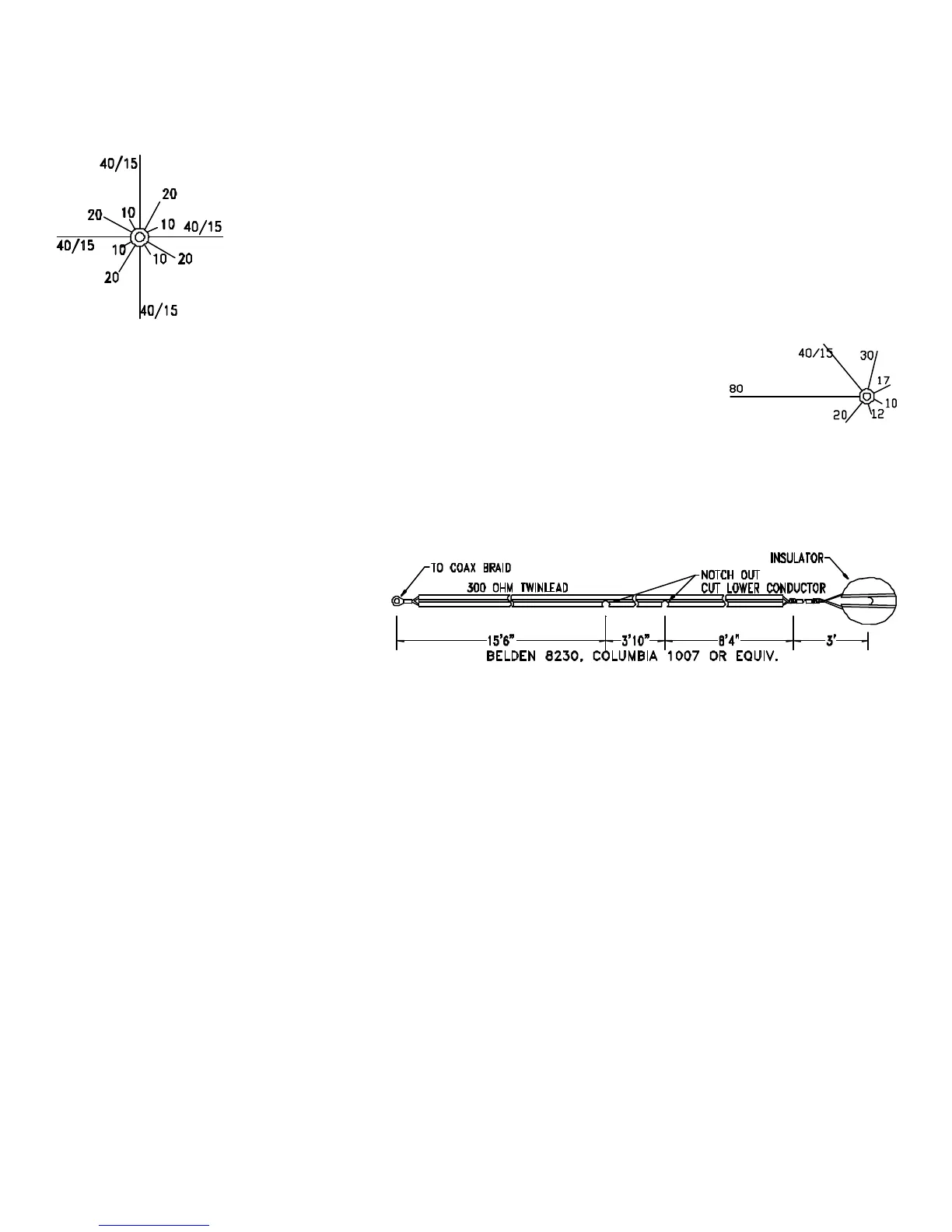
Figure 4
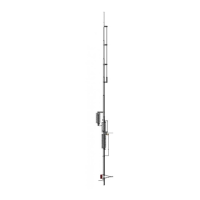
Figure 5
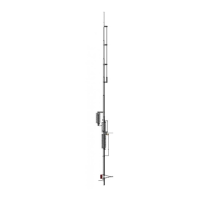
Figure 6
TECH NOTES—GROUND RADIAL SYSTEMS
The 12-radial system of Figure 4 is a very good one, but it requires at least
12 tie-off points. Butternut has developed a multiband radial made of
300-ohm ribbon that resonates simultaneously on 40, 20, 15 and 10
meters. Four such radials offer essentially the same ground plane
performance as the system of Figure 4 but require only 4 supports. These
multiband radials plus additional wire for an 80 meter radial are available
separately (our STR-II kit) or as part of the Butternut roof mounting kit
(RMK-II).
There are times when physical restrictions will dictate
the use of fewer than four radials, and at least one manufacturer
recommends 2 radials per band, the radials for each band running 180
degrees away from each other. A simpler (and no doubt less effective)
system is shown in Figure 5. Since only one resonant radial is used per
band the antenna will radiate both vertically and horizontally polarized
energy, and the pattern will not be completely omnidirectional. For true ground plane action
and predominantly vertical polarization no fewer than three equally-spaced radials should be
used.
Figure 6 illustrates the construction
of a multi-band radial which is
resonant on 40, 20, 15 and 10
meters. Good quality 300 ohm TV
ribbon lead should be used (velocity
factor is critical), and the conductors
should employ at least one strand of
steel wire to support the weight of the radial. Four such radials will be the practical equivalent
of the system shown in figure four for operation on 40 through 10 meters.
Regardless of the number of radials used in either elevated or ground level systems, all radials
should be attached to the ground connection at the antenna feedpoint by the shortest possible
leads. An elaborate radial system at ground level, for example, cannot be used with a vertical
antenna on a rooftop or on a tall tower, for the length of the ground lead would effectively
become part of the antenna, thus detuning the system on most or all bands.
METAL TOWERS AND MASTS
If a metal mast or tower is used to support a vertical antenna all radials should be connected to
the mast or tower at the ground connection of the antenna feedline. This is because one of the
functions of a resonant radial is to detune a supporting metal structure for antenna currents
that might otherwise flow on the structure and thus turn the vertical antenna system into a
vertical long wire with unwanted high-angle radiation.
OTHER MOUNTING SCHEMES
In cases where a resonant vertical antenna may neither be ground mounted nor used with an
elevated ground plane, operation may still be possible if connection can be made to a large
mass of metal that is directly connected or capacitively coupled to the ground, e.g., central air



 To Next Page