Starting and Operating Instructions
. . . 286
Hitches
It's important to have the correct
hitch equipment.
Most small-to-medium sized trail-
ers can be towed with a weight-
carrying hitch which has a coupler
attached to the hitch ball on the
vehicle. Larger trailers may require
a weight-distributing hitch that
uses spring bars to evenly distrib-
ute the trailer tongue weight
between the vehicle’s and trailer’s
axles.
Consider using a sway control
when towing a trailer, regardless
of trailer size.
Consult a trailering professional
regarding the use of sway controls
and follow the trailer manufactur-
er's recommendations and instruc-
tions.
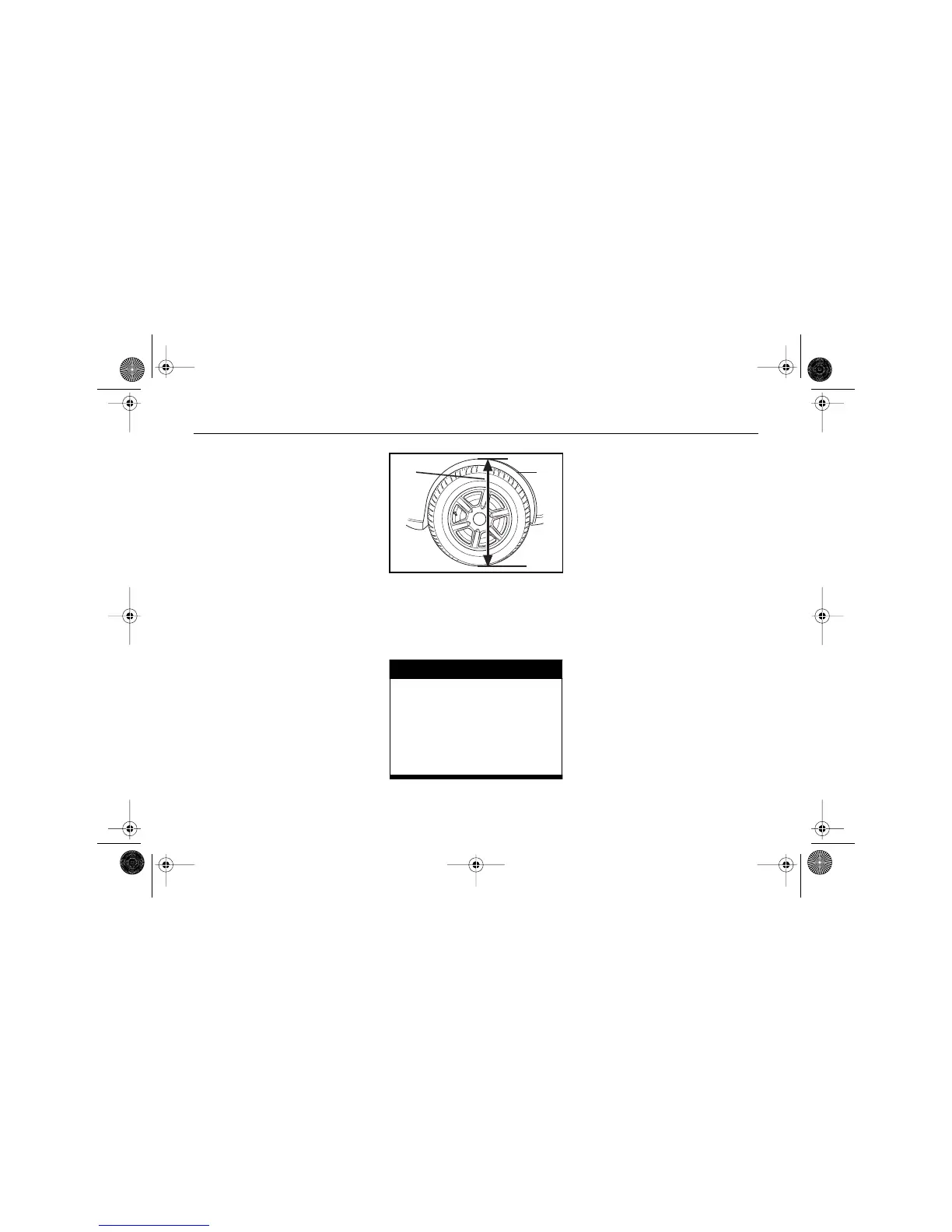
If you are using a weight-distribut-
ing hitch, adjust the spring bars so
that distance remains the same
before and after coupling the trail-
er to the vehicle and adjusting the
hitch.
NOTICE
If you use a step-bumper hitch,
your bumper could be
damaged in sharp turns. Make
sure you have ample room
when turning to avoid contact
between the trailer and the
bumper.
Safety Chains
You should always attach chains
between your vehicle and your
trailer. Cross the safety chains
under the tongue of the trailer so
that the tongue will not drop to
the road if it becomes separated
from the hitch. Instructions about
safety chains may be provided by
the hitch manufacturer or by the
trailer manufacturer.
For trailers up to 2270 kg with the
factory-installed step bumper, you
may attach the safety chains to the
attachment points on the bumper.
For heavier trailers weighing up to
the vehicle's trailer rating limit,
attach the safety chains to the
attachment point on the hitch
platform.
Always leave just enough slack so
you can turn with your rig. And,
never allow safety chains to drag
on the ground.
A
$10araEscaladeEXT Page 286 Wednesday, October 14, 2009 9:54 AM









 To Next Page