3. A-D Conversion Circuit/ABC Circuit
a. A-D Conversion Circuit
The A-D conversion circuit converts analog signals from the CCD to 8-bit digital image signals.
In general, the A-D conversion signal performs A-D conversion based on the reference voltage. As
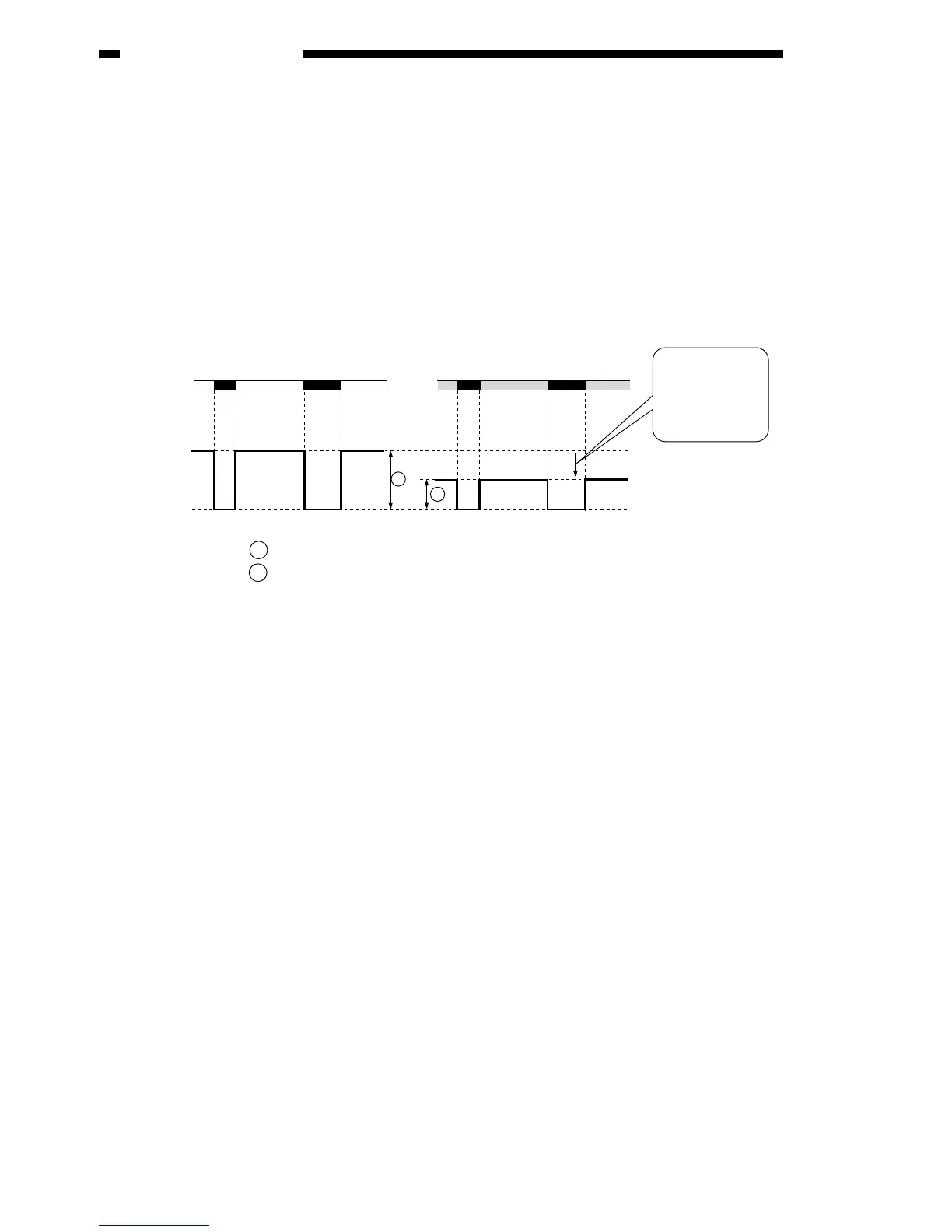
such, increasing/decreasing the reference voltage will increase/decrease the dynamic range (difference
between maximum output level and minimum output level), affecting the signal level after A-D conversion.
(This means faithful digital conversion of analog inputs is not possible.)
The ABC circuit to be explained next takes advantage of this fact; i.e., the reference voltage is varied
according to the A-D conversion circuit output signal level to vary the dynamic range, thereby canceling
the background density of originals. (This processing is executed for every main scanning line.)
Figure 3-303
b. ABC (auto background control) Circuit
The ABC circuit operates if ‘priority to speed’ is selected as part of AE (auto density mechanism) set-
tings; image signals after A-D conversion are returned to the ABC circuit for the following processing.
• Identifies the A-D conversion circuit output signal level.
• Varies the reference voltage based on the results of identification.
The reference voltage obtained here is sent to the A-D conversion circuit. The “priority on speed”
function may be adjusted in service mode (
*
3
*
); see p. 3-204
Outline of A-D conversion
FFH (white)
00H (black)
Surface of
an original
<White original>
<Colored original>
A
B
: Dynamic range of a white original.
: Dynamic range of a colored background.
A
B
FFH (white)
00H (black)
The ABC circuit
varies the reference
voltage to lower the
FFH (white) level,
thereby decreasing
the dynamic range.
Output level



 To Next Page