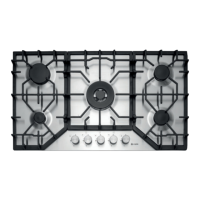
14 Instruction manual C706G Please keep this instruction manual for future reference
If, despite all of these checks, the hob does not function properly and problems persist, call our
Caple Service department for help:
T - 0117 938 7420
E - service@caple.co.uk
INSTALLATION INSTRUCTIONS
Installation should only be attempted by a qualified installer so that the installation and
maintenance procedures may be followed in the most professional and expert manner possible.
IMPORTANT:
Unplug the electrical connection before performing any maintenance or regulation upkeep work.
POSITIONING FOR GAS HOB
IMPORTANT:
This unit may be installed and used only in permanently ventilated rooms according to British
standards.
The following requirements must be observed:
› The room must be fitted with a ventilation system which vents smoke and gases from
combustion to the outside. This must be done by means of a hood or electric ventilator that
turns on automatically each time the hood is operated.
Installation Instructions
Installation should only be attempted by a qualified installer so that the installation and maintenance
procedures may be followed in the most professional and expert manner possible. Important: Unplug the
electrical connection before performing any maintenance or regulation upkeep work.
Positioning for gas hob
Important: this unit may be installed and used only in permanently ventilated rooms according to British
standards
The following requirements must be observed:
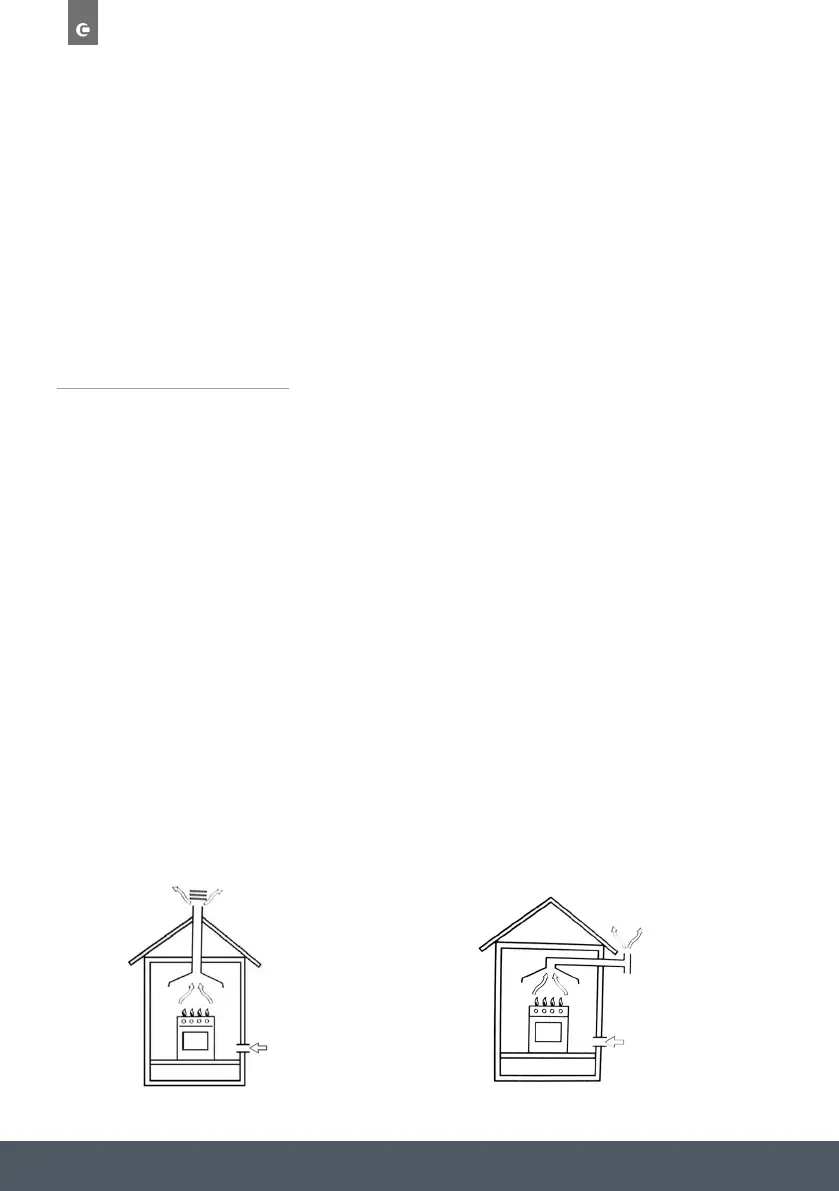
a) The room must be fitted with a ventilation system which vents smoke and gases from combustion to the
outside.
This must be done by means of a hood or electric ventilator that turns on automatically each time the
hood is operated.
In a chimney stack or branched flue. Directly to the Outside
(Exclusively for cooking appliances)
b) The room must also allow for the influx of the air needed for proper combustion. The flow of air for
combustion purposes must, not be less than 2 m³/h per kW of installed capacity. The supply of said air
can be effected by means of direct influx from the outside through a duct with an inner cross section of
at least 100cm² which must not be able to be accidentally blocked.
c) Intensive and prolonged use of the appliance may necessitate supplemental ventilation, e.g. opening a
Window or increasing the power of the air intake system (if present).
d) Liquefied petroleum gases are heavier than air and, as a result, settle downwards. Rooms in which LPG
tanks are installed must be fitted with ventilation openings to the outside in order to allow the gas to
escape in the event of a leak. Therefore, LPG tanks, whether empty or partially full, must not be
installed or stored in rooms or spaces below ground level (cellars, ect.). It is also a good idea to keep
only the tank currently being used in the room, making sure that it is not near sources of heat (ovens,
fireplaces, stoves, etc.) that could raise the internal temperature of the tank above 50ºC.
Installation of built-in stove tops
The gas hobs are prepared with protection degree against excessive heating of type X, the appliance can
therefore be installed next to cabinets, provided the height does not exceed that of the hob. For a correct
installation of the cooking hob the following precautions must be followed:
a) The hob may be located in a kitchen, a kitchen/diner or bed sitting room, but not in a bathroom or shower
room.
b) The furniture standing next to the hob, that is higher than the worktop, must be placed at least 110mm
from the edge of the hob.
c) The cabinets positioned next to the hood should be at a height of at least 420 mm (Fig. 5).
DIRECTLY TO THE OUTSIDEIN A CHIMNEY STACK OR BRANCHED FLUE



 To Next Page