26 Instruction manual RiR125 Please keep this instruction manual for future reference
FOOD STORAGE
› Never place warm food in the refrigerator. Warm food should be allowed to cool at room
temperature and should be arranged to ensure adequate air circulation in the refrigerator
compartment.
› Werecommendthatmeatandcleansharelooselywrappedandstoredontheglass
shelf just above the vegetable bin where the air is cooler, as this provides the best storage
conditions.
› Store loose fruit and vegetable items in the crisper containers.
› Storing fruit and vegetables separately helps prevent ethylene-sensitive vegetables (green
leaves, broccoli, carrot, etc.) being affected by ethylene-releaser fruits (banana, peach,
apricot, etc.).
› Do not put wet vegetables into the refrigerator.
› Storage time for all food products depends on the initial quality of the food and an
uninterrupted refrigeration cycle before refrigerator storage.
› To avoid cross-contamination do not store meat products with fruit and vegetables. Water
leaking from meat may contaminate other products in the refrigerator. You should package
meat products and clean any leakages on the shelves.
› Donotputfoodinfrontoftheairowpassage.
› Consume packaged foods before the recommended expiry date.
NOTE:
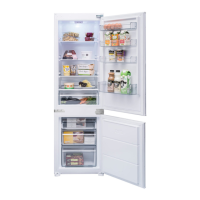
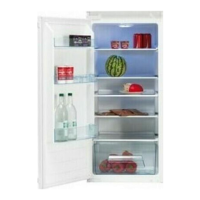
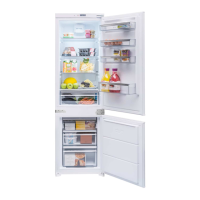
Potatoes, onions and garlic should not be stored in the refrigerator. The table below is a quick
guidetoshowyouthemostefcientwaytostorethemajorfoodgroupsinyourrefrigerator
compartment.
To avoid contamination of food, please respect the following instructions:
› Openingthedoorforlongperiodscancausesignicantincreaseofthetemperatureinthe
compartments of the appliance.
› Regularly clean surfaces that can come in contact with food accessible drainage systems.
› Storerawmeatandshinsuitablecontainersintherefrigerator,sothatitisnotincontact
with or drips onto other food.


 To Next Page