May 2015 Page 4 of 51
Personal noise exposure measurement can be confusing given the plethora of parameters
available and the combination required to meet different standards and regulations but the
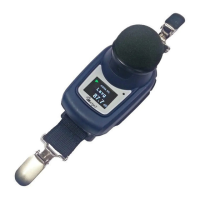
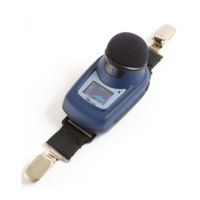
dBadge2 has been specifically designed to simplify the process. Like its iconic predecessor,
the dBadge2 concept is to capture every possible noise exposure related parameter during a
measurement run and make it available for subsequent download and analysis. The user
has only to choose the most relevant parameters to display on the screen.
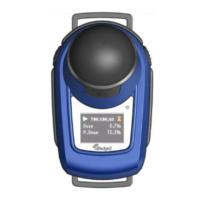
The dBadge2 thus uses a ‘multiple simulated dosimeter’ concept to display noise exposure
values according to these differing standards and regulations. The ‘simulated dosimeters’
are referred to as D1, D2 and D3 throughout this user manual and they define the
measurement parameters that are displayed on screen.
The primary dosimeter (D1) provides any LAVG or LEQ based noise dose parameter plus a
comprehensive set of related values. LEQ based noise exposure assessment e.g. to
European standards, will typically only ever require the D1 dosimeter meaning D2 and D3
may be switched off in the configuration menu available on power up.
Dosimeters D2 and D3 allow the display of additional LAVG based noise dose values based
on combinations of Threshold (T), Criterion (C) and Exchange rate (Q factor). As an
example, a US customer may wish to simultaneously compare noise exposure data based
upon the OSHA Hearing Conservation (HC), OSHA Personal Exposure Limit (PEL) and
ACGIH requirements.
A user defined custom set up is also available for those who have their own internal
standards that may exceed the exposure requirements laid down by regulations. This
custom set up is available from Casella Insight.
It should be noted that for every measurement run, the dBadge2 records a comprehensive
data set which means that you can retrospectively analyse the results within Casella Insight,
regardless of what was displayed on the instrument in D1, D2 or D3.


 To Next Page
 Loading...