12 Generac
®
Power Systems, Inc.
Section 3 – Maintenance
CENTURION 3500 Home Standby Generator
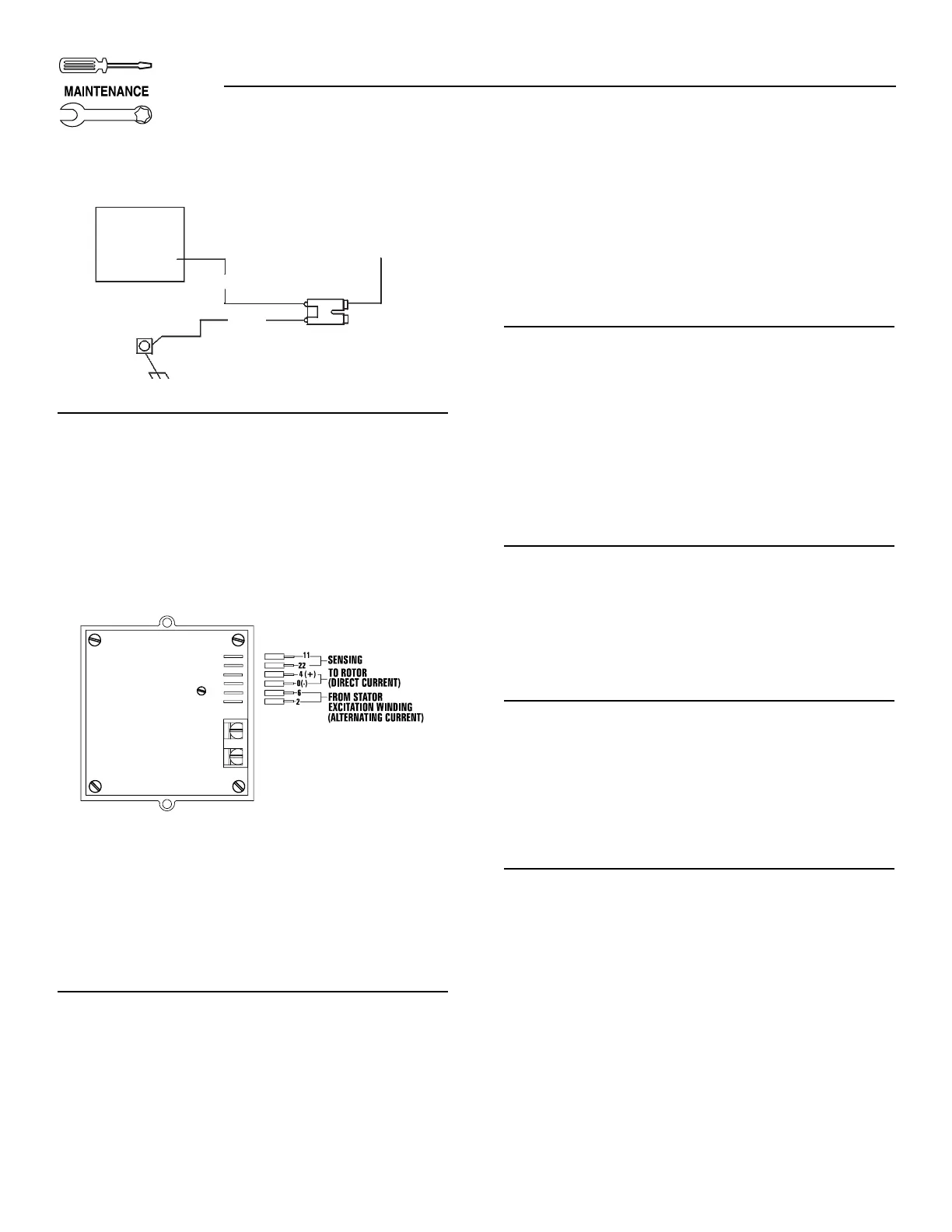
Figure 2.4 — Field Boost Circuit
2.9.7 OVERVOLTAGE PROTECTION
A solid-state voltage regulator (Figure 2.5) controls
the generator’s AC output voltage. This regulator sup-
plies an excitation current to the rotor. By regulating
the rotor’s excitation current, the strength of its mag-
netic field is regulated and, in turn, the voltage deliv-
ered to connected electrical loads is controlled. When
the AC frequency is 60 Hertz, voltage is regulated at
120 volts (voltage-to-frequency ratio is 2-to-1).
Figure 2.5 — Solid State Voltage Regulator
The voltage regulator also incorporates a “voltage
surge protection circuit”. This circuit prevents trou-
blesome surges in the generator AC output voltage.
Voltage surge is a common cause of damage to elec-
tronic equipment.
2.10 ADDITIONAL INFORMATION
2.10.1 BREAK-IN PERIOD
The first few hours of operation is the break-in peri-
od for the generator. Properly breaking in the genera-
tor is essential to minimize fuel consumption and
provide maximum engine performance. During this
break-in period, follow this procedure:
• Run the unit at different electrical loads by plug-
ging items into the Power Transfer Monitor’s out-
lets. This will help seat the engine piston rings
properly.
• Check the engine oil level frequently. Add oil if
needed. It is normal for the generator engine to
consume more oil than is normal until the piston
rings have properly seated.
• After operating the unit for the break-in period,
complete the tasks recommended under Section
2.10.2.
2.10.2 POST BREAK-IN CHECK-UP
After the break-in period, the owner should perform
the following maintenance items:
• Change the engine crankcase oil and oil filter.
• Check the oil level.
• Inspect the cooling and ventilation openings.
• Check the engine ignition system.
• Inspect the entire electrical system.
• Inspect the engine exhaust system.
2.10.3 ATTENTION REQUIRED AFTER
SUBMERSION
If the generator has been submerged in water, it
MUST NOT be started and operated. Following any
submersion in water, have a Generac/Centurion
Authorized Service Dealer thoroughly clean and dry
the generator.
2.10.4 OPERATION IN HIGH GRASS OR
BRUSH
Never operate the generator while it is in contact with
high grass, weeds, brush, leaves or any other com-
bustible substance. Such materials can ignite and
burn from the heat of the exhaust system. The gener-
ator exhaust system becomes extremely hot during
operation and remains hot for a long time after it has
shut down.
2.10.5 EFFECTS OF MOISTURE AND DIRT
Keep the generator set as clean and dry as possible.
Protect the unit against excessive dust, dirt, corrosive
vapors, etc. Permitting dirt and moisture to accumu-
late on generator windings will have an adverse effect
on the insulation resistance of those windings.
When moisture is allowed to remain in contact with
windings, some of the moisture will be retained in
voids and cracks in the insulation. This causes a
reduced insulation resistance and will eventually
cause problems. Dirt will make the problem worse,
since dirt tends to hold moisture in contact with
windings. Salt (as from sea air) also will worsen the
problem since it tends to absorb moisture from the
air. Salt and moisture, when combined, form an elec-
trical conductor which is detrimental to the genera-
tor.


 To Next Page