6 Generac
®
Power Systems, Inc.
Section 1 – General Information
CENTURION 3500 Home Standby Generator
Do not overload the generator. Some installa-
tions may require that electrical loads be alter-
nated to avoid overloading. Applying exces-
sively high electrical loads may damage the
generator and may shorten its life. Add up the
rated watts of all electrical lighting, appliance,
tool and motor loads the generator will power
at one time. This total should not be greater
than the wattage capacity of the generator. If
an electrical device nameplate gives only volts
and amps, multiply volts times amps to obtain
watts (volts x amps = watts). Some electric
motors require more watts of power (or amps
of current) for starting than for continuous
operation.
1.3 SAFETY
Before attempting to use the generator set, carefully
read the “Safety Rules” section of this manual.
Comply strictly with these rules to prevent accidents
and damage to equipment and/or property. We sug-
gest copying and posting the “Safety Rules” in poten-
tial hazard near the generator. Stress safety to all
operators and potential operators of this equipment.
1.4 PROTECTION SYSTEMS
Unlike an automobile engine, the generator may have
to run for long periods of time with no operator pre-
sent to monitor engine conditions. For that reason,
the engine is equipped with the following systems
that protect it against potentially damaging condi-
tions:
1. Overcrank
2. Overspeed
3. Low Oil Pressure Sensor
4. High Temperature Sensor
5. Underspeed
There is an LED readout on the control panel to noti-
fy personnel that one of these faults has occurred.
Detail of of the protection systems can be found in
Section 2.9.
1.5 LOCATION
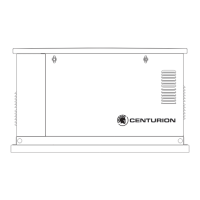
Install the generator set, in its protective enclosure,
outdoors, where adequate cooling and ventilating air
is always available. Consider these factors:
• Install the unit where air inlet and outlet openings
will not become obstructed by leaves, grass, snow,
etc. If prevailing winds will cause blowing or drift-
ing, consider using a windbreak to protect the unit.
• Install the generator on high ground where water
levels will not rise and endanger it.
• Allow sufficient room on all sides of the generator
for maintenance and servicing. A good rule is to
allow three feet of space on all sides.
• Where strong prevailing winds blow from one
direction, face the generator air inlet openings to
the prevailing winds.
1.6 SPECIFICATIONS
1.6.1 FUEL REQUIREMENTS AND RECOM-
MENDATIONS
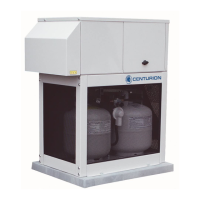
With LP gas, use only the LP vapor withdrawal sys-
tem. This type of system uses the vapors formed
above the liquid fuel in the storage tank.
Recommended fuel should have a BTU content of at
least 2,520 BTU's per cubic foot. Ask the LP fuel sup-
plier for the BTU content of the fuel.
This generator has been designed for a specific type
of tank. Acceptable tank types are DOT-4BA240 and
DOT-4BW240. Any deviation in tank type may not
allow the tank to fit in the LP enclosure.
Gaseous fuels such as liquid propane (LP) gas
are highly explosive. Even the slightest spark
can ignite such fuels and cause an explosion.
No leakage of fuel is permitted. LP gas, which
is heavier than air tends to settle in low areas.
1.6.2 FUEL CONSUMPTION
Fuel consumption is in gal/hr.
1.6.3 ENGINE OIL REQUIREMENTS
Use only high quality detergent oil rated with
American Petroleum Institute (API) Service
Classification SF, SG or SH. The recommended oil
weights include the following:
• During summer months: SAE 30. An acceptable
substitute is SAE 10W-30.
• During winter months: SAE 5W-30. DO NOT USE
SAE 10-W40.
Crankcase and oil filter capacity is approximately
800 mL or .84 U.S. quarts. Do NOT use special addi-
tives. See Sections 3.1 and 3.2 for oil level check and
fill procedures.


 To Next Page