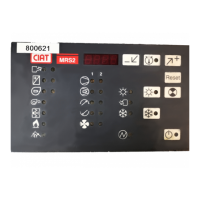
The CIAT Vectic is an electronic control system designed for air-air units, managing and supervising their operation. It integrates with various components and networks, offering comprehensive control over heating, cooling, and ventilation functions.
Function Description
The Vectic control board, a µPC3 microcontroller, is the central component, processing input data from sensors and managing unit operations. It stores programs and parameters in non-volatile memory, ensuring data retention even during power failures. The system supports various operating modes, including cooling (summer), heating (winter), automatic, only ventilation, and ventilation with 100% fresh air. It can manage multiple units in a shared network (SHRD) as Master, Slave, or Back-up, allowing for data exchange, shared probe readings, and coordinated operation. A pLAN local network connection reduces the number of VecticGD terminals needed, as a single shared terminal can monitor all units in the network.
The control system regulates ambient temperature by comparing sensor readings with setpoint values. It manages compressors, auxiliary heating components (electrical heaters, hot water coils, gas burners/boilers), and air flow. Defrosting is automatically performed in heating mode to remove ice from outdoor coils, triggered by minimum pressure or temperature differences. Safety functions include anti-fire safety, high supply temperature safety, compressor lock, high/low indoor temperature safety, low temperature protections, clogged filter detection, and high-speed safety on plug-fans.
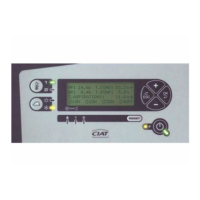
The VecticGD graphic terminal provides a user-friendly interface with a backlit LCD FSTN display, offering detailed explanations of control functions in English, Spanish, French, and Italian. The TCO user terminal (optional) offers a more compact display for basic control. Both terminals allow users to select operating modes, adjust setpoints, and view unit status and alarms.
Important Technical Specifications
µPC3 Control Board:
- Storage/Operating Conditions: -40T70 °C; 90% RH non-condensing.
- Protection Index: IP00.
- Power Supply: 230 Vac, 28 VA max.
- CPU: 32-bit, 100 MHz.
- Memory: 128 MB FLASH, 16MB/8MB Data.
- Analogue Inputs: 12 (B1-B12) NTC CAREL, 0-20mA/4-20mA, 0-5V radiometric pressure sensor, 0-10Vdc.
- Digital Inputs: 10.
- Analogue Outputs: 4 (0-10 Vdc, 2 mA max).
- Digital Outputs: Various combinations of SPST, SPDT, SSR HV, SSR LV types.
- Communication: BMS port (Modbus RTU), Ethernet port (Modbus TCP/IP), optional communication cards for TCP/IP, SNMP, FTP, HTTP, BACnet™ Ethernet/MSTP, Konnex, Modbus RTU.
c.pCOe Expansion Modules:
- Storage/Operating Conditions: -40T70 °C; 90% RH non-condensing / -20T70 °C; 90% RH non-condensing.
- Protection Index: IP40 (front panel).
- Power Supply: 24 Vca +10/-15% 50/60 Hz, 28-36 Vdc +10/-15%. Basic model: 15 VA/6 W. Enhanced model: 30 VA/12 W.
- Universal Channels: 10 (14 bits, NTC, PT1000/500/100, 4-20mA, 0-1V/5V/10V, 0-2kHz input; PWM 0/3.3V 100Hz, 2mA 2kHz, 0-10V output).
- Digital Outputs: 6 (2(1)A, 1(1)A).
- Single-pole Valve Output (Enhanced): 1 (8 W max).
VecticGD Terminal:
- Display: FSTN graphic, blue LED backlight, 132 x 64 pixels.
- Power Supply: 18/30 Vdc (via telephone cable or external source), 1.2 W max.
- Communication: Asynchronous half duplex, 2 dedicated wires, 6-way telephone plug, CMR 7 V (RS485).
- Protection Index: IP65 (panel), IP40 (wall).
- Dimensions: 156 x 82 x 31 mm.
TCO Terminal (Optional):
- Power Supply: 230 Vac (+10/-15) 50/60Hz, 1 VA max.
- Communication: AGW20 or AGW22 with 1 braided pair + drainwire + shielding.
- Protection Index: IP20.
- Dimensions: 86 x 86 x 51 mm (model to fit), 86 x 142 x 23 mm or 142 x 86 x 23 mm (surface model).
RS485 Probes:
- Types: Ambient temperature/humidity, enthalpy (mixing air, supply air).
- Connection: RS485 Field-bus (addressable).
Usage Features
- User Interfaces: The VecticGD graphic terminal is standard, offering a comprehensive menu structure with access levels (Level 1 for basic users, Level 2 for advanced, Level 3 for manufacturers). The TCO user terminal is optional for simpler control.
- Unit Status: The initial screen displays unit number, indoor/outdoor temperature, time, date, and language. Detailed status screens provide information on operating mode, setpoints, machine status, and network configuration.
- Starting/Stopping: Units can be started/stopped via the VecticGD keyboard, remotely via digital input (D17), or through time scheduling. The keyboard control has priority over remote or scheduled commands.
- Setpoints Selection: Setpoints for cooling and heating modes can be adjusted via the VecticGD terminal or TCO terminal. Zoning allows for individual setpoints for up to four zones.
- Operating Mode Selection: Operating modes (cooling, heating, automatic, ventilation, 100% fresh air ventilation) can be selected via the VecticGD terminal, TCO terminal, or remotely via digital input (U5 of expansion card).
- Time Scheduling: The VecticGD terminal and TCO terminal allow for programming weekly schedules with different operating modes and setpoints. Vacation schedules and special days can also be configured.
- Input/Output Status Display: Users can view the status of all digital and analogue inputs/outputs, including sensor readings, compressor status, fan operation, and energy meter data.
- Alarm Management: The system displays active alarms, provides an alarm list with details (shutdown type, affected circuits, reset type, timing, actuation, alarm level), and stores an alarm history. Remote alarm signaling is optional. Alarm levels can be configured with "Back-up" functionality for redundancy.
- Control Parameters: A comprehensive list of control parameters is available, categorized by function (Unit Status, Unit On/Off, Setpoint, Summer/Winter, Clock/Scheduler, Input/Output, Alarms History, Burner/Boiler, Versions) and accessible based on user access level.
Maintenance Features
- Refrigerant Leak Detection: Standard R-454B and optional R-410A refrigerant leak detectors are integrated. The R-454B detector uses infrared technology, requiring no calibration and offering a 15-year lifespan. It triggers a "PROTECTION MODE" that disables compressors and activates indoor fans/dampers to mitigate leakage. Alarms are maintained until manually reset.
- Compressor Lock: In case of power cut-off exceeding 2 hours, compressors are locked for 8 hours. This lock can be reset from the service parameters, with the event recorded in the data register.
- Clogged Filter Detector: An optional clogged filter switch can be connected, triggering an alarm or unit shutdown.
- Anti-fire Safety: Activated if return air temperature exceeds a safety value (60°C by default), stopping the unit until temperature drops below 40°C. French ERP regulations for fire safety are supported, including specific fan and damper behaviors in case of thermal protection failure.
- High Supply Temperature Safety: For units with electrical heaters or gas burners, this safety shuts down the auxiliary component if supply temperature exceeds 55°C.
- Low Temperature Protections: Managed by the c.pCOe expansion card, these include crankcase heaters, antifreeze protection for external dampers, electrical heaters for electric panels, and hot water coil circuit protection.
- High-speed Safety on Plug-fans: Displays a warning or shuts down the unit if plug-fan speed exceeds the maximum permissible limit for an extended period.
- Troubleshooting: The manual provides a detailed troubleshooting guide covering issues like incorrect sensor readings, communication problems, and incorrect wiring, with instructions for checking various components and parameters.
- Probe Maintenance: For air quality probes, periodic cleaning of aeration slits is recommended. Annual tests and periodic calibrations (every 3 years) or element changes (every 5-6 years) are advised for refrigerant leak detectors.

 Need help?
 General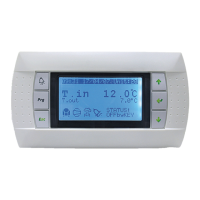

 To Next Page