ENGLISH
21
4.2.4 INSPECTING THE CATALYTIC CONVERTER
Recommended frequency: Every 500 uses.
The catalytic converter is the primary air duct between the incineration chamber and the appliance ue
terminal. Any accumulations of particles in the catalytic converter will reduce the ow rate and the toilet
eciency, and may be the cause of bad odour. It is therefore important to ensure that the catalytic converter
is open at all times. Any changes in incineration time, incineration eciency or odour, may be due to dense
catalytic conversion. The best method to easily clean the catalyst is to perform “steam cleaning” as described in
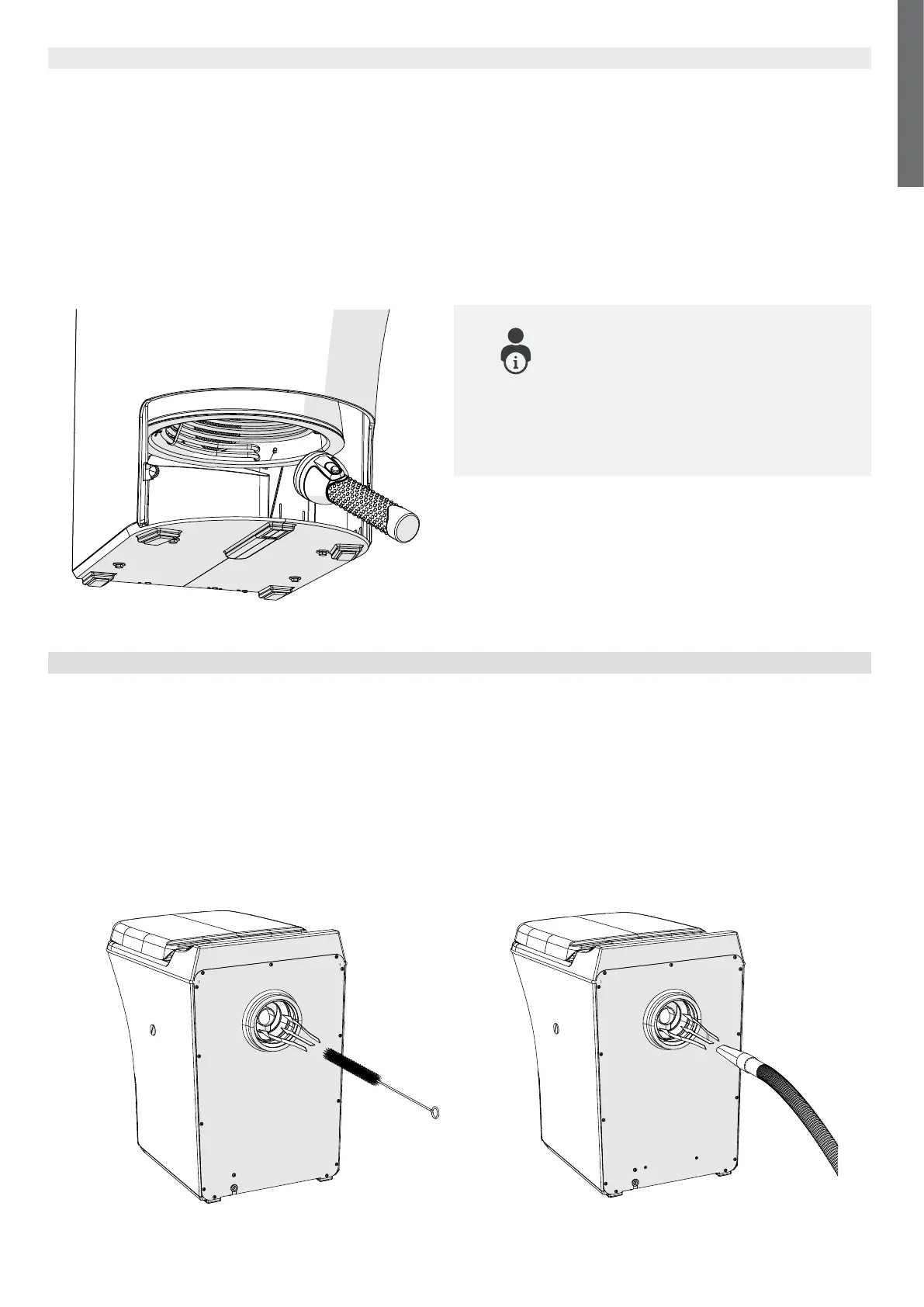
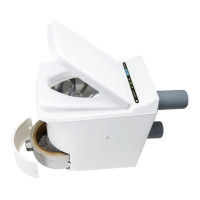
section 4.2.2. You can also inspect the front of the catalyst by removing the ash container and illuminating the
combustion chamber from the inside. Any remaining particles or odours persisting after steam cleaning will have
to be removed by rinsing the catalytic converter with hot water as described in section 5.3.2.
4.2.5 CLEANING THE APPLIANCE FLUE TERMINAL
Recommended frequency: at least every 500 uses.
1. The appliance will have to be disconnected from the ue pipe and power source.
2. Clean the ue terminal with a exible brush, it is important that you clean both the exhaust pipe and
surrounding venturi all the way back to the fan blades, this to get sucient air ow.
3. Remove the ash container and clean out any debris in the container.
4. Use a vacuum cleaner to extract the remaining debris in the exhaust pipe and catalytic converter.
5. Reconnect the appliance to the ue pipe and power supply.
6. Install the ash container and front cover.
7. It is recommended that you perform a steam cleaning as described in section 4.2.2 after performing the ue
terminal maintenance.
NOTE!
Clear signs of corrosion or
deformity of the catalytic
converter will indicate that the
catalytic converter must be
replaced. Contact your local service
provider to arrange for service.


 To Next Page