10
tes
.
Adding Salt
IMPORTANT: Before adding salt, ALWAYS perform an independent water
test to measure pre-existing salt levels.
Use only evaporated, granulated, non-iodized salt (Sodium Chloride). The
purer the salt (at least 99%), the better the life and performance of the
Electrolytic Cell.
DO NOT add chemicals or salt directly to the skimmer. This may damage the
cell. If the Electrolytic Cell has already been installed, it should not be
turned on before adding salt. For pools, it is best to empty the required salt
into the shallow end of the pool and run the filter and pump simultaneously
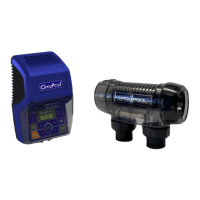
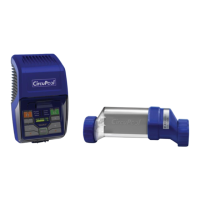
in order to circulate the water and dissolve the salt (the RJ PLUS Series is to
remain off during this time period). Do not throw the salt bag into the
water as chemicals and inks on the bag can interfere with water balance.
Salt may take 24 - 48 hours to dissolve in summer, and longer in winter.
Finer granules of salt will dissolve faster than compressed pellets.
Water Softener salt (also known as Water Conditioning pellets) is an
economical way to buy large quantities of salt. However, only salt that is at
least 99% pure NaCl can be used. Pellets are compressed forms of
evaporated salt that may take longer to dissolve. Avoid using salt with anti-
caking agents (Sodium Ferrocyanide, also known as YPS or Yellow Prussiate
of Soda) that could cause discoloration of fittings and surface finishes in
pool. Do not use Calcium Chloride as a source of salt. Do not use Rock Salt;
insoluble impurities mixed with the rock salt can shorten the life of the unit.
Salt Levels
The CircuPool RJ PLUS Series can work within a broad salinity range,
from a minimum of 3000 ppm (parts per million), up to 4000 ppm.
However, the ideal level for operation is about 3500 ppm. To achieve
this level of salinity, add approximately 30 lbs of salt for every 1000
gallons of water (or 3.6 Kilograms of salt for every 1000 Liters). If you
are unsure of the number of gallons in your pool, double-check with the
following equations.
TIP: When adding large quantities of salt, start with an independent test
of the existing salinity level and add in portions, retesting at each stage.



 To Next Page