This document describes the Conceptronic C54BRS4A 802.11g Wireless Broadband Router, a device designed for home and small office network environments. It functions as a central hub for wired and wireless network connections, allowing multiple devices to share a broadband internet connection.
Function Description:
The C54BRS4A is primarily a wireless broadband router that supports the 802.11g standard for wireless communication, with backward compatibility for 802.11b devices. It also includes standard Ethernet ports for wired connections. The router's core function is to provide internet access to connected devices by acting as a gateway between the local network (LAN/WLAN) and the broadband internet (WAN). It supports various WAN connection types, including Static IP, Dynamic IP, PPPoE, PPTP, and L2TP, making it compatible with a wide range of Internet Service Providers (ISPs).
Key functionalities include:
- Wireless Access Point: Enables wireless devices to connect to the network.
- Broadband Router: Manages network traffic and routes data between the local network and the internet.
- DHCP Server: Automatically assigns IP addresses to devices on the local network, simplifying network setup.
- Firewall: Provides security features to protect the network from unauthorized access and malicious traffic.
- Virtual Server: Allows remote users to access services (like FTP or web servers) on the local network.
- Special Applications: Supports applications that require multiple connections.
- IP/MAC/URL/Domain Filtering: Offers granular control over network access and content.
- Dynamic DNS (DDNS): Allows access to the network using a static hostname even with a dynamic public IP address.
- VPN Pass-Through: Supports VPN connections for secure remote access.
Important Technical Specifications:
- Standards: IEEE 802.11b, IEEE 802.11g, IEEE 802.3, IEEE 802.3u.
- Data Rate:
- 802.11g: 108, 54, 48, 36, 24, 18, 12, 9, and 6Mbps.
- 802.11b: 11, 5.5, 2, and 1Mbps.
- Security: 64- and 128-bit WEP, WPA (Wi-Fi Protected Access - WPA-TKIP/PSK/AES), 802.1x (EAP-MD5/TLS/TTLS/PEAP), MAC Address Access Control List. WPA-PSK/WPA2-PSK is recommended for the highest security level.
- Wireless Frequency Range: 2.4GHz to 2.4835GHz.
- Wireless Operating Range (802.11g, Full Power with 2dBi gain diversity dipole antenna):
- Indoors: Up to 295ft (90m) at 6Mbps, 98ft (30m) at 54Mbps.
- Outdoors: Up to 378ft (420m) at 6Mbps, 312ft (95m) at 54Mbps.
- Antenna Type: Dipole antenna with 2dBi gain.
- Operating Voltage: 5VDC +/- 10%.
- Radio and Modulation Type (For 802.11g): OFDM (BPSK, QPSK, 16QAM, 64QAM).
- Radio and Modulation Type (For 802.11b): DSSS (DBPSK, DQPSK, CCK).
- Wireless Transmit Power (Typical RF Output Power at each Data Rate):
- For 802.11g: 31mW (15dBm) @ 54 and 108Mbps, 40mW (16dBm) @ 48Mbps, 63mW (18dBm) @ 36, 24, 18, 12, 9, and 6Mbps.
- For 802.11b: 63mW (18dBm) @ 11, 5.5, 2, and 1Mbps.
- Receiver Sensitivity (For 802.11g): -94dBm at 1Mbps, -73dBm at 54Mbps.
- Receiver Sensitivity (For 802.11b): -94dBm at 1Mbps, -85dBm at 11Mbps.
- LEDs: Power, Status, WAN, WLAN, LAN.
- Temperature:
- Operating: 32°F to 113°F (0°C to 45°C).
- Storing: -4°F to 149°F (-20°C to 65°C).
- Humidity:
- Operating: 10%~95% (non-condensing).
- Storing: 5%~95% (non-condensing).
- Certifications: FCC Class B, CE Class B, C-Tick, UL, TUV.
- Dimensions: L = 149mm, W = 109mm, H = 35mm.
- Weight: 237.2g.
- Power Adapter: 5V, 2A DC.
Usage Features:
- Web-Based Management: The router is configured and managed through an HTML-based web interface, accessible via a web browser (e.g., Microsoft Internet Explorer v6+, Netscape Navigator v6+, or other Java-enabled browsers). JavaScript must be enabled in the browser.
- Easy Installation: The manual provides a step-by-step guide for initial setup, including connecting cables, configuring computer IP settings, and running a setup wizard.
- Wireless Network Connection: Users can easily connect to the wireless network by selecting the "C54BRS4A" SSID and clicking "Connect." The system tray icon provides signal strength information.
- WAN Connection Options: Supports various ISP connection types (Static IP, Dynamic IP, PPPoE, PPTP, L2TP) with detailed configuration instructions for each.
- LAN Configuration: Allows users to customize the LAN IP address and subnet mask.
- DHCP Server Management: Enables or disables the built-in DHCP server and allows adjustment of IP address pool and lease time.
- Advanced Security Features: Includes Firewall Rules, DMZ, IP Filters, MAC Filters, URL Blocking, and Domain Blocking for comprehensive network security.
- Wireless Performance Settings: Users can adjust parameters like Beacon Interval, RTS Threshold, Fragmentation Threshold, DTIM Interval, CTS Mode, WMM Function, TX Rate, and Transmit Power to optimize wireless performance.
- System Tools: Provides options for managing the administrator password, setting system time (SNTP), scheduling rules, backing up/restoring configurations, resetting to factory defaults, and rebooting the device.
- Firmware Upgrade: Supports upgrading the device firmware to incorporate new features or bug fixes.
- Diagnostic Tools: Includes a Ping Test to check network connectivity and a system log to monitor router activities.
- Status Monitoring: Displays current information about LAN, WAN, and wireless interfaces, firmware version, MAC address, wireless clients, and traffic statistics.
Maintenance Features:
- Configuration Backup and Restore: Users can save the router's configuration settings to a local hard drive and restore them later, which is useful before firmware upgrades or for quick recovery.
- Factory Reset: A dedicated reset button on the back panel allows users to revert all settings to factory defaults, which can resolve system failures or prepare the device for a new configuration.
- Firmware Upgrade: Regular firmware updates can improve performance, add new features, and address security vulnerabilities.
- System Log: The system log records router activities, providing valuable information for troubleshooting and monitoring.
- Traffic Statistics: Allows monitoring of received and transmitted packets on WAN, LAN, and Wireless interfaces, aiding in network performance analysis.
- Remote Management: The router can be configured for remote management, allowing administrators to access and manage the device from a remote network.
- Time Synchronization: Supports SNTP (Simple Network Time Protocol) to maintain accurate system time, which is crucial for system logs and scheduled tasks.

 Need help?
 General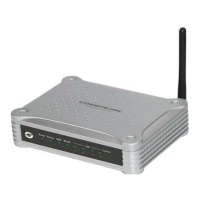

 To Next Page