1-18
Section 1
(PFD) at all times. Make certain all passengers know where life
jackets are located, how to put on and properly adjust their life
jackets (PFDs), and that life jackets are readily accessible at all
times.
Your dealer can help you select appropriate life jackets (PFDs) and
throwable lifesaving devices for your area. Some PFDs are specially
made for use while waterskiing or wakeboarding and are not
U.S.C.G. approved. Please check local law with respect to their use.
Some states require children to wear a PFD at all times. There are
four types of wearable PFDs (Type I, II, III or V) and one throwable
type of PFD (Type IV) used for throwing in emergency situations.
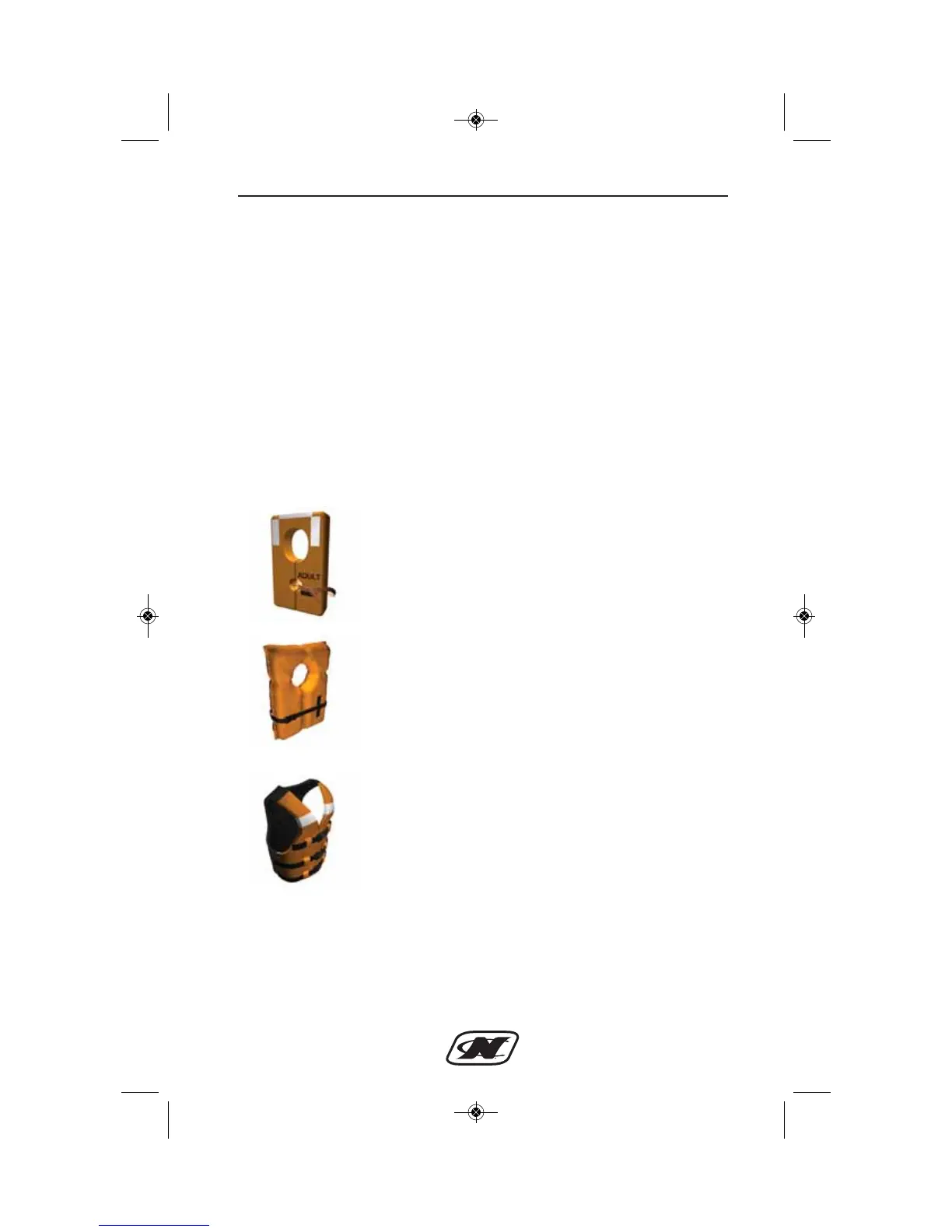
Examples of these USCG approved PFDS are shown:
Type I PFD – Offshore Lifejacket: This PFD is designed for
extended survival in rough, open water. It usually
will turn an unconscious person face up and has
over 22 pounds of buoyancy. This is the best PFD
to keep you afloat in remote regions where
rescue may be slow in coming.
Type II PFD – Near Shore Buoyant Vest: This
“classic” PFD comes in several sizes for adults and
children and is for calm inland water where
there is chance of fast rescue. It is less bulky and
less expensive than a Type I, and many will turn
an unconscious person face-up in the water.
Type III PFD - Flotation Aid: These life jackets
are generally considered the most comfortable,
with styles for different boating activities and
sports. They are for use in calm water where
there is good chance of fast rescue since they will
generally not turn an unconscious person face-
up. Flotation aids come in many sizes and styles.



 To Next Page