1-76
Section 1
A recreational boat towing another should be a last resort due to
the potential for damaging one or both boats. The Coast Guard or
a private salvage company is better equipped for this activity. A
recreational boat may assist by standing by, and possibly by keeping
the disabled boat’s bow at a proper angle until help arrives. Only
when conditions are ideal—that is, waters are calm, disabled boat is
small, appropriate hardware is available, and one or both skippers
know the correct technique—should a recreational boat tow
another.
Towing Vessel
• Be sure your boat will not run aground too.
• Because you are maneuverable and the grounded boat is
not, you should pass the towline to the grounded boat.
• Select an appropriately strong tow line. Use double-
braided or braid-on-braid line. Never use three-strand
twisted nylon; it has too much elasticity and can snap back
dangerously.
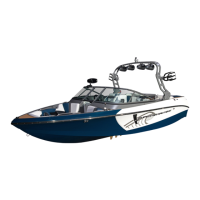
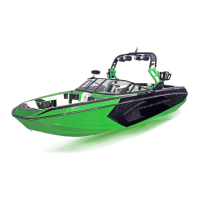
• Select an appropriate attachment point. If available fasten
the towline to the forward tow pylon of the towing boat.
Otherwise fasten tow line to stern tow point. Fastening to
the stern tow point will restrict maneuverability of the
towing boat.
• If possible, use a bridle.
• Move slowly to prevent sudden strain on slack line.
• Proceed at slow speed.
• Avoid abrupt changes in throttle as that may cause the tow
line to slacken and jerk tight. Sudden strain or jerking the
line causes excessive tow line forces which may part the
line. Keep slack out of the tow line, but if it occurs
proceed slowly to again take up the strain on the line and
avoid sudden jerks in the line.
• Be ready to cast loose or cut the line if the towing
situation becomes hazardous.



 To Next Page