Instruction Booklet KHEOS PLUS
10 ENGLISH
EN
The unit has been designed for specific use with refrigerant R134a.
The type of refrigerant (R134-a) to be used is indicated on a specific label.
After switching the unit on, allow at least five minutes before performing any operation. If the work cycle is inter-
rupted for whatever reason (e.g. power failure), the operation must be restarted from the beginning.
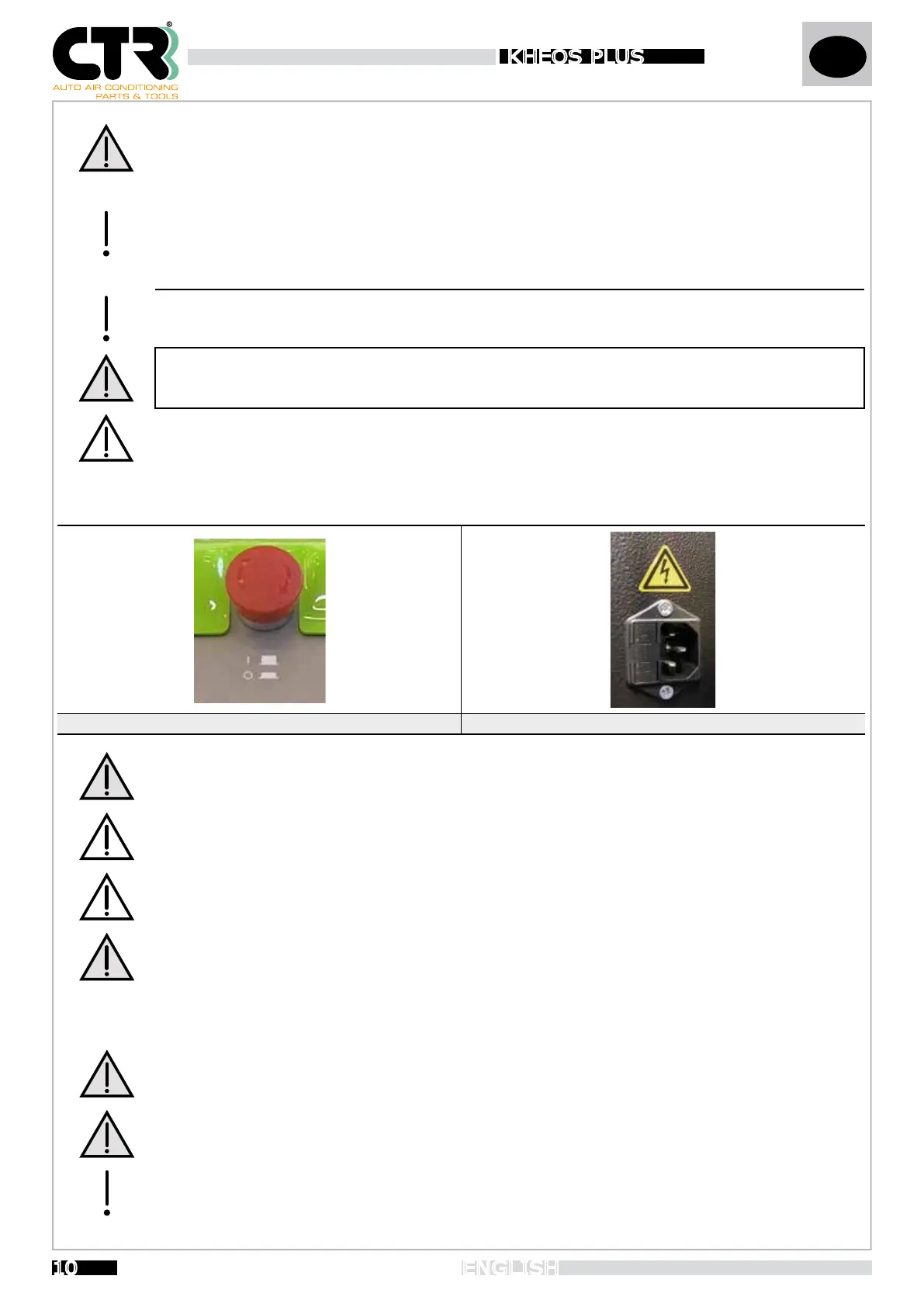
In case of emergency press the red push button in the panel to remove power completely
The external container used for refilling must be type approved for pressure levels of at least 35
bars and equipped with a safety valve (the valve must comply with the regulations for pressurized
containers).
The refrigerant storage container must NEVER be filled to over 80% its total capacity to prevent drops in efficiecy.
During operation, check fill level of oil containers and ensure they are not overfilled to prevent sudden drops in
efficiency. Do not use these containers with different types of materials.
Live parts
EMERGENCY PUSH BUTTON POWER SOCKET
The unit is designed for use by a single operator. Other persons should keep at a safe distance during operation
as well as during adjustment and maintenance.
Always connect the high and low pressure ducts (red and blue) with the parts supplied and do not use them for
purposes other than those specified.
During operation, check the level in the oil tanks to prevent overflowing .
You must NEVER disconnect the HP and LP hoses, unless specifically requested in this manual. Do not open the
manual valves during normal operation unless expressly requested in the instructions.
3.5 Maintenance
Do not, under any circumstance, use flammable liquids or detergents to clean the unit. Use only neutral deter-
gents; failure to do so will invalidate the warranty for damaged parts.
Always allow a few minutes after switch off to enable the system to return to its rest condition (temperature and
pressure).
During maintenance procedures, do not discard any residues into the environment, but comply with current
disposal regulations.
6
16
Fig. 1
Fig. 2


 To Next Page