This document serves as a user manual for a tablet, providing comprehensive instructions on its functions, usage features, and maintenance.
The tablet, branded CUBOT with model name TAB 10, is designed for a variety of applications, from basic calculations and time management to communication and multimedia consumption.
Appearance and Keypad Operations
The tablet features several keys for navigation and control:
- Home key: A short press returns to the home screen from any application or interface. A long press opens Google search.
- Recent key: A short press opens recent items.
- Back key: Returns to the previous interface, closes dialog boxes, options menus, notification panels, or the keypad.
- Power key: A short press locks or unlocks the screen. A long press opens the tablet's menu, allowing options like Power off, Restart, Airplane mode, Screenshot, and Emergency.
- Up/Down volume keys: Increase or decrease the volume.
Using Memory Card as U Disk
To transfer music, pictures, or other files between the tablet's memory card and a computer, the memory card must be set as a U disk.
- Connect the tablet to the computer via a USB cable. A notification icon will appear in the status bar.
- The USB mobile transmission line will connect to the computer.
- In the notification panel, touch "USB is connected," then touch "USB connected as a media device."
Note: For PC operation assistant tools like mobile tablets, USB debugging must be enabled.
Wi-Fi Connectivity
The tablet supports Wi-Fi, providing wireless network access up to 300 feet (100M). The availability and coverage of the Wi-Fi signal depend on the number of obstacles and infrastructure.
To connect to a Wi-Fi network:
- Enter settings.
- Select the Wi-Fi option to turn it on. The tablet will automatically scan for available wireless networks.
- Touch Wi-Fi settings to view a list of found networks with their names and security settings (open, WEP, WPA/WPA2 with password). If notifications are enabled in Wi-Fi settings, a specific icon will appear in the status bar when available networks are found.
- Touch a Wi-Fi network to connect. For open networks, the tablet connects automatically. For secured networks, enter the password and then touch "connect."
Note: Once connected, a Wi-Fi icon with signal strength bars will appear in the status bar. Touching the connected network displays its details, including name, status, speed, signal strength, security, and IP address. To delete wireless settings, touch "FORGET." To reconnect, re-enter the settings. The tablet will automatically search for and connect to previously encrypted networks unless forgotten.
To connect to other Wi-Fi networks, go to the wireless and network interface, touch Wi-Fi settings, and select from the list.
Note: The tablet can also access the internet via GPRS with a SIM card. Users can manually enable data connection from the status bar or through "Settings > SIM cards > Mobile data."
Bluetooth Connectivity
To turn on Bluetooth or make the tablet discoverable:
- Enter settings.
- Select "Connected devices," then turn on Bluetooth. A specific icon will appear in the status bar.
- Touch "Pair new device" to display all found devices.
Note: For other Bluetooth devices to find and pair with the tablet, they must also be discoverable.
After pairing, the system will show paired and available equipment.
To pair and connect a Bluetooth headset:
- Enter settings.
- Select "Connected devices," then turn on Bluetooth. Touch "Pair new device." The tablet will scan for Bluetooth devices within range and display them.
Tips: Ensure the desired devices are in detected mode.
- Touch the headset in the equipment list to complete the connection.
Note: Bluetooth devices often require a password for pairing, commonly "0000."
The pairing and connecting status will appear under the headset in the Bluetooth devices list. When connected, a specific icon in the status bar indicates connection, allowing the headset to make or receive calls.
To disconnect from Bluetooth:
In the Bluetooth equipment list, touch and hold the connected hand-free headset, then select "OK."
Calculator
The tablet includes a calculator for simple calculations.
- Touch the number keys to input them into the blank box.
Calendar
The calendar program offers various features:
- Main interface: Click the upper left area to display menus for schedule, four modes, search, PC Sync, settings, and help/feedback.
- Day/3-day view: Displays the schedule for the day and three days, with the current day highlighted in gray.
- Week view: Shows the schedule for the current week, allowing users to slide to turn pages.
- Month view: Displays the month schedule, allowing users to slide left and right to navigate.
- Schedule view: Shows schedules for a specific time frame.
- Search: Enter a schedule name in the search box to find it.
- New event:
- Click the menu button > "new event."
- Enter the event name in the details box.
Note: For special occasions like birthdays or all-day activities, set the "throughout the day" option. For activities with a specific duration, select the start and end times.
- Enter the activity location, notes, invited people, repeat settings, and reminder time.
- Click to complete and return to the calendar.
Note: All event titles are displayed in the calendar; no specific time period is shown.
Camera
Before using the camera or video camera, ensure a memory card is installed, as all photos and videos are stored there.
To open the camera: Press home, touch menu, select "camera."
To take pictures:
- Aim your object with the screen.
- Touch the "shutter" button on the screen.
- Photos are saved to the camera's gallery folder with the taking time as the name.
- View photos by touching the preview box button.
- Camera settings: Touch the "setting Menu" button in the camera interface. In viewfinder mode, press Menu to switch to video or photos' gallery. The bottom right of the viewfinder displays a preview of the previous picture; touch it to view the photo in full screen and zoom in.
- Shared Settings (Camera and Video Camera):
- Flash mode: Auto, On, Off.
- Exposure: -3 to +3.
- Anti-flicker: Auto, 50HZ, 60HZ.
- Camera Settings:
- Capture mode: Normal, Panorama, HDR.
- Storage path: Tablet, SD card.
- Volume key function: Shutter, Volume, Zoom.
- Quick capture by double-click vol down key when screen off: Capture with back camera, capture with front camera, off.
- Shutter sound: ON, Off.
- Save location: ON, Off.
- Photo settings:
- Picture size: (back camera) 8.0, 6.0, 2.0 megapixels (4:3); 6.0, 4.0, 2.0 megapixels (16:9); (front camera) 5.0, 2.0 megapixels, VGA (4:3); 4.0, 2.0 megapixels, VGA (16:9).
- Picture quality: Superfine, Fine, Normal.
- Countdown duration: Off, 3, 10.
- Composition line: Close, Grid, Goldensection, Reticle, Box.
- Smile shutter: ON, Off.
- Antibanding: 50Hz, 60Hz, Auto.
- Enhance lowlight photos automatically: ON, Off.
- Touching photograph: ON, Off.
* Video Camera:
- Prior preparation: Install a memory card.
- Take video:
Aim your subject with the screen.
Touch the record button on the screen.
After shooting, the video is automatically saved to the gallery by default.
The bottom right corner displays a video preview; touch it to view in full screen and play.
Video settings:
- Video size: (back camera) HD1080p, HD720p, SD480p; (front camera) HD720p, SD480p, CIF.
- Composition line: Close, Grid, Goldensection, Reticle.
- White balance: Auto, Sunshine, Cloudy, Incandescent, Fluorescent.
- Antibanding: 50Hz, 60Hz, Auto.
- Face detect: ON, OFF.
- MicroTablet switch: ON, OFF.
Clock
To access the alarm clock settings:
- Open the application menu and click the clock icon.
Alarm:
After setting functions, the tablet will alert you at the specified time by ringing or vibrating. Press Menu to add an alarm, or add it from the adding interface. Customize alarms as needed.
Edit:
Edit existing alarms, including time, ringing tones, vibration, repeat form, and tabs.
To open contacts: Open the application menu > "contacts."
The default display shows mobile tablet contacts and SIM card contacts.
To create new contacts:
Click the "+" icon.
Select to save contacts to the tablet or a SIM card, then enter the contact editing interface. Edit contact head, name, phone number, email, and other details, then click "SAVE."
In the contact interface, click the Menu button for more options.
a. Search: Click Menu > Search. Enter numbers or letters to find contacts. If no match, "No contacts" will appear.
b. Display Settings: Menu > Settings > Contacts to display. Choose to view all contacts, customize the view for a SIM card, or select whether to show all contacts from both SIM card and tablet.
c. Import/Export: Menu > Settings > Import/export. Transfer contact information between local storage, SIM card, and SD card. First, choose the "copy source," then select the "copy contact to" destination.
FM Radio
The tablet includes an FM radio. A wired headset must be inserted to act as an antenna. When listening, you can switch between headset and speaker output.
To open FM radio: Touch the FM radio icon.
- Click the "search" icon to automatically scan for FM channels. Channels will be listed.
- Click "Start recording" to record the current radio broadcast. The recording is saved with a default filename that can be changed.
- Click "Tidak aktif" to close the FM radio, preventing background listening.
- A wired headset must be inserted as an antenna, but the horn button allows listening through the speaker.
- Click the five-pointed star icon next to the frequency to add the channel to the collection list.
Listen to FM radio background:
Click the return key to move the radio program to the background, allowing continued listening while using other applications.
Gmail
To create an electronic mail account:
Open Gmail. You can activate or edit existing email accounts or create new ones.
Select "mail," and the Google account setting interface appears. Then touch "next step" > "create account" > enter name, last name, and email account.
Google servers will verify the name. If available, a new interface prompts for a password. Users who don't meet security requirements will need to re-enter the password.
Successfully registering a new Gmail account automatically creates a messenger for testing.
2) Loading mail account
a. Open Gmail, skip the introduction screen, and the loading interface appears. Select "load."
b. Enter name, password, then load.
Email account initialization prompts "login successful." All Google accounts will be synchronized.
3) Creating and sending mails:
When creating mails, select "mail" > "creating mails." Enter the recipient's address, theme, and contents. Press MENU to "append," "Add Cc/Bcc," "select send," or "discarded."
4) Receive mails:
A tone indicates new mails. Press Menu > "refresh" to update the number of unread mails.
5) Delete mails:
To delete a loaded mail account, you need to restore factory settings. For a second loaded account, press the menu button to delete it.
Notices: Many functions depend on a Gmail Account, such as Electronic Market, Google Talk, Sync Contact, and Calendar.
Messaging
Important: The tablet's message title is the tablet number, and messages are reserved in a dialog-like structure rather than folders. Messages with a white background are received, and those with a blue background are sent.
Send SMS to a specific tablet number:
- Press home > messaging, touch "Start chat."
- Enter the editing information interface.
a. Click "type a name, Tablet number, or email" box to start the input method and enter characters.
b. Click "type an SMS message" and input your message.
c. Click the SMS button to send the message.
Send MMS to a specific tablet number:
When creating a message, it defaults to SMS and turns into MMS when the following operations are performed.
- Send MMS via touch "Start chat."
- Enter the editing information interface.
a. Click "type a name, Tablet number, or email" box to start the input method and enter characters.
b. Click "type an SMS message," then click the Lower left corner "+" to add default pictures, photos, videos, recordings, and location.
c. Click the MMS button to send the message.
Send messages to group conversation:
Enter group numbers in the input box or choose from contacts, separating each number with a comma.
Notices: The orbit currently supports up to 200 recipients. If more than 200 contacts are added, a "recipient too much" prompt will appear, and contacts will not be added successfully. You must manually add them again.
- When a message is successfully sent, a checkmark appears next to the little symbol, indicating the SIM card and time sent.
- If message sending fails, a red triangle with an exclamation mark appears.
- Hold down specific information to perform selective operations.
Tablet (Calling)
When the network server icon appears, you can dial or receive calls. The signal bar in the top right corner shows network signal strength.
Start dialing:
Open the application's main menu > Tablet > Dial the keyboard. Choose a SIM card for dialing.
At the dialing keyboard, enter the tablet number, then click the dialing key and choose a SIM card.
TeleTablet calls in the call log:
Every call made or received on the tablet is reserved in the call log. Recent calls show the "SIM card" used. All numbers in the call log can be dialed by clicking the "dial" button on the right.
When the number list appears, click it for details. Long-press to dial via "SIM card," edit, delete, save, or perform other operations.
Receive callings:
When a call comes in, swipe up to answer.
Refuse to answer the Tablet:
When a call comes in, swipe down to reject.
When a call comes in, hold the icon in the lower left corner and swipe from it to decline with a message. The call will be suspended, and the caller will receive a corresponding text message.
Proximity sensor:
Automatically adjusts backlight switch based on the distance between the tablet and the human body.
Two-way call/multiparty call (conference call):
Notices: This function requires the SIM card to have multiparty call features enabled.
Click "Add call," dial another call (or receive another). The tablet defaults to "call waiting." After both calls are connected, you can view the calling status.
TeleTablet recording:
During a call, click the "record" icon to record the conversation.
Call settings:
- Display options: Set contact sort and name format.
- Sounds and vibration: Set tablet ringtone and vibration.
- Quick responses: Edit text messages rejected by content.
- Calling accounts: Set FDN, Call forwarding, Call barring, and Additional Settings.
- Call blocking: Add contacts you don't want to receive calls or text messages from.
- Voicemail: Set voicemail number and notifications.
- Accessibility: Set TTY mode.
- About: View build version and other information.
Photos
To open photos:
You need to take a picture or video first with the camera, or you can log in to your Google account.
Gallery interface:
A. In the main gallery interface, the button in the upper right corner allows quick login to your Google account.
B. Folder tiles in the main gallery interface display folder thumbnails on the folder name file.
Files Interface:
In the library interface, click on images to enter the picture viewing interface. Long-press image files to bring up corresponding operations.
Share photos:
In the picture viewer interface, long-press a selected folder or photo, then choose to share. Methods include Bluetooth, mail, and information sharing.
A. Use Bluetooth to send images: Select paired Bluetooth devices from the list to transmit pictures.
B. Use email to send pictures: Choose Gmail or E-mail. Pictures will be automatically attached to the email. Write your information and click send.
C. Using information sending pictures: Select information. Images will be automatically attached to the MMS. Write your information and click send.
See photo:
In the photo viewing interface, slide across the screen to view photos forward or backward.
Edit pictures:
A. Color effects: Original, auto, west, palma, metro, eiffel, blush, modena, reel, vogue, ollie, bazaar, alpaca, and vista.
B. Editor brightness: Adjust light, color, and pop.
C. Clip: Straight, pruning, rotate, mirror.
D. Clip pictures:
a. To adjust the clip size, hold the edge of the cutting tools. The arrow appears from the trim. Drag fingers inside or outside the center to adjust the size.
b. To adjust the big hours in the clip while maintaining proportion, hold down any of the four corners.
If you move to the clip of the picture area, hold cutting internally, then drag fingers to the position.
Play video:
- In a photo gallery, touch a video album, then choose the video to watch to start playing.
- The touch screen displays playback controls.
A. Schedule control: Drag the control bar to move to any play point.
B. Suspended or continue to play: Click pause video to pause, click continue to play.
Settings
Your service provider may default some device settings, so you may not be able to change all of them.
Wireless & internet:
- Wi-Fi: Touch Wi-Fi to open. It searches for available networks automatically. Networks without passwords can be used directly; others require a password.
- Notice: When Wi-Fi is open, flight mode will close Wi-Fi automatically. If flight mode is open, connecting to Wi-Fi can be done normally.
- Bluetooth: Touch Bluetooth to open. It automatically searches for nearby Bluetooth equipment.
- SIM cards: Choose a SIM card or stop using one. The default SIM card can be selected for voice calls, information, and data connection.
Data usage:
- Set up mobile data traffic limits. If the limit is exceeded, mobile data services will close.
Device:
- Display:
- Brightness level: Adjust screen brightness.
- Wallpaper: Set gallery and built-in wallpapers for standby and lock screens.
- Sleep: Adjust the delay before the screen automatically locks.
- Auto-rotate screen: On, Off.
- Font size: Set the system font size.
- Display size: Set the screen display size.
- Sound:
This option configures tablet tones for calls and notifications, including vibration, volume, ringtones, notification tones, and feedback (Dial pad tones, Screen locking sounds, Charging sounds, Touch sounds, Vibrate on tap) to suit different environments.
- Volume: Adjust media, alarm, and ring volumes manually.
- Tablet ringtone: Voice tablet ring.
- Notice: Default notification sound.
- Sound enhancement: Boost trumpet volume for headset sound.
- Storage:
a. View SD card and cell tablet memory usage.
b. Unmount or erase SD card.
c. Choose the default memory.
- Battery:
Displays boot time and power usage for each module.
Personal:
- Apps:
Manage applications and delete installed applications.
- Security & location:
- Google Play Protect: Off/Tap to turn on protection.
- Find My Device: Helps locate the device remotely and keep data safe if lost.
- Security update: Display security update.
- Screen lock: Choose screen lock.
- Lock Screen preferences: Show all notification content or don't show notifications at all.
- Smart Lock: To use, first set a screen lock.
- Location: Use wireless to find locations in applications (Google map).
- Show passwords: Display characters briefly as you type.
- Device admin apps.
- SIM card lock: Set or change SIM card PIN.
- Encryption & credentials.
- Languages & input:
- Set up all supported languages.
- Keyboard Settings: Set virtual and physical keyboards.
- Backup & reset:
- Backup application data, WLAN password, and other settings to Google's servers.
System:
- Date and Time:
- Automation: Use date and time provided by the network.
- Setting Date: Set the current date.
- Selecting Time Zone: Select the time zone according to your location.
- Setting Time: Set the current time.
- Use 24 Hour Time Format: ON/OFF.
- About Tablet:
Check information on software updates, status, legal information, model, CPU, GPU, RAM, internal memory, Android version, Android security patch level, baseband version, kernel version, software version, and custom build version.
Notices for the use of Tablet (Maintenance Features)
The tablet is a product of superior design and craftsmanship and should be treated with care. The following suggestions help comply with repair kit terms and extend the life of the mobile tablet:
- Keep the mobile tablet and its parts out of reach of small children.
- Keep the tablet dry. Rain, humidity, and liquids containing minerals will corrode electronic circuits.
- Do not touch the tablet with wet hands when charging, as it can cause electric shock or damage.
- Avoid placing the device in high-temperature environments, as this shortens the life of electronic devices, damages batteries, and warps or melts plastics.
- Avoid placing the device in too low-temperature environments. When the temperature rises, the tablet may produce water vapor that can damage electronic circuits.
- Avoid placing the tablet in dusty, dirty places, as parts may be damaged.
- Do not expose the tablet to lit cigarettes, open flames, or any heat sources.
- Do not open the device, as non-professional attempts will damage it.
- Do not throw, knock, or shake the tablet, as rough handling can damage internal circuit boards.
- Do not paint the tablet, as paint can block headsets, micro-tablets, or other removable parts, causing malfunctions.
- Use a clean, soft, dry cloth to clean the camera and light sensor lenses. Do not use harmful chemicals, cleaning agents, or fluids.
- If the mobile tablet, battery, charger, or accessories are defective, send them to the nearest qualified service center for inspection.
- If necessary, Service Centre staff will assist with and arrange for tablet repairs.

 Need help?
 General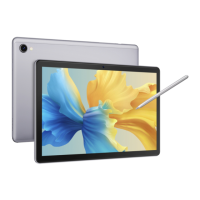

 To Next Page