SANITIZING PROCEDURE / 15
Sanitizing Procedure
CHEMICAL OR OTHER COMPOUNDS CONTAINING
SODIUM HYDROSULFITE OR SODIUM BISULFITE,
OR ANY OTHER REDUCING AGENT, DISCONNECT
THE DEVICE AND MANUALLY REGENERATE THE
UNIT BEFORE SANITIZING.
• DO NOT USE THIS PROCEDURE IF THE SOFT-
ENER SALT CONTAINS IRON CONTROL ADDI-
TIVES.
1. Remove the brine tank cover and the small cover on the
brine valve chamber.
2. Pour directly into the brine chamber 1 cup (9-inch units)
or 2 cups (12-inch units) of common household bleach
(5-1/4% sodium hypochlorite).
3. Manually start recharge. Allow the unit to complete the
recharge cycle automatically.
If tastes and odors return frequently, even after sanitization,
a continuous chlorination system may be needed. Contact
Household Application Engineering for assistance. Also, have
the consumer send a sample to a qualified laboratory for
bacterial analysis.
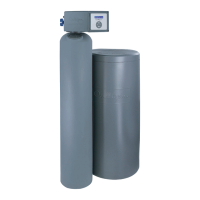
A water softener in daily use on a potable water supply gen-
erally requires no special attention other than keeping the
salt tank filled. Occasionally, however, a unit may require
sanitation under one of the following conditions:
• The unit has stood idle for a week or more (the premises
vacant or the residents on vacation).
• On private supplies, the appearance of off-tastes and odors,
particularly if musty or “rotten egg” (caused by harmless
sulfate-reducing bacteria).
For occasional occurrences, the softener can be sanitized with
household bleach as follows:
NOTICE: If the water supply contains iron, regenerate the
softener before sanitizing to remove accumulated iron from
the Cullex
®
resin.
WARNING! HAZARD FROM TOXIC FUMES!
CHLORINE BLEACH AND COMMON IRON CON-
TROL CHEMICALS MAY GENERATE TOXIC FUMES
WHEN MIXED.
• IF THE UNIT USES CULLIGAN
®
SOFNER-GARD
™


 To Previous Page