unit installation
www.DaikinApplied.com 13 IM 1049-9
Cleaning & Flushing System
1. Priortorstoperationofanyconditioner,thewater
circulatingsystemmustbecleanedandushedofall
construction dirt and debris.
If the conditioners are equipped with water shutoff
valves, either electric or pressure operated, the supply
and return runouts must be connected together
at each conditioner location. This will prevent the
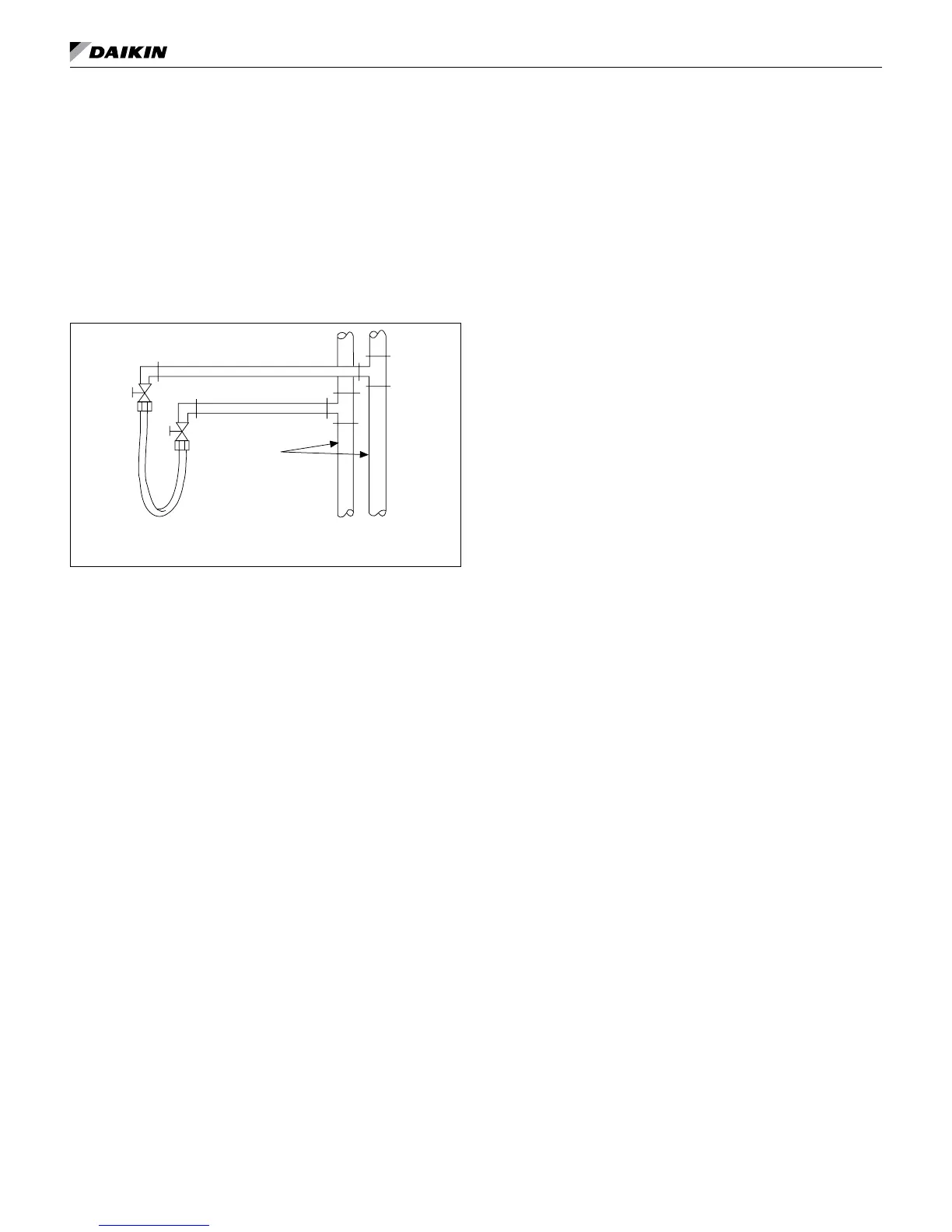
introduction of dirt into the unit. See Figure 13.
Figure 13: Supply & return runouts connected together
Return Runout
Supply Runout
Mains
Flexible
Hose
Runouts Initially
Connected Together
2. Fill the system at the city water makeup connection
withallairventsopen.Afterlling,closeallairvents.
The contractor should start main circulator with
the pressure reducing valve open. Check vents
in sequence to bleed off any trapped air, ensuring
circulation through all components of the system.
Power to the heat rejector unit should be off, and
the supplementary heat control set at 80°F (27°C).
While circulating water, the contractor should check
and repair any leaks in the piping. Drains at the
lowest point(s) in the system should be opened for
initialushandblowdown,makingsurecitywater
llvalvesaresettomakeupwateratthesame
rate. Check the pressure gauge at pump suction
and manually adjust the makeup to hold the same
positive steady pressure both before and after
opening the drain valves. Flush should continue for
at least two hours, or longer if required, to see clear,
clean drain water.
3. Shut off supplemental heater and circulator pump
and open all drains and vents to completely drain
down the system. Short circuited supply and return
runouts should now be connected to the conditioner
supply and return connections. Do not use sealers
attheswivelareconnectionsofhoses.
4. Trisodium phosphate was formerly recommended
asacleaningagentduringushing.However,
many states and localities ban the introduction of
phosphates into their sewage systems. The current
recommendationistosimplyushlongerwithwarm
80°F (27°C) water.
5. Rellthesystemwithcleanwater.Testthewater
using litmus paper for acidity, and treat as required
to leave the water slightly alkaline (pH 7.5 to 8.5).
Thespeciedpercentageofantifreezemayalsobe
added at this time. Use commercial grade antifreeze
designed for HVAC systems only. Do not use
automotive grade antifreeze.
Oncethesystemhasbeenlledwithcleanwater
and antifreeze (if used), precautions should
be taken to protect the system from dirty water
conditions. Dirty water will result in system wide
degradation of performance and solids may clog
valves,strainers,owregulators,etc.Additionally,
the heat exchanger may become clogged which
reduces compressor service life or causes
premature failure.
6. Set the loop water controller heat add setpoint
to 70°F (21°C) and the heat rejection setpoint to
85°F (29°C). Supply power to all motors and start
thecirculatingpumps.Afterfullowhasbeen
established through all components including the
heat rejector (regardless of season) and air vented
and loop temperatures stabilized, each of the
conditioners will be ready for check, test and start-
up, air balancing, and water balancing.



 To Next Page