17
Indoor Condensers and Condensing Units
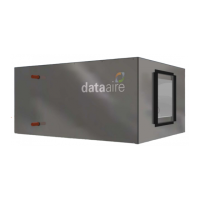
Although most split air-cooled systems have outdoor condensers or condensing units, indoor
condensers and condensing units are occasionally used. These 29 1/2” (750 mm) tall sections are to
be mounted in the same manner as the evaporator sections using four (4) threaded rods. Air-cooled
condensers or condensing units have factory provided duct collars on the supply and return air
openings as appropriate.
Typical installations have the condenser or condensing section physically near the evaporator,
especially since most have some shared electrical line power. The mounting of these sections is
independent of the evaporator mounting. The same service and maintenance clearance requirements
apply to these units as well.
These remote outdoor condenser or condensing units – outdoor sections have their own installation,
operation and maintenance manuals.
Piping
• All refrigerant piping should be is Type L Air Conditioning Refrigeration (ACR) hard drawn
copper pipes. Soft copper is unacceptable.
• When brazing refrigerant lines, an inert gas should be passed through the line at low pressure
to prevent scaling and oxidation inside the tubing. Dry nitrogen is preferred. No soldering
allowed.
• Completely deburr and clean tube end and inside surface of piping.
• Use only a suitable silver alloy on suction and liquid lines. Limit the flux to the minimum
required to prevent contamination of the joint internally. Flux only the male portion of the
connection, never the female. After brazing, remove excess flux.
• All refrigeration piping materials are subject to changes in temperature and will expand and
contract with temperature change. Installation techniques must allow for expansion and
contraction changes for piping connections, this will prevent stresses which may buckle and
rupture the copper tube piping or joints.
• Proper piping practices should be employed to ensure adequate oil return, even under


 To Next Page