4.7.3 Rudder blade and rudder bearing
The rudder blade is a modern prebalanced GF synthetic profiled blade with considerable
rudder force. The rudder shaft, diam. 44 mm, is made of stainless steel, offset and is narrower
at the lower end. The rudder force from the wave to the rudder blade is transmitted with
welded fittings. The rudder shaft is held above in a JP3 pendulum bearing, type 1 Ref
10.13.03 and below in a JP3 bearing, type 1 Ref 10.14.04.
The rudder is practically maintenance free. An annual cable tension check is however
necessary. Tension adjustment should be carried out if necessary. Every five years the rudder
should be dismantled, the bearing surfaces carefully cleaned, greased and then reinstalled.
Bear in mind that the rudder can only be “withdrawn” in a crane or above a pit after the
rudder quadrant has been loosened.
After re-installation the transmission cable must have its tension adjusted again.
IMPORTANT
Do not make sternway too quickly,
and always hold the wheel firmly.
Never let go of the wheel!
The stop mechanism and the cables are unnecessarily put under strain
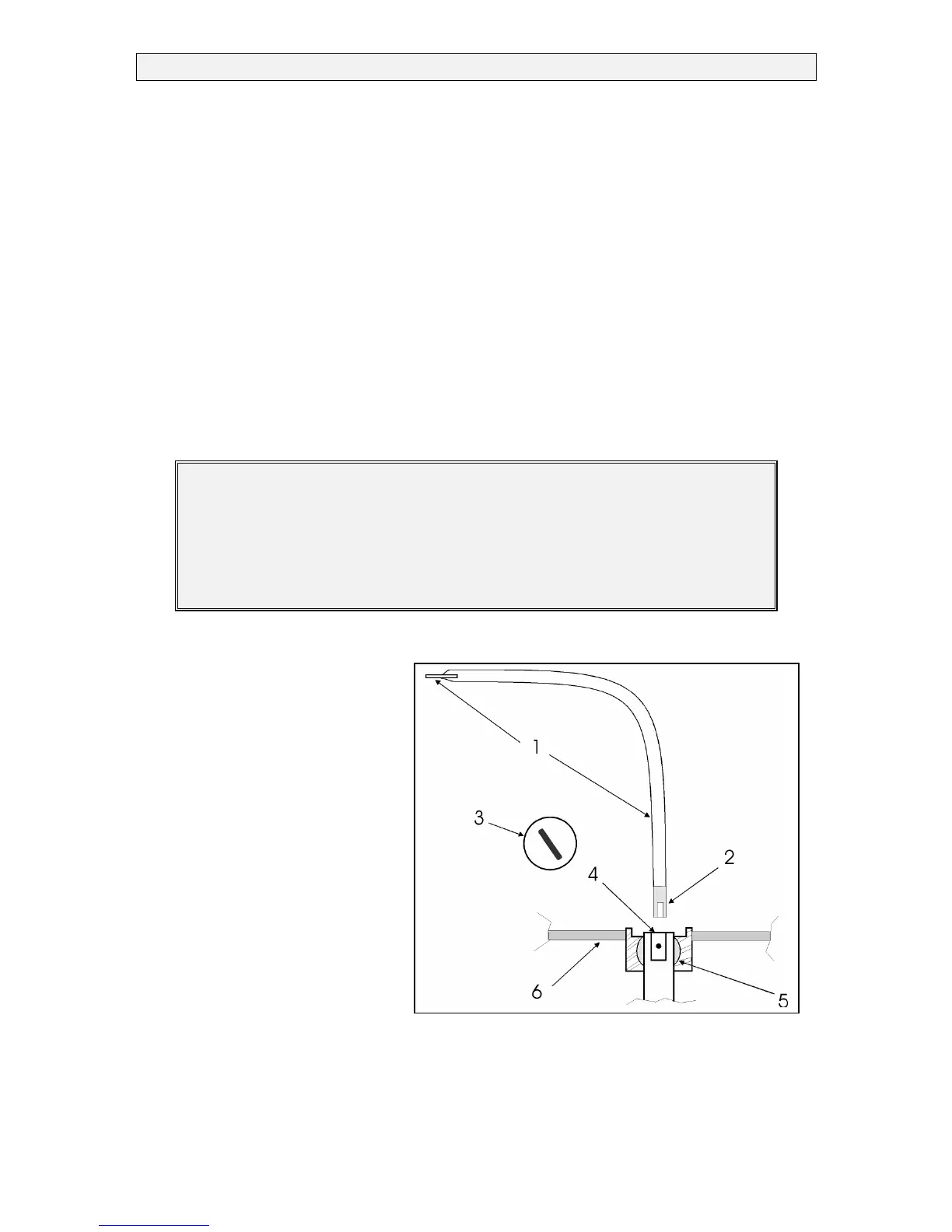
4.7.4 Emergency tiller
The emergency tiller is stowed in
the galley locker port side. One end
of the emergency tiller is in fact a
screw, with which the cover of the
upper bearing can be loosened. The
other end is equipped with a nut
that must be placed on the
connecting plate in the upper end of
the rudder shaft. As skipper, you
should get used to the hand grip and
have tried out the tiller.
Components
1. Emergency tiller
2. Nut for insertion
3. Cover of upper bearing
4. Blind hole with connecting plate
5.
Pendulum bearing
6. Cockpit floor
Figure 20: Emergency head


 To Next Page